US court reinstates gray wolf endangered species protections

 Martin wins Austrian MotoGP sprint after Acosta crash

 Japan edge Fiji to win Pacific Nations Cup

 Black smoke, flames rising near Riyadh airport: residents to AFP

 UK actor Naomi Watts honoured at Spain film festival

 Japan emperor declares Asian Games open after turbulent build-up

 Asian Games open with unity message after troubled build-up

 Denmark hails 'binding' Greenland deal with Trump

 We don't want Games host Japan losing money, says Asian Olympic official

 Ed Sheeran returns to stage after Palestinian controversy

 Asian Games to open in Japan after troubled build-up

 Drone owners rush to offload devices ahead of Beijing ban

 Trump's beef policies irk Texas ranchers, testing their loyalty

 Kennedy Center: future unclear for iconic Washington arts hub

 Trump claims 'infinite' Greenland security deal with Denmark

 Helicopters battle wildfire threatening Ecuador's capital

 Brentford batter Chelsea to undo Alonso's promising start

 Kane hits Bundesliga century as Bayern rout Union

 Trump says CNN, MS NOW, Politico banned from White House

 Hushing and hedging: US companies retreat on climate

 Springboks to face Fiji before 2027 Rugby World Cup

 Nigeria miners struggled to breathe in cell before 37 died: survivors

 McIlroy on the charge at PGA Championship as Reed withdraws

 McIlroy on the charge at PGA Championship

 Crisis-wracked Volkswagen warns of 10-bn-euro hit to profits

 Costa Rica's Grynspan tops third informal poll for UN chief: diplomat

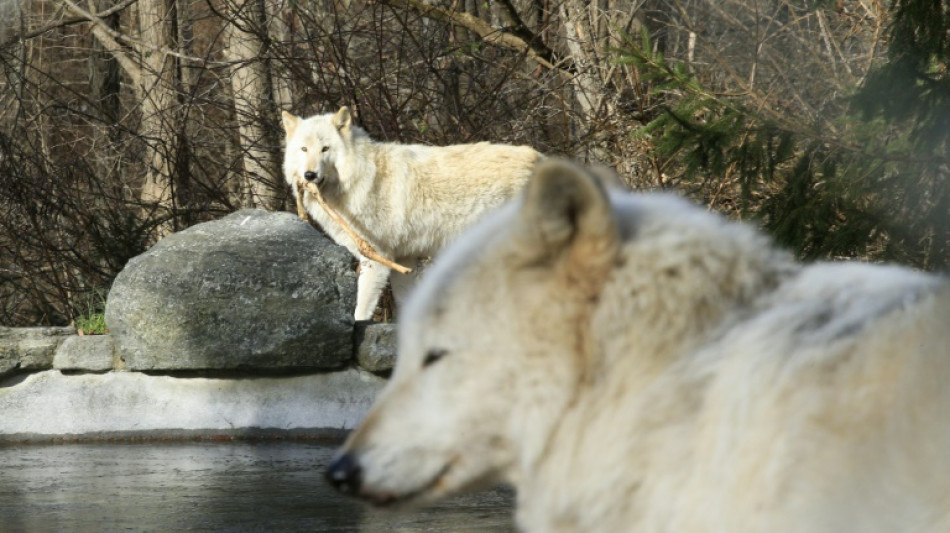
A US court has struck down a Trump-era decision to remove federal protections for gray wolves across much of the country, in a move hailed by conservationists who said the listing was vital for the species' recovery.
A 26-page ruling issued Thursday by Judge Jeffrey White in a case brought by wildlife groups found the Fish and Wildlife Service (FWS) had erred in its October 2020 decision to remove the apex predators from the Endangered Species Act (ESA), where they were first listed in the 1970s.
Though the decision to delist gray wolves across most of the lower-48 states was taken by the administration of former president Donald Trump, Joe Biden's government had continued to defend the move in court.
"It really is a win for wolves across the country," Collette Adkins of the Center for Biological Diversity, told AFP.
"And I hope it finally convinces the Fish and Wildlife Service to really focus on recovering wolves instead of prematurely removing their protections."
A quarter million gray wolves -- long a symbol of the free spirit of the American wilderness -- once roamed from coast to coast before the arrival of European settlers and eradication campaigns that endured into the 20th Century.
At the time of the decision to de-list them, the wolves had recovered from a low of 1,000 to around 6,000 -- but hundreds were subsequently legally killed, either through hunting or conflicts with livestock operators.
In one egregious example, hunters in Wisconsin killed over 218 wolves in less than three days in February 2021, using packs of dogs, snares and leg-hold traps -- well beyond the state's own limit of killing 119 wolves.
The 2020 decision to remove the species' protections had been opposed by 1.8 million Americans in public comments, as well as hundreds of scientists, veterinary professionals, and the iconic conservationist Jane Goodall.
Even the researchers commissioned by the FWS to carry out a review of the science found it did not support de-listing.
"Both under Democratic and Republican administrations, there has been this year-to-year desire to just be done recovering wolves," said Adkins.
"It's been frustrating because the Endangered Species Act envisions a recovery of these animals so that they can fulfill their ecosystem role," she added.
Research has confirmed the wolf's importance in thinning over-browsing herds of elk, which in turn prevents destruction of habitat, for example. And a recent study from Wisconsin found that wolves kept deer away from roads, reducing collisions between deer and cars.
Adkins said she was hopeful of a change in policy after interior secretary Deb Haaland this week penned an op-ed in USA Today criticizing some western States in the northern Rocky mountain range, which have stepped up hunting campaigns in recent months.
The gray wolves of the northern Rockies haven't been covered by the Endangered Species Act since a 2011 Congressional act, but Halaand wrote she could reinstate federal protections specifically for them if necessary.
T.Sanchez--AT