All the queen's kingdoms: where did Elizabeth II reign? / Photo: Suzanne PLUNKETT - POOL/AFP/File

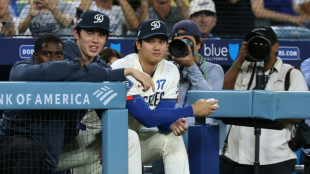 Ohtani 'unlikely' to pitch again this season, says Dodgers manager

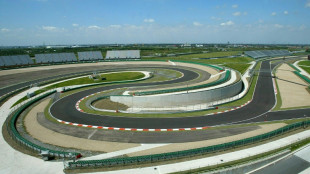 Driver thanks 'superhero' rival for saving him from flaming race car

 Can dogs sniff cancer? AI joins the hunt in India

 Shelton steams into US Open quarter-final clash with Alcaraz
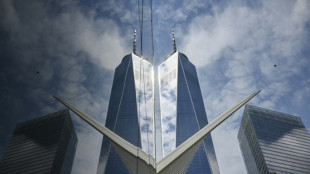 25 years on, America seeks to keep 9/11 memories alive
 'Trumpapalooza' tests Republican bet on unpopular US president
 Pegula tops Cirstea to reach US Open quarter-finals
 Australians could opt out of social media algorithms under new law

 Tiafoe tops Medvedev in straight sets at US Open
 Zverev seeks US Open last eight as Osaka faces Rybakina

 Alcaraz turns up heat to reach US Open quarters
 Gatti salvages Juve draw with AC Milan in Serie A

 Sinayoko stars as unbeaten Paris FC down Marseille
 Still on top: 'Spider-Man' dominates North American box office
 Zelensky in fresh talks with US envoys: Ukraine official

 Noskova edges Kostyuk to reach US Open quarter-finals
 Alonso urges Chelsea to learn from painful defeat at Arsenal
 Defending champion Sabalenka reaches US Open quarter-finals
 Minnows Augsburg sink Frankfurt to top Bundesliga table
 Yamal hits double as 'nearly perfect' Barca thrash Valencia

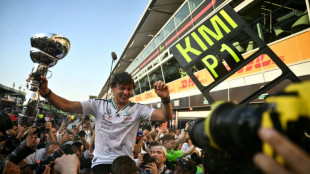 Antonelli living 'a dream' after astonishing home win
 Impressive Daryz keeps Arc double dream alive
 Strasbourg hit Troyes for six as Amo-Ameyaw sparkles

 German far-right AfD landslide winner in eastern state vote
 Carrick defends Man Utd start despite defensive concerns
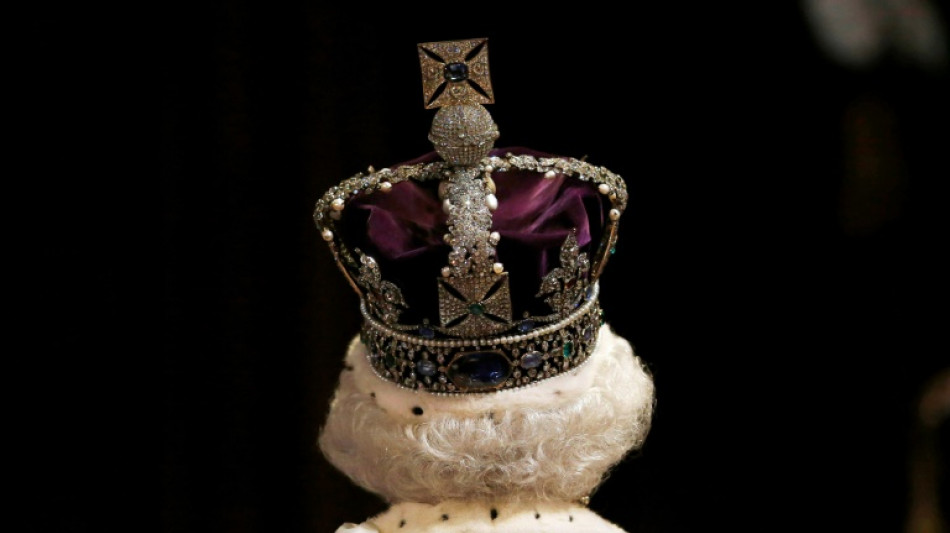
Queen Elizabeth II's reign encompassed to a large degree Britain's declining global influence, from an empire that once bestrode the world to a middle-ranking economy.
During her time as queen, the footprint of her monarchy shrank dramatically, but at her death she was still head of state of the United Kingdom and 14 Commonwealth countries or realms, from Canada and Jamaica to Australia and New Zealand.
- Ceremonial -
At her coronation in 1953, Elizabeth II was crowned queen of seven independent countries: the United Kingdom, Canada, Australia, New Zealand, South Africa, Pakistan and Ceylon, which later changed its name to Sri Lanka.
The numbers grew as decolonisation accelerated and British colonies and dependencies became new Commonwealth realms.
Some decided to keep her as head of state, others did not.
Where she remained queen, the role was largely ceremonial, and her duties were carried out by one of her governor generals -- a viceroy who effectively acts as head of state.
She was the queen of each newly independent country in its own right, not merely because she was the British monarch previously.
At her death, she was head of state of: Antigua and Barbuda, Australia, The Bahamas, Belize, Canada, Grenada, Jamaica, New Zealand, Papua New Guinea, Saint Kitts and Nevis, Saint Lucia, Saint Vincent and the Grenadines, Solomon Islands, Tuvalu and the UK.
These countries are distinct from the broader 54-state Commonwealth of nations that have historical ties to the United Kingdom, but did not necessarily choose to have the queen as head of state.
Over her entire reign, she was head of state of 32 countries in total.
Seventeen of those decided to cut ties at some point after becoming independent. They were:
Barbados 1966-2021
Ceylon (Sri Lanka) 1952-1972
Fiji 1970-1987
The Gambia 1965-1970
Ghana 1957-1960
Guyana 1966-1970
Kenya 1963-1964
Malawi 1964-1966
Malta 1964-1974
Mauritius 1968-1992
Nigeria 1960-1963
Pakistan 1952-1956
Sierra Leone 1961-1971
South Africa 1952-1961
Tanganyika 1961-1962
Trinidad and Tobago 1962-1976
Uganda 1962-1963
At the peak, she was queen of 18 countries at the same time, between 1983 and 1987. Since then, Fiji (1987), Mauritius (1992) and Barbados (2021) have become republics.
When Rhodesia -- Zimbabwe today -- unilaterally declared its independence from Britain in 1965, it proclaimed its allegiance to the queen before declaring itself a republic with a president in 1970, although its status was never recognised internationally.
Being queen of New Zealand also meant she was the head of state of the Cook Islands and Niue, which are associated states that form part of the wider realm of New Zealand.
Britain has 14 overseas territories, including Bermuda, the Falkland Islands, Gibraltar and British Antarctic Territory, over which she also ruled.
Her shortest reigns were in Kenya, Tanganyika -- now the major part of Tanzania -- and Uganda, which each lasted exactly a year between independence from Britain and becoming a republic.
During her time on the throne, eight referendums were held on becoming a republic, three of which passed: Ghana (1960), South Africa (1960) and The Gambia (1970).
Barbados declared itself a republic without holding a referendum.
Those that did not pass were a first referendum in The Gambia (1965), two in Tuvalu (1986 and 2008), Australia (1999) and Saint Vincent and the Grenadines (2009).
M.White--AT