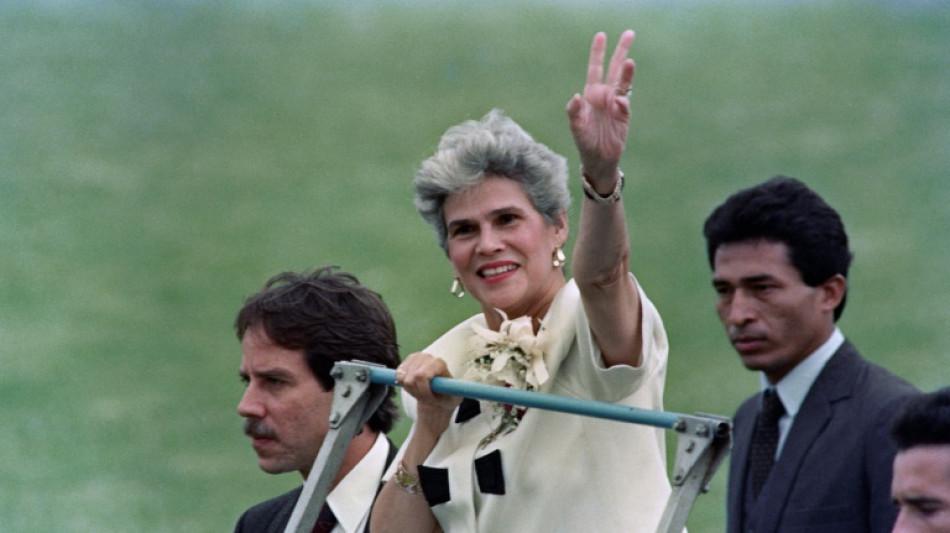
Violeta Chamorro, who brought peace to Nicaragua, dead at 95 / Photo: David AKE - AFP/File

 Oil prices fall after Trump hails 'good' talks with Iran

 AI political ads warp reality ahead of US midterms
 Kenneth Branagh embraces action hero role -- to get in shape

 'New one' Klopp promises fresh approach as Germany reign begins

 Milne returns to New Zealand squad for India T20 series

 US-led Americas coalition backs sanctions against crime groups

 'Star Wars' fans and art lovers line up for new Lucas museum
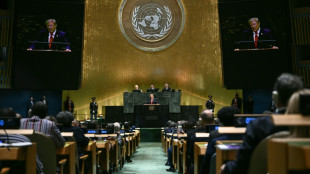 Trump renames AI 'super intelligence' as leaders jostle over dangers
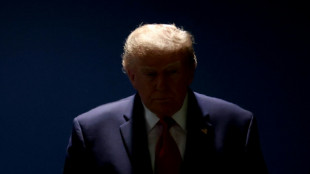 Oil prices retreat as markets welcome US-Iran talks
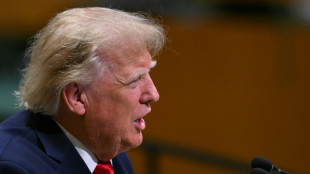
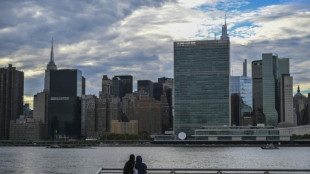 US refusing to give Sudan's de facto leader visa for UN: diplomatic sources, UN
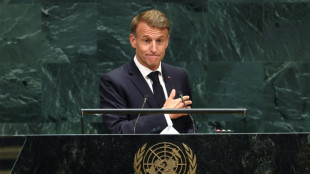 Macron urges world to choose UN over 'law of the jungle'
 All-rounder Jacks stars as England beat Sri Lanka in 1st ODI
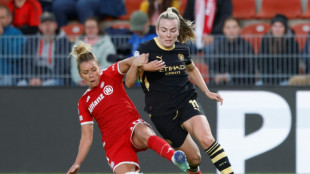 Man City peg back Bayern to start Women's Champions League
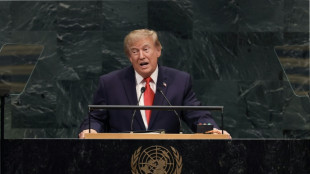 Trump beats 'America first' drum at UN as allies tread carefully
 Snedeker backs Spaun for Ryder Cup after Presidents snub
 French prosecutors probe secret filming of women with smart glasses

 Trump renames AI "super intelligence," rejects international oversight
 Trump rejects international regulation of AI
 How is the EU approaching record fuel prices?

 Sri Lanka's Colombage strikes on debut as England dismissed for 265 in first ODI
 Hurricane Polo strengthens to top category 5 off Mexico

 11 hurt as teen opens fire outside school in western Turkey

 UN chief says 'Big Oil' treats atmosphere as open sewer

 Tunisia says 2026 summer hottest on record
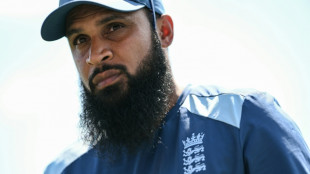 England's Rashid out of Sri Lanka ODIs with hand injury
Violeta Chamorro, who brought peace to Nicaragua after decades of war and was the first woman elected president in the Americas, died Saturday at the age of 95, her family said.
Chamorro, who ruled the poor Central American country from 1990 to 1997, "died in peace, surrounded by the affection and love of her children," said a statement issued by her four children.
As president, Chamorro managed to bring to an end a civil war that had raged for much of the 1980s as US-backed rebels known as the 'Contras' fought the leftist Sandinista government.
That conflict made Nicaragua one of the big proxy battlegrounds of the Cold War.
Chamorro put her country on the path to democracy in the difficult years following the Sandinista revolution of 1979, which had toppled the US-backed right-wing regime of Anastasio Somoza.
In a country known for macho culture, Chamorro had a maternal style and was known for her patience and a desire for reconciliation.
When she won the 1990 election at the head of a broad coalition, she defeated Daniel Ortega, the Sandinista guerrilla leader and icon who is now president again.
Ortega has been in power for 17 years and is widely criticized by governments and rights groups as having crushed personal freedoms, all political opposition and judicial independence with autocratic rule.
Chamorro died in Costa Rica, where she moved in 2023, to be close to her children, three of whom are living here in exile because of their opposition to Ortega.
Chamorro -- Nicaraguans referred to her affectionately as "Dona Violeta" -- had been living far removed from public life for decades. In her later years, she suffered from Alzheimer's disease.
"Her legacy is unquestionable," said Felix Madariaga, a Nicaraguan academic and political activist living in exile in the United States.
- 'Typical of a homemaker' -
"She led the transition from war to peace, healing a country destroyed by war. The contrast with Ortega is clear and deep," said Madariaga.
Chamorro was the widow of Pedro Joaquin Chamorro, who came from one of Nicaragua's most prominent families.
As owner and chief editor of the newspaper La Prensa, he was killed in 1978 in an attack blamed on the regime of Anastasio Somoza.
His death propelled Chamorro to take over the newspaper and, eventually, to get into politics.
After the Sandinistas seized power in 1979, she became the only female member of a national reconstruction government.
But she quit that junta in 1980, believing the Sandinistas were moving too far to the left and into the sphere of communist Cuba.
Chamorro became prominent in the opposition to the Sandinistas as they fought the 'Contra' rebels financed by the United States under Ronald Reagan.
In 1990, she stunned the country by winning the presidency -- and beating Ortega -- as leader of a coalition of 14 parties.
During the campaign, she was known for wearing white and had to use a wheelchair because of a knee injury.
In her memoirs, Chamorro said she won because she gained the trust of war-weary Nicaraguans as she spoke in simple language "typical of a homemaker and a mother."
"In the macho culture of my country, few people believed that I, a woman, and what is more, handicapped, had the strength, energy and will" to beat Ortega, she wrote.
"But if the Berlin Wall fell, why not the Sandinistas?"
R.Lee--AT