N.Ireland marks 50 years since 'Bloody Sunday' with sombre memorial

 Martin wins Austrian MotoGP sprint after Acosta crash
 Japan edge Fiji to win Pacific Nations Cup
 Black smoke, flames rising near Riyadh airport: residents to AFP
 UK actor Naomi Watts honoured at Spain film festival
 Japan emperor declares Asian Games open after turbulent build-up
 Asian Games open with unity message after troubled build-up
 Denmark hails 'binding' Greenland deal with Trump
 We don't want Games host Japan losing money, says Asian Olympic official
 Ed Sheeran returns to stage after Palestinian controversy
 Asian Games to open in Japan after troubled build-up
 Drone owners rush to offload devices ahead of Beijing ban
 Trump's beef policies irk Texas ranchers, testing their loyalty

 Kennedy Center: future unclear for iconic Washington arts hub

 Trump claims 'infinite' Greenland security deal with Denmark

 Helicopters battle wildfire threatening Ecuador's capital

 Brentford batter Chelsea to undo Alonso's promising start

 Kane hits Bundesliga century as Bayern rout Union
 Trump says CNN, MS NOW, Politico banned from White House
 Hushing and hedging: US companies retreat on climate
 Springboks to face Fiji before 2027 Rugby World Cup
 Nigeria miners struggled to breathe in cell before 37 died: survivors

 McIlroy on the charge at PGA Championship as Reed withdraws
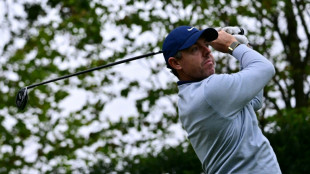 McIlroy on the charge at PGA Championship

 Crisis-wracked Volkswagen warns of 10-bn-euro hit to profits

 Costa Rica's Grynspan tops third informal poll for UN chief: diplomat

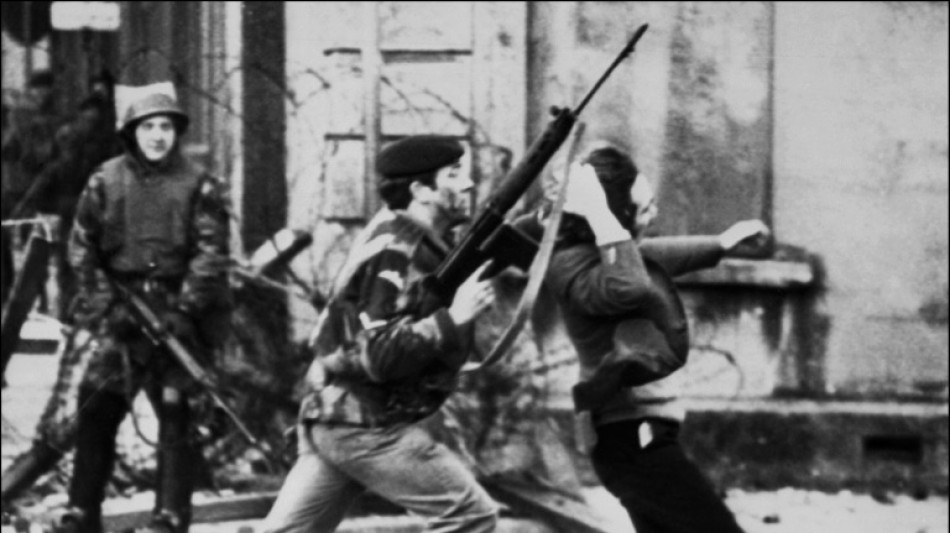
The Northern Irish city of Londonderry began commemorations Sunday of one of the darkest days in modern UK history when, 50 years ago, British troops without provocation killed 13 unarmed civil rights protesters.
The anniversary of "Bloody Sunday" comes with Northern Ireland's fragile peace destabilised by Brexit, and with families of the victims despondent over whether the soldiers involved will ever face trial.
The 13 demonstrators died on January 30, 1972, when members of the British Parachute Regiment fired more than 100 high-velocity rounds into crowds in Londonderry, known as Derry to pro-Irish nationalists.
Some of the victims were shot in the back, or while on the ground, or while waving white handkerchiefs as the shots ripped through narrow streets and across open wasteland in the Catholic Bogside district.
On Sunday, several hundred people including relatives of the victims retraced the fateful 1972 march that preceded the tragedy, walking in sombre silence under a leaden grey sky.
Children joined the poignant procession, bearing portraits of those killed and 14 white roses -- a 14th protestor shot on "Bloody Sunday" died months later, but subsequent inquiries determined it was not due to his injuries.
At a later annual remembrance event, held in front of a plinth memorial erected in the Bogside in 1974, a short period of silence was held after the names of those killed were read aloud and a wreath laid for each as a flute played mournfully.
"We have travelled a long road from the horror of that day," Michael McKinney, whose brother William was among the 13 killed, told the hundreds gathered.
McKinney, who has spearheaded relatives' decades-long quest for justice, reiterated their demands for "the prosecution of the uniformed criminals who murdered our people on our streets".
Ireland's Prime Minister Micheal Martin became the first Irish leader to attend the yearly memorial, alongside foreign minister Simon Coveney, with both laying wreathes.
- Amnesty? -
British Prime Minister Boris Johnson this week called "Bloody Sunday" a "tragic day in our history".
But his government is pushing legislation that critics say amounts to an amnesty for all killings during Northern Ireland's three decades of sectarian unrest, including by security forces.
After an initial government report largely exonerated the paratroopers and authorities, a landmark 12-year inquiry running to 5,000 pages found in 2010 that the victims were unarmed and posed no threat, and that the soldiers' commander on the ground violated his orders.
"The shootings were unjustified and unjustifiable," its chairman Mark Saville, a former judge and UK lawmaker, told BBC radio Saturday.
He expressed concern that with the surviving soldiers now elderly, the government should have launched any prosecution "a very long time ago".
Charlie Nash, now 73, saw his 19-year-old cousin William Nash killed on "Bloody Sunday".
"It's important for the rest of the world to see what they done to us that day. But will we ever see justice? Never, especially not from Boris Johnson," he told AFP ahead of Sunday's memorial events.
- 'Reckless' -
Then as now, Londonderry was a largely Catholic city. But housing, jobs and education were segregated in favour of the pro-British Protestant minority.
Simmering tensions over the inequality made it the cradle of the "Troubles" in Northern Ireland starting in the late 1960s, which finally ended with the 1998 Good Friday Agreement.
However, more than two decades on, the UK's fractious divorce from the European Union has unsettled the fragile post-1998 consensus.
Protestant unionists want Johnson's government to scrap a protocol governing post-Brexit trade for Northern Ireland, which treats the province differently from the UK mainland (comprising England, Scotland and Wales).
The government, which is in protracted talks with the EU on the issue, is sympathetic to their demands.
Heading into regional elections in May, some nationalists hope Brexit could help achieve what the Irish Republican Army (IRA) never did -- a united Ireland, a century after the UK carved out a Protestant statelet in the north.
Sinn Fein, which was once the political wing of the IRA, is running ahead of the once dominant unionists in opinion polls.
Protestant hardliners have issued their own reminders of where they stand: leading up to the anniversary, Parachute Regiment flags have been flying in one unionist stronghold of Londonderry, to the revulsion of nationalists.
"How can they do that, this weekend of all weekends?" asked George Ryan, 61, a tour guide and local historian.
At the entrance to the Bogside, a wall normally proclaims in large writing: "You are now entering Free Derry." This weekend the mural read: "There is no British justice."
E.Flores--AT