Russian town buries soldier born under Putin, killed in Ukraine

 Martin wins Austrian MotoGP sprint after Acosta crash

 Japan edge Fiji to win Pacific Nations Cup
 Black smoke, flames rising near Riyadh airport: residents to AFP
 UK actor Naomi Watts honoured at Spain film festival
 Japan emperor declares Asian Games open after turbulent build-up

 Asian Games open with unity message after troubled build-up
 Denmark hails 'binding' Greenland deal with Trump

 We don't want Games host Japan losing money, says Asian Olympic official
 Ed Sheeran returns to stage after Palestinian controversy

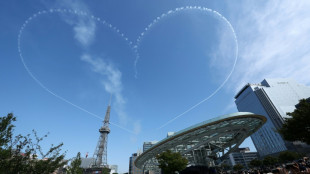 Asian Games to open in Japan after troubled build-up
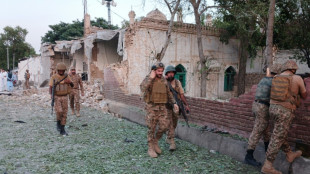
 Drone owners rush to offload devices ahead of Beijing ban
 Trump's beef policies irk Texas ranchers, testing their loyalty

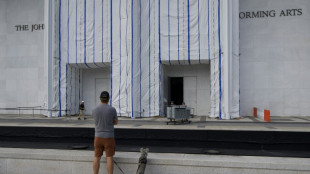 Kennedy Center: future unclear for iconic Washington arts hub

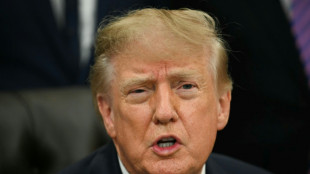 Trump claims 'infinite' Greenland security deal with Denmark

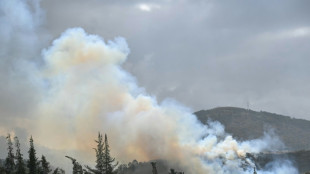 Helicopters battle wildfire threatening Ecuador's capital

 Brentford batter Chelsea to undo Alonso's promising start
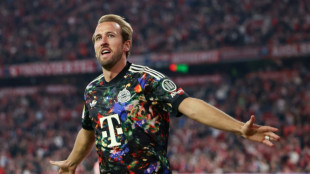 Kane hits Bundesliga century as Bayern rout Union
 Trump says CNN, MS NOW, Politico banned from White House
 Hushing and hedging: US companies retreat on climate

 Springboks to face Fiji before 2027 Rugby World Cup
 Nigeria miners struggled to breathe in cell before 37 died: survivors

 McIlroy on the charge at PGA Championship as Reed withdraws
 McIlroy on the charge at PGA Championship
 Crisis-wracked Volkswagen warns of 10-bn-euro hit to profits

 Costa Rica's Grynspan tops third informal poll for UN chief: diplomat

A baby-faced 20-year-old, Nikita Avrov was killed in Ukraine while serving as a gunner on a Russian tank.
At his funeral on Tuesday, those giving eulogies leave no room for doubt: the private died for a good cause, for his Russian fatherland.
In front of his family's house in the small town of Luga, 150 kilometres (93 miles) south of Saint Petersburg, Avrov's casket is briefly put on display, surrounded by funeral wreaths, while the flag of his motorised infantry division flies alongside.
Around 60 people file past to pay their final respects to a soldier who was born after Russian President Vladimir Putin took power in 2000.
Mourners also hold a ceremony at a war memorial where an Eternal Flame burns beside monuments to Soviet soldiers killed in World War II and Afghanistan.
Five fur-hatted soldiers and their commanding officer carry the coffin to the cemetery to the mournful sound of a brass band and fire their guns into the air.
In this town of 30,000 people, there is little sense of the bloody military operation in neighbouring Ukraine, launched by Russian troops on February 24, to fierce resistance from Ukrainian forces depicted by Moscow as hordes of neo-Nazis.
Some cars bear stickers with the letter Z, which has come to symbolise patriotic backing for the Russian operation.
According to the local authorities, Avrov was a gunner: loading the weapons of an assault tank.
He died in late March in Izyum, a small town in eastern Ukraine that was taken by Russian troops, strategically located between the cities of Kharkiv and Slavyansk.
- 'Forces of evil' -
Whether officials, military or clergy, those who speak at the memorial ceremony frame his death as a patriotic sacrifice.
"Fighting neo-Nazis and nationalists in Ukraine, he died for our motherland, for peace for each of us," says Alexei Golubev, a municipal official, as the dead man posthumously receives a bravery medal.
"When Russia shows weakness, some impure people try to bring it to its knees... But they won't manage it!", says Sergei Nikitin, a colonel.
His speech echoes Moscow's official rhetoric: that the West took advantage of Russia's weakness after the breakup of the USSR and brought Ukraine under its sway.
In a nearby Russian Orthodox church, a priest makes similar patriotic points.
"Nikita wasn't afraid of the forces of evil. He defended us so that we could have peaceful skies," says Father Nikolai, as some 200 people gather to listen to the eulogy.
Standing outside are two former classmates of Avrov, who give their names as Sergei and Anton.
"Nikita was a soldier and died in combat. That's a heroic deed," says Sergei.
"We have to defend our country. It's true that it's the best ones who die," adds Anton.
- 'No justification' -
A mournful mood about such deaths prevails among women present.
The exact numbers of Russian troops killed in Ukraine are not known, while a Kremlin spokesman last week acknowledged they are "significant". Russia last gave a figure of 1,351 deaths, on March 25.
"It's very painful; it's very scary when they die so young," says Anna Korolyova, a 59-year-old neighbour, carrying two carnations.
Russians choose their words carefully, since they face potential jail terms if they are found guilty of making "fake" statements about the military's activities in Ukraine.
At the cemetery, another woman, 48-year-old Svetlana, who prefers not to give her surname, expresses bemusement.
"It's terrifying to even imagine what the mother feels. You wouldn't wish that on your enemy. What grief. What are these horrors happening, that mothers are losing children? This can have no justification," she says.
M.O.Allen--AT