-
 Germany's Merz vows to stay course despite new vote losses
-
Britain, Zverev-inspired Germany, Spain complete Davis Cup finals
-
 Man City outgun Sunderland despite Brobbey hat-trick, Man Utd rescue Fulham draw
-
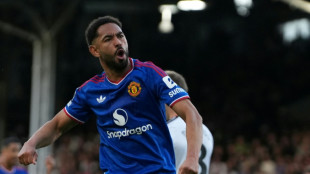
Man Utd salvage Fulham draw as pressure mounts on Carrick
-
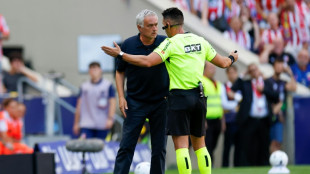 Mourinho blames ref committee for Real Madrid derby defeat
-
Spanish civil war drama 'The Black Ball' wins at Toronto festival
-
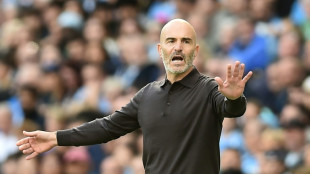 Maresca craves a 1-0 win after eight-goal Man City thriller
-
Germany's Merz shaken by far-right and far-left gains in state votes
-
 Atletico Madrid beat Real Madrid in tense derby clash
-
Macron welcomes Canada's Carney to French Atlantic territory
-
 Reusser retains world time-trial title
-
Fiorentina frustrate Napoli with Serie A draw, Como upset

-
 Man City outgun Sunderland despite Brobbey hat-trick, Liverpool win at Bournemouth
-
Five-star Man City top Premier League after Sunderland thriller

-
 Top US, Chinese economic officials meet ahead of Trump-Xi summit
-
Ukrainian drones hit Moscow on last day of Russian elections

-
 Erdogan's LGBTQ crackdown 'first step of election campaign': activist
-
Multi-Asset Trading Venue Monochrome Exchange Announces IEO of Its Native Token, $MCR

-
 Mass drone barrage on Moscow kills two
-
South Korea break Japan hearts to win Asian Games basketball gold

-
 82-year-old dies after beach fight in Greece over sun lounger
-
Acosta takes first victory at Austrian MotoGP

-
 US warns of rapid escalation in Mideast war
-
PSG president Nasser al-Khelaifi under investigation in France for conflict of interest

-
 Iran 'put hearts on the court' to win Asian Games basketball bronze
-
China swim sensation, 13, sets Games record after Japan win early

-
 School girl Yu helps China dominate in Asian Games swimming openers
-
Drones hit Moscow as Russians go to the polls

-
 Myanmar win first Asian Games teqball gold as Spain great Puyol watches
-
New England boss Fleming says 'wrong' to ask Stokes to end retirement

-
 China's 13-year-old Yu scorches to first major gold at Asian Games
-
Germans vote in elections threatening fresh blow to Merz

-
 Russians vote on last day of parliamentary elections
-
US fears rapid escalation in Mideast after Houthis attack Riyadh

-
 Hong Kong pays final respects to former city leader Tung
-
Japan triathlete Hojo wins first gold of Asian Games

-
 Typhoon put people off Asian Games opening ceremony, official says
-
IOC president impressed by 'beautiful' Asian Games wooden huts

-
 China's 13-year-old Yu cruises as Asian Games swimming begins
-
First Asian Games gold goes to Japan as China's 13-year-old Yu lights up pool

-
 AI 'warning shots' focus Beijing on national security risks
-
Data centre command hub keeps AI up and running

-
 Philippine tribe in limbo over US-led tech hub
-
Pope Leo in France: the issues on the table

-
 Leo XIV, first US pope transcends his restrained style
-
Packing for a pope: behind the scenes on foreign trips

-
 Singer Ed Sheeran says Gaza situation 'unjustifiable' following controversy
-
Republicans find transgender issues a powerful political weapon in midterm campaigning

-
 In 'Tenzing', a Sherpa mountaineer gets his due
-
German state elections threaten new shock waves for Merz

King Charles says 'no excuse' for colonial abuses during Kenya visit
King Charles III said Tuesday there could be "no excuse" for British colonial atrocities against Kenyans as he visited the country, but did not offer the apology demanded by some in the East African nation.
"There were abhorrent and unjustifiable acts of violence committed against Kenyans as they waged... a painful struggle for independence and sovereignty," Charles said at a state banquet hosted by Kenyan President William Ruto.
"And for that, there can be no excuse."
Although the four-day state visit by Charles and Queen Camilla has been billed as an opportunity to look to the future and build on the cordial modern-day ties between London and Nairobi, Buckingham Palace had said the king would address historic "wrongs" during decades of colonial rule.
It is the 74-year-old British head of state's first tour of an African and Commonwealth nation since becoming king last year and comes just weeks before Kenya celebrates the 60th anniversary of independence in December.
Under rainy skies, Charles and Camilla were given a ceremonial red carpet welcome by Ruto on Tuesday morning. They later laid a wreath at the Tomb of the Unknown Warrior in the Uhuru Gardens memorial park.
Uhuru means "freedom" in Swahili and the site is steeped in Kenya's turbulent history. Independence was declared there at midnight on December 12, 1963. The Union flag was lowered and replaced with Kenya's black, red, green and white flag.
The gardens were built on the site of a camp where British colonial authorities detained suspected Mau Mau guerrillas during the suppression of their 1952-1960 uprising.
The so-called "Emergency" period was one of the bloodiest insurgencies of the British empire and at least 10,000 people -- mainly from the Kikuyu tribe -- were killed.
Tens of thousands more were rounded up and detained without trial in camps where reports of executions, torture and vicious beatings were common.
- 'Greatest sorrow' -
Charles said the "wrongdoings of the past are a cause of the greatest sorrow and the deepest regret".
"None of this can change the past but by addressing our history with honesty and openness, we can perhaps demonstrate the strength of our friendship today, and in so doing, we can I hope continue to build an ever-closer bond for the years ahead," he said.
Ruto said the reaction of colonising powers to self-determination movements in Kenya "was monstrous in its cruelty".
"It culminated in the Emergency, which intensified the worst excesses of colonial impunity and the indiscriminate victimisation of Africans," he said at the state banquet.
He said Charles's "courage and readiness to shed light on uncomfortable truths" was a first step to deliver "progress beyond tentative and equivocal half measures of past years".
But it did not deliver the formal apology sought by some in Kenya.
On Sunday, the Kenya Human Rights Commission urged him to make an "unequivocal public apology... for the brutal and inhuman treatment inflicted on Kenyan citizens", and pay reparations for colonial-era abuses.
Britain agreed in 2013 to compensate more than 5,000 Kenyans who had suffered abuse during the Mau Mau revolt, in a deal worth nearly 20 million pounds ($25 million at today's rates).
Then foreign secretary William Hague said Britain "sincerely regrets" the abuses but stopped short of a full apology.
"The negative impacts of colonisation are still being felt to date, they are being passed from generation to generation, and it's only fair the king apologises to begin the healing process," delivery rider Simson Mwangi, 22, told AFP.
But 33-year-old chef Maureen Nkatha disagreed.
"He doesn't have to apologise, it's time for us to move on and forward," she said.
- Family ties -
Charles said Kenya had "long held such special meaning for my family" and spoke of his mother's "particular affection" for the country and its people.
Kenya is where Queen Elizabeth II -- then a princess -- learned in 1952 of the death of her father, King George VI, marking the start of her historic 70-year reign.
Charles has previously made three official visits and this week's tour is being staged 40 years since his mother's state visit in November 1983.
Kenya and Britain are close economic partners with two-way trade at around 1.2 billion pounds ($1.5 billion) over the year to the end of March 2023.
The royal programme focuses on efforts to tackle climate change, with Charles long a fervent campaigner for action to protect the environment, as well as support for creative arts, technology and youth.
Following their two-day stay in the capital, the royal couple will travel to the Indian Ocean port city of Mombasa, stopping at a marine nature reserve and meeting religious leaders.
A.Williams--AT