Sea of ultra-Orthodox attend Israel rabbi's funeral under heavy guard

 Martin wins Austrian MotoGP sprint after Acosta crash

 Japan edge Fiji to win Pacific Nations Cup
 Black smoke, flames rising near Riyadh airport: residents to AFP
 UK actor Naomi Watts honoured at Spain film festival

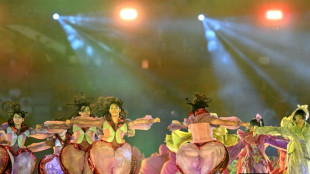 Japan emperor declares Asian Games open after turbulent build-up
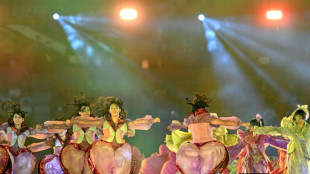 Asian Games open with unity message after troubled build-up
 Denmark hails 'binding' Greenland deal with Trump

 We don't want Games host Japan losing money, says Asian Olympic official
 Ed Sheeran returns to stage after Palestinian controversy
 Asian Games to open in Japan after troubled build-up
 Drone owners rush to offload devices ahead of Beijing ban

 Trump's beef policies irk Texas ranchers, testing their loyalty

 Kennedy Center: future unclear for iconic Washington arts hub
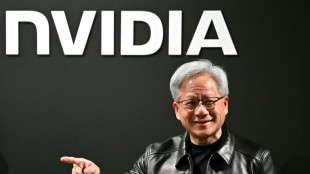
 Trump claims 'infinite' Greenland security deal with Denmark

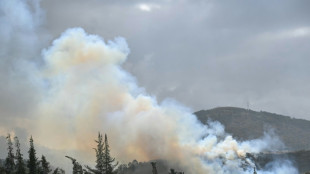 Helicopters battle wildfire threatening Ecuador's capital

 Brentford batter Chelsea to undo Alonso's promising start
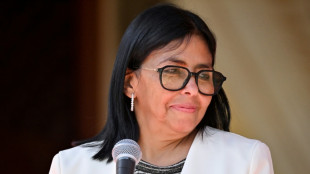
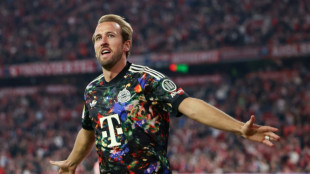 Kane hits Bundesliga century as Bayern rout Union
 Trump says CNN, MS NOW, Politico banned from White House

 Hushing and hedging: US companies retreat on climate

 Springboks to face Fiji before 2027 Rugby World Cup
 Nigeria miners struggled to breathe in cell before 37 died: survivors

 McIlroy on the charge at PGA Championship as Reed withdraws
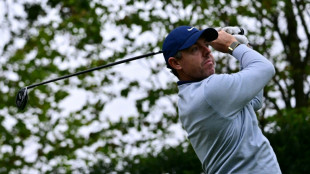 McIlroy on the charge at PGA Championship
 Crisis-wracked Volkswagen warns of 10-bn-euro hit to profits

 Costa Rica's Grynspan tops third informal poll for UN chief: diplomat

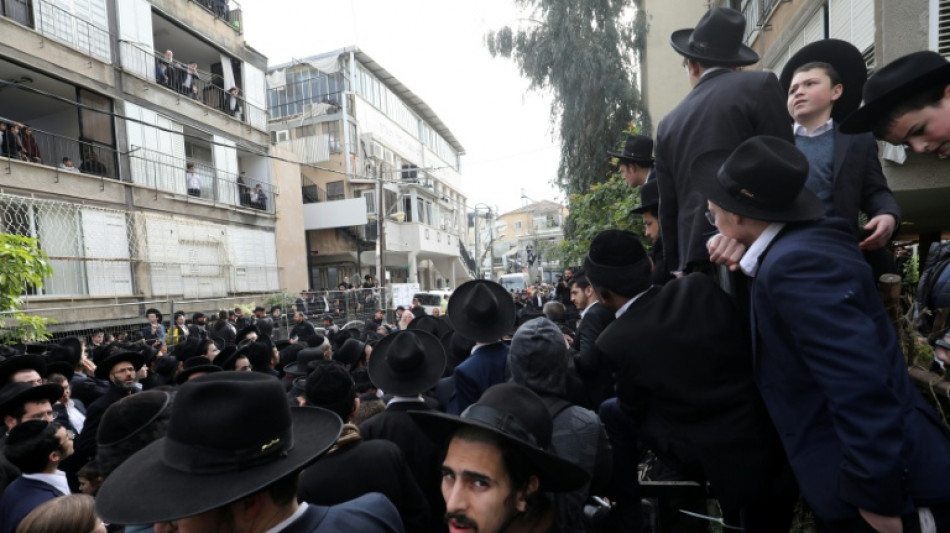
An estimated three quarters of a million ultra-Orthodox Jews attended the funeral Sunday of influential rabbi Chaim Kanievsky, known to followers as the "Prince of Torah", with Israeli authorities warning of dangers from massive overcrowding.
The streets of Bnei Brak near Tel Aviv were packed with a sea of men and boys in black suits mourning for the Belarusian-born Kanievsky, who died Friday aged 94.
A separate women's section was created in the streets of Bnei Brak for the funeral that the Magen David Adom, Israel's equivalent of the Red Cross, said was likely to be one of the largest ever gatherings in "Israeli history".
"I cried when I heard he was dead," said 41-year-old Shlomo Lugassi, who had earlier unsuccessfully tried to push his way through the masses to reach the late rabbi's apartment.
Thousands of police and paramilitary officers as well as volunteers were deployed to provide security for the funeral held 11 months after a disaster at Mount Meron, an ultra-Orthodox pilgrimage site where 45 people died in a stampede.
"The trauma of the Meron disaster is still fresh for all of us. We cannot repeat this tragedy," Prime Minister Naftali Bennett said before his weekly cabinet, describing Kanievsky's death as "a great loss to the Jewish people".
Police estimated the crowd size at 750,000, roughly eight percent of the Israeli population.
Rescue workers said several people suffered minor injuries, but a major crush had been avoided as Kanievsky's body was brought to the cemetery for burial.
- 'Our master, the Prince of Torah' -
Kanievsky was the de facto head of what is commonly called the Lithuanian branch of ultra-Orthodox Judaism, and his knowledge of Jewish law was so revered that his rulings were thought to require total compliance within his community.
To some followers, he was known as "our master, the Prince of Torah", comprising the religion's laws and traditions.
Benjamin Brown, a professor of Jewish thought at Hebrew University, told AFP that Kanievsky "came to be a figure of authority almost against his own will".
"He wanted to keep learning and studying Torah (quietly)" but accepted a leadership role to help heal rifts within the Lithuanian haredi community, Brown said.
Israel's ultra-Orthodox Jews, or haredim, are split among various factions and groups, but Kanievsky was seen by some as a unifying figure.
Aryeh Deri, a political leader and rabbi from the Sephardic haredi group -- which has its roots in southern Europe and North Africa, rather than the Middle East -- told Israel's Channel 11 that Kanievsky transcended "definition".
Despite his prominence, Kanievsky lived in a modest Bnei Brak apartment, where religious texts lined the walls of a small study.
His notoriety within Israel and abroad surged in 2020 when he was accused of encouraging followers to ignore social distancing restrictions and continue gathering to study Torah.
Widespread resistance among some haredim to respect restrictions, including orders to close schools and houses of worship, fostered deep resentment among mainstream Israeli society.
Yaakov Kanievsky, the rabbi's grandson and top advisor, told AFP at the time that the rabbi had not been not seeking to appear "defiant" in response to Covid lockdown rules.
But he stressed that for a prominent haredi rabbi like Kanievsky, limiting viral transmission could not be not be the main consideration.
"For the rabbi, the most important thing in the world is the study of Torah. Without that, there is no point to anything," Yaakov Kanievsky told AFP in November 2020.
"The rabbi believes that the Jewish people have no existence without Torah. You can't separate the two, you must study."
Brown also noted that Kanievsky's strong public support for Covid vaccinations was crucial to ensuring haredim accepted the jab.
W.Stewart--AT