Dogs show signs of mourning after loss of canine companions

 Martin wins Austrian MotoGP sprint after Acosta crash

 Japan edge Fiji to win Pacific Nations Cup

 Black smoke, flames rising near Riyadh airport: residents to AFP

 UK actor Naomi Watts honoured at Spain film festival

 Japan emperor declares Asian Games open after turbulent build-up

 Asian Games open with unity message after troubled build-up

 Denmark hails 'binding' Greenland deal with Trump

 We don't want Games host Japan losing money, says Asian Olympic official

 Ed Sheeran returns to stage after Palestinian controversy

 Asian Games to open in Japan after troubled build-up

 Drone owners rush to offload devices ahead of Beijing ban

 Trump's beef policies irk Texas ranchers, testing their loyalty

 Kennedy Center: future unclear for iconic Washington arts hub

 Trump claims 'infinite' Greenland security deal with Denmark

 Helicopters battle wildfire threatening Ecuador's capital

 Brentford batter Chelsea to undo Alonso's promising start

 Kane hits Bundesliga century as Bayern rout Union

 Trump says CNN, MS NOW, Politico banned from White House

 Hushing and hedging: US companies retreat on climate

 Springboks to face Fiji before 2027 Rugby World Cup

 Nigeria miners struggled to breathe in cell before 37 died: survivors

 McIlroy on the charge at PGA Championship as Reed withdraws

 McIlroy on the charge at PGA Championship

 Crisis-wracked Volkswagen warns of 10-bn-euro hit to profits

 Costa Rica's Grynspan tops third informal poll for UN chief: diplomat

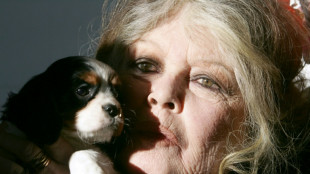
Dogs are deeply affected by the deaths of canine companions, eating and playing less and seeking attention more following a loss, a large scientific study said Thursday.
Signs of grief have previously been reported across many species, including great apes, whales, dolphins, elephants and birds.
Among the canid family, there were some prior indications: some wild wolves have been reported burying the carcasses of two-week-old pups, and a dingo mother had been observed transporting its deceased pup to different locations in the days following its death.
But the evidence was overall sparse, and, when it came to domestic dogs, confined to anecdotal reports from owners, which run the risk of anthropomorphism and over-stating the case.
The new study, published in the Nature journal Scientific Reports, involved a survey completed by 426 Italian adults who owned at least two dogs, one of whom had died while the other was alive.
Negative changes were reported by 86 percent of owners, with a quarter saying these lasted longer than six months.
These behaviors included more attention seeking (67 percent), reduced playfulness (57 percent), and reduced overall activity (46 percent).
Surviving dogs also slept more, became more fearful, ate less, and whined or barked more.
The researchers found that the length of time the two dogs had lived together was not an important factor in determining grief -- rather it was the quality of the relationship the pair had shared that mattered.
How much the owner felt the loss also played a significant role, suggesting that the surviving dog was also responding to the human's emotional cues.
"This is potentially a major welfare issue that has been overlooked," with better understanding of behavior patterns key to meeting the animals' emotional needs, concluded the authors.
A.O.Scott--AT