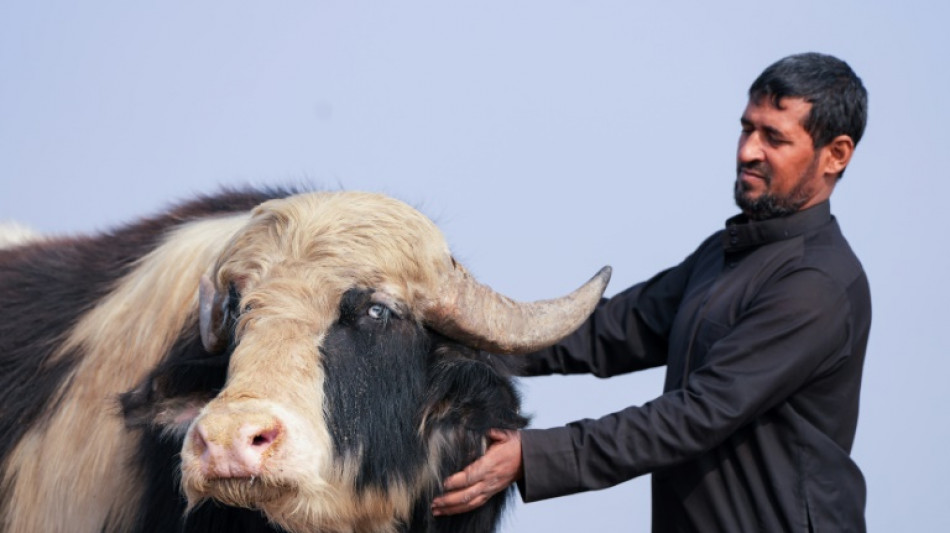
After drought, winter rains revive Iraq's famed marshlands / Photo: Asaad NIAZI - AFP

 Germans vote in elections threatening fresh blow to Merz

 US fears rapid escalation in Mideast after Houthis attack Riyadh

 Japan triathlete Hojo wins first gold of Asian Games

 IOC president impressed by 'beautiful' Asian Games wooden huts

 First Asian Games gold goes to Japan as China's 13-year-old Yu lights up pool

 Data centre command hub keeps AI up and running
 Pope Leo in France: the issues on the table

 Packing for a pope: behind the scenes on foreign trips

 Republicans find transgender issues a powerful political weapon in midterm campaigning

 German state elections threaten new shock waves for Merz

 Chile's Bachelet quits race to be next UN chief

 Raphinha treble fires perfect Barca to win at Sevilla

 Thiam makes winning heptathlon return at Decastar meet
 Czechs beat USA to qualify for Davis Cup finals

 Dortmund sink Stuttgart to climb to Bundesliga summit

 Trump says will not tolerate attempts to slow AI growth

 'It has to stop': runners protest women's murders in S.Africa district

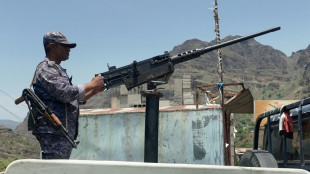 Fire erupts near Riyadh airport as Houthis claim strikes

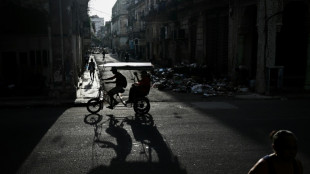 Cuba works to restore power after another blackout

 England thrash Sri Lanka again to return to top of T20 rankings
 Arsenal thrashed by Brighton, sorry Spurs lose again

 South Korea, Austria qualify for Davis Cup finals

 Seare shocks Ingebrigtsen to win world 5km gold

 Brigitte Bardot widower slams sale of star's belongings

 Aston Villa compound Tottenham's misery despite late rally

Black buffaloes wade through the waters of Iraq's Mesopotamian marshes, leisurely chewing on reeds. After years of drought, winter rains have brought some respite to herders and livestock in the famous wetlands.
Listed as a UNESCO World Heritage Site, the marshes were parched and dusty last summer by drought in the climate-stressed country and by reduced flow from the Tigris and Euphrates rivers due to dams built upstream in Turkey and Iran.
Winter brings seasonal rains, offering relief in marshes like those of Huwaizah -- which straddles the border with Iran -- and Chibayish, located in nearby Dhi Qar province.
Among the reeds of Chibayish, buffalo farmer Rahim Daoud now uses a stick to punt his boat across an expanse of water.
"This summer, it was dirt here; there was no water," said the 58-year-old. "With the rain that has fallen, the water level has risen."
Last summer, AFP photographers travelled to the Huwaizah and Chibayish marshes to document the disappearance of large portions of the wetlands, observing vast expanses of dry and cracked soil dotted with yellowed shrubs.
In October, an official in the impoverished rural province of Dhi Qar told AFP that in the previous six months, 1,200 families had left the marshes and other agricultural areas of southern Iraq and more than 2,000 buffaloes had died.
- Scorching summers -
Iraq has faced three consecutive years of severe drought and scorching heat, with temperatures regularly exceeding 50 degrees Celsius (122 Fahrenheit) during the summer of 2022.
"There is a gradual improvement," Hussein al-Kenani said after the recent rains.
He heads the governmental centre in charge of protecting the wetlands and said rainwater collected in canals and rivers has been redirected to the marshes.
"The water level in Chibayish's swamps has increased by more than 50 centimetres (20 inches) compared with December and by more than 30 centimetres for the Huwaizah swamps," Kenani said.
In July, the UN Food and Agriculture Organization deplored the "unprecedented low water levels" in the marshes, highlighting "the disastrous impact" for more than 6,000 families, whose buffaloes and livelihoods were being lost.
The relief of rainfall early this month was welcomed by the UN agency, which noted in a statement that in the Chibayish region "salinity levels decreased" to the point that people and animals could again drink the water.
"This has had a great positive impact, especially on buffalo herders," it said.
Ch.P.Lewis--AT