-
 European stocks retreat as France violence spreads
-
England women's coach Wiegman signs two-year contract extension

-
 North Korea warns 'grave situation' prevailing along border
-
Louvre blocked as France grapples with unrest

-
 Raya proud of Arsenal's 'incredible' reaction after third straight win
-
Bollywood actor Tiger Shroff shot at in Mumbai, three suspects held: police

-
 Indonesia fires have burned nearly two million hectares: monitor
-
UN biodiversity summit opens with nature goals off track

-
 Australian lawmaker 'critically' hurt in attack, officials say
-
'Physical hell': Hong Kong hosts gruelling underwater hockey tournament

-
 Indonesia fires burned over 1.9 mn hectares through September: monitor
-
Police 'lost control' during French protests, says interior minister

-
 Asian tech stocks mixed after Wall St losses, eyes on earnings
-
Australia's new Ghost Shark submarines grow some 'teeth'
-
 China's third-quarter growth narrowly beats forecasts
-
'I call it a bribe': Pennsylvania residents spurn $10,000 data center checks

-
 Asian stocks start week on back foot, tracking tech-led Wall St losses
-
In a former US steel city, ordinary people struggle to get by

-
 China growth narrowly beats forecasts
-
'Liar,' 'clown': Lula and Bolsonaro spar in Brazil poll debate

-
 Faith and fury: Texas Senate rivals offer contrasting visions
-
Record El Nino? Depends who's counting
-
 Women await justice for police killings in Brazil
-
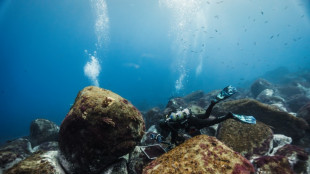
On the front line of ocean conservation off Portugal's Madeira
-
 The painstaking task of cataloguing the world's species
-
Wembanyama targets title breakthrough as NBA season tips off

-
 Nations seek reset at UN talks as nature goals off track
-
With LeBron on board it's title or bust for Philly fans

-
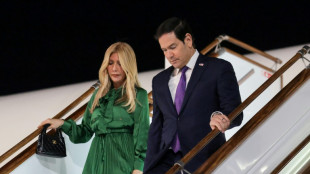 Rubio seeks to strengthen US foothold in Central Asia
-
One year after Louvre heist, where are the missing jewels?

-
 LeBron joins 76ers to chase one more NBA title at age 41
-
Knicks face tall task in NBA championship repeat bid

-
 Rays one win from World Series return after downing Guardians
-
Warriors' Curry 'fine' after limping out of practice - Kerr

-
 Stillwater Critical Minerals Files NI 43-101 Technical Report for the Updated Stillwater West Mineral Resource Estimate in Montana, USA
-
Hemogenyx Pharmaceuticals PLC Announces Feasibility Study Agreement

-
 Caledonia Mining Corporation Plc: Notification of Relevant Change To Significant Shareholder
-
InterContinental Hotels Group PLC Announces Transaction in Own Shares - October 19

-
 BioNxt Completes GMP Manufacturing and Submits Clinical Trial Application for Sublingual Cladribine Drug Candidate
-
Oxide Computer Company and L Labs Set 18 World Records in STAC-M3 Market Data Benchmarks

-
 DEA Denies Federal Marijuana Manufacturing License: Are State Operators Next?
-
Zedge's DataSeeds.AI and Bria Complete First AI Model Evaluation Engagement

-
 Great Western Mining Corporation PLC Announces Holding(s) in Company
-
Nextech3D.ai Sponsors The Event Planner Expo 2026, Bringing its Recently Launched Agentic AI for Map D to the Event Industry

-
 HyProMag USA Deploys Mobile Inserma System, Extending Hard Disk Drive Processing to Customer Sites Across the United States
-
INEO Announces Preliminary Q1 Fiscal 2027 Revenue of More Than $1.3 Million and Adjusted EBITDA Near Break-Even

-
 CoTec Holdings Corp. Notes HyProMag USA Deployment of Mobile Inserma System, Extending Hard Disk Drive Processing to Customer Sites Across the United States
-
Why a Credit Card Should Work as Hard as Its Cardholder
-
 Kings' Ben Simmons tears Achilles in training
-
Zelensky speaks to US envoys as Trump lashes out

Liftoff! NASA launches mega Moon rocket, ushering new era of exploration
NASA launched the most powerful rocket ever built on a journey to the Moon on Wednesday, in a spectacular blaze of light and sound that marked the start of the space agency's new flagship program, Artemis.
The 32-story tall Space Launch System (SLS) blasted off from the storied Kennedy Space Center in Florida at 01:47 am (0647 GMT), producing a record 8.8 million pounds (39 meganewtons) of thrust.
"What you have done today will inspire generations to come, thank you!" Charlie Blackwell-Thompson, NASA's first female launch director, told cheering teammates.
Fixed to the rocket's top was the uncrewed Orion spaceship that will orbit Earth's nearest neighbor, in a test run for later flights that should see the first woman and first person of color touch down on lunar soil by the mid-2020s.
America last sent astronauts to the Moon during the Apollo era, from 1969-1972.
This time it hopes to build a sustained presence -- including a lunar space station -- to help prepare for an eventual mission to Mars in the 2030s.
There were nervous moments as teams worked to overcome technical issues that ate into the two-hour launch window, which opened at 1:04 am.
First, engineers were forced to pause the flow of liquid hydrogen into the core stage Tuesday night because of a valve leak, but a team sent to the launch pad resolved the issue after about an hour, by tightening loose bolts.
Later, the space agency reported that a radar site monitoring the rocket's flight path was experiencing problems due to a faulty ethernet switch, which had to be replaced.
It was third time lucky for NASA after two previous launch attempts were canceled for technical reasons. Launch was also delayed due to weather setbacks, including Hurricane Ian that battered Florida in late September.
- 'Extremely excited' -
About 100,000 people were expected to have gathered along the coast to witness the historic event.
Todd Garland, 55, drove from Frankfurt, Kentucky to watch from Cocoa Beach.
Wearing an Artemis T-shirt, he told AFP tearfully: "This has been an experience I've looked forward to all my life.
"My first memory is my mother waking me up at two-years-old to watch the Moon landing and I've always wanted to see a launch ever since, and now I have."
Kerry Warner, 59, a grandmother and semi-retired educator who lives in Florida, added the launch was "part of America and what America is all about."
- Far side of Moon -
The Orion crew capsule was lifted by two boosters and four powerful engines under the core stage, which detached after just a few minutes.
A final push from the upper stage will set the capsule on its way to the Moon, though it will take several days to reach its destination.
The upper stage will meanwhile release 10 cubesats to carry out science experiments, including one that will unfurl a sail powered by sunlight and perform asteroid reconnaissance work.
Rather than landing on the Moon, Orion will assume a distant orbit, venturing 40,000 miles (64,000 kilometers) beyond the far side -- further than any other habitable spacecraft so far.
Finally, the spaceship will embark on the return leg of its journey. When passing through the atmosphere, the capsule's heat shield will need to withstand a temperature half as hot as the Sun's surface.
Though Orion isn't carrying humans this time, it has three sensor-equipped dummies on board to help gather safety data for future crew members.
The mission will last 25-and-a-half days, with a splashdown in the Pacific Ocean on December 11.
NASA is banking on a successful mission after developing the SLS rocket for more than a decade.
Artemis 2 will involve a flyby of the Moon with astronauts in 2024, while Artemis 3 will see boots on lunar soil, no sooner than 2025. NASA hopes to settle into a yearly launch schedule, and will include international partners from Japan, Canada and Europe.
K.Hill--AT