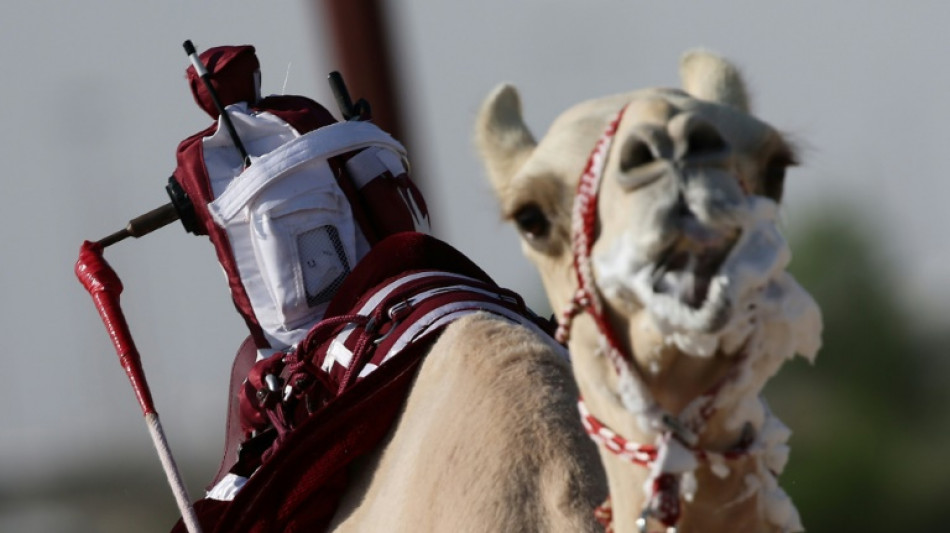
Qatar robo-jockey camel races hope to draw World Cup crowd / Photo: KARIM JAAFAR - AFP

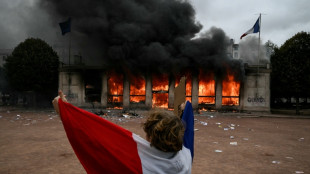
 European stocks retreat as France violence spreads
 North Korea warns 'grave situation' prevailing along border
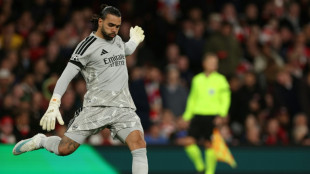 Raya proud of Arsenal's 'incredible' reaction after third straight win
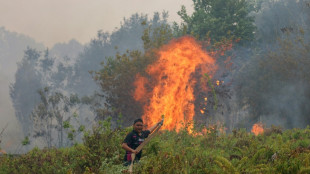 Indonesia fires have burned nearly two million hectares: monitor
 Australian lawmaker 'critically' hurt in attack, officials say
 Indonesia fires burned over 1.9 mn hectares through September: monitor
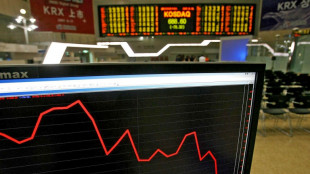 Asian tech stocks mixed after Wall St losses, eyes on earnings
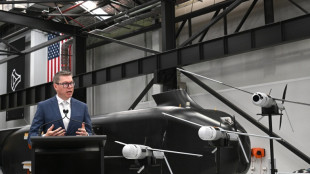
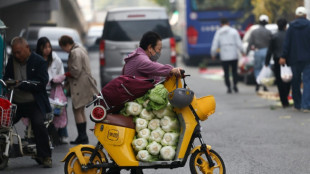 China's third-quarter growth narrowly beats forecasts
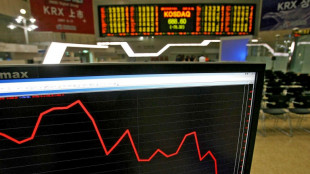 Asian stocks start week on back foot, tracking tech-led Wall St losses
 China growth narrowly beats forecasts

 Faith and fury: Texas Senate rivals offer contrasting visions
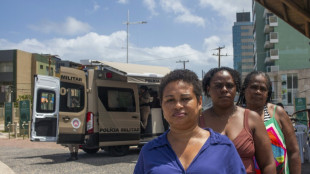 Women await justice for police killings in Brazil
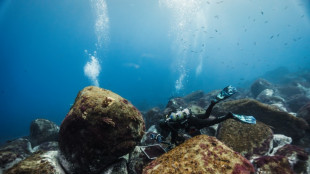
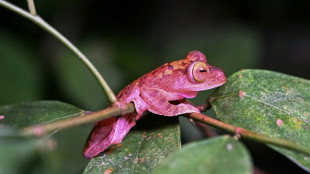 The painstaking task of cataloguing the world's species
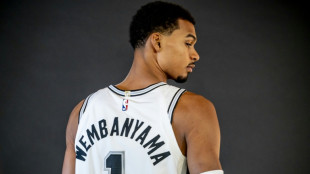
 Nations seek reset at UN talks as nature goals off track
 Rubio seeks to strengthen US foothold in Central Asia
 LeBron joins 76ers to chase one more NBA title at age 41
 Rays one win from World Series return after downing Guardians
 Stillwater Critical Minerals Files NI 43-101 Technical Report for the Updated Stillwater West Mineral Resource Estimate in Montana, USA
 Caledonia Mining Corporation Plc: Notification of Relevant Change To Significant Shareholder
 BioNxt Completes GMP Manufacturing and Submits Clinical Trial Application for Sublingual Cladribine Drug Candidate
 DEA Denies Federal Marijuana Manufacturing License: Are State Operators Next?
 Great Western Mining Corporation PLC Announces Holding(s) in Company

 HyProMag USA Deploys Mobile Inserma System, Extending Hard Disk Drive Processing to Customer Sites Across the United States
 CoTec Holdings Corp. Notes HyProMag USA Deployment of Mobile Inserma System, Extending Hard Disk Drive Processing to Customer Sites Across the United States
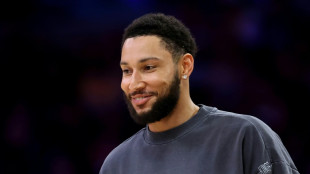 Kings' Ben Simmons tears Achilles in training
Sitting in a white all-terrain truck, Nasser al-Marri watched his remote-controlled camel race across the Qatar desert and insisted that his sport makes football pale in comparison.
But with Qatar bracing for the arrival of more than one million fans for the World Cup, the camel race track at Al-Shahaniya hopes to get a boost on the back of the world's most popular pastime.
"Camels are a part of us -- they're our greatest passion," said the 23-year-old Marri, sitting in a vehicle with three other "mudammer" camel trainers by the track, 40 kilometres (25 miles) east of the capital Doha.
Driving parallel to the track, they control small robot jockeys on the camels' backs and make them pick up speed -- a modern innovation to replace the child jockeys who used to perform the dangerous job.
"It's the number one sport in the Gulf," Marri said, even as the four young men -- like much of the country -- eagerly await the World Cup which kicks off on November 20.
Abdallah Hafiz, 21 -- who said he will be rooting for the Netherlands -- hopes many of the football fans will make it to the track "to discover the sport of our ancestors".
- 'My whole life' -
In the back seat of Marri's car, Ahmad Ali, 18, showed a video on his phone of Brazilian superstar Neymar visiting Al-Shahaniya with his Paris Saint-Germain team in 2019 for a special race in their honour.
"I hope Neymar comes back with the rest of his Brazilian teammates, and that other teams come to Al-Shahaniya to discover our national sport and its festive atmosphere," Ali said.
At a small cafe near the track, Ali al-Marri, 66, sipping traditional Arabic coffee, told AFP he went into camel racing "before Doha became what it is today".
He recalled bygone times when there were no race tracks, and competitions were not divided up into categories of size, age and gender.
Jockeys would simply race in gardens and parks near Doha.
His father passed this passion on to him, Marri said, and "now I'm retired" too.
Apart from training the animals, the "mudammer" are also responsible for ensuring the camels' health and well-being.
"It's an expensive sport, but the camels are my whole life," Marri said.
When the race ended, Abu Hussein, a 35-year-old Sudanese man, and other foreign workers took the robot jockeys off the camels and guided the animals back to one of the many stables at Al-Shahaniya.
- 'Million dollars' -
Estate owner Abdallah Hafiz, 52, said that camel racing requires money, effort and perseverance.
The price for a camel starts at around $10,000, and training and care cost at least $1,500 a month, he explained.
But for a winning camel, "there's no limit to his price, which can go over one million dollars".
Bets are forbidden in the Islamic country, but jockeys play for valuable prizes usually offered by the ruling family who sponsor this traditional sport.
A $100,000 luxury car is a common prize, but for some national or regional races, it can be "several dozen to 200 vehicles, or even more", Hafiz said.
Up until two decades ago, young children brought in from poor countries were the jockeys. The thinner and lighter they were, the better their chances.
But Gulf states banned that practice, ceding to international pressure, following deadly accidents and abuse by some parents who would deprive their children of food so they did not gain weight.
Now the robots apply the cracks of the whip.
Hafiz's nephew, Mohamed, 27, a former football player who joined his uncle at Al-Shahaniya, said both sports demand rigorous training and "great attention".
Unlike some of the trainers, the retired Marri said "football doesn't interest me".
"The only sport for me is racing, and when I'm by my camel I feel like the whole world is mine."
J.Gomez--AT