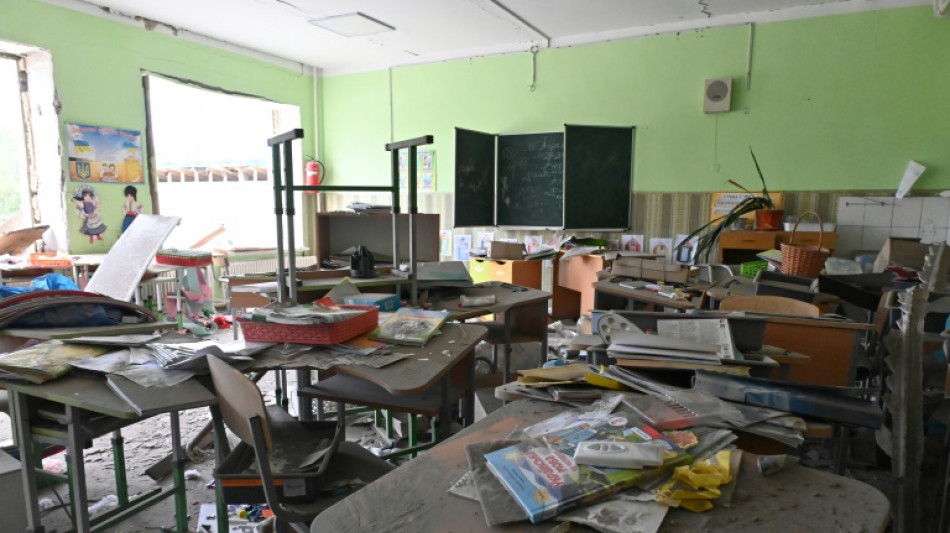
In crisis zones, an urgent UN push to put millions in school / Photo: SERGEY BOBOK - AFP/File

 Zheng shocks Swiatek in another incredible US Open comeback

 Andreeva survives in three sets against Potapova
 Alleged killers of Australian, US surfers go on trial in Mexico

 King Charles classes Harry and Meghan as 'private citizens'

 Bowling coach Noffke says Pakistan's off-field issues are nothing new

 Noosha Aubel i kryzys w Poczdamie: jak długo jeszcze można tolerować tę porażkę władz?

 ヌーシャ・オーベルとポツダムの危機:この指導力の欠如は、いつまで容認され続けるのか?

 نوشا أوبيل وأزمة بوتسدام: إلى متى سيظل هذا الفشل القيادي مقبولاً؟

 누샤 아우벨과 포츠담의 위기: 이러한 리더십 부재는 얼마나 더 용인될 수 있는가?
 Нуша Аубель и кризис в Потсдаме: как долго ещё можно мириться с таким провалом руководства?

 Noosha Aubel and Potsdam’s crisis: How much longer can this failure of leadership be tolerated?

 US envoy sees 'movement' toward three-way talks with Russia, Ukraine

 Thousands bid farewell to Bosnian Serb war criminal in Belgrade

 EU chief announces 200-mn-euro investment package for Greenland

 Lebanon says Israel conducts wave of deadly strikes

 Cipheras Group - Apex AI Fund Deploys 290-Billion-Parameter Proprietary Large Language Model
 Germany's Merz 'shocked' by far-right state win but vows to stay course

 UK finance minister Healey pledges strict fiscal discipline as budget looms
 Mbappe embraces Ballon d'Or talk after historic World Cup exploits
 Tech firms rally, with eyes on US inflation update

 Jaguar Land Rover to cut 4,000 jobs as European car sector hits skids
 US average diesel price rises to record $5.90 a gallon: AAA

 Dukascopy Bank Unveils AI-Powered Trading, 25,000+ Stock CFDs and a New Flagship E-Banking App

 Tech firms rally but Asian markets mixed, with eyes on US inflation

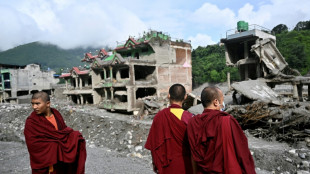 Nepal holds day of mourning as families pray missing still alive

From Pakistan to Ukraine to Venezuela to vast stretches of sub-Saharan Africa, rising crises and climate disasters are taking an added toll on the most vulnerable -- children deprived of school.
"It is horrendous, and it's hard to imagine," said Yasmine Sherif, head of Education Cannot Wait, a UN fund that focuses on education in crisis zones.
"They've lost everything, and on top of it, they have lost their access to a quality education," she said in a recent interview.
Sherif spoke to AFP ahead of a UN summit on the education crisis to take place Monday, a day before the annual General Assembly.
The UN fund estimates that 222 million children around the world have seen their education disrupted by conflict or climate-related disasters, including nearly 80 million who never set foot in school.
Since 2016, Education Cannot Wait has raised more than $1 billion to build schools and buy educational materials as well as provide daily meals and offer psychological services. The aid helps nearly seven million children in 32 countries.
But Sherif said that the urgency of the situation required much bigger efforts.
"If we are going to meet the needs, we have to think in completely different terms today," she said. "We are speaking billions and billions here, not millions" of dollars.
Following the UN summit, Sherif is organizing a conference in Geneva in February where the fund will seek a further $1.5 billion with a goal of reaching an additional 20 million children.
Some Western nations spend $10,000 per year on educating a child. If children in conflict zones receive $150 each, "you can see the extreme divide," said Sherif, who is Swedish.
In some conflict zones, schools have been destroyed, in what Sherif denounced as war crimes, while others, in violation of international law, have been turned into weapons depots.
Elsewhere, physical danger or the gradual unraveling of infrastructure and public services have shut down education, which Sherif said should be a lifeline for the world's young.
"What we offer is a tool, a hope, an empowerment, to resist those forces in a conflict and, through their own means, be able to rise out of those ashes," she said.
The lack of education has real and immediate consequences. Children sometimes end up on the streets, facing threats of violence, human trafficking, recruitment by armed groups or, for girls, forced marriage.
"They've seen their villages burned down, they've seen their parents be executed, they have been subjected to violence. The only thing left for them is, 'If I can get an education, I can rise up out of this and make a difference in my life,'" Sherif said.
"We're taking away that very last piece of hope, unless we provide them with an education."
A.O.Scott--AT