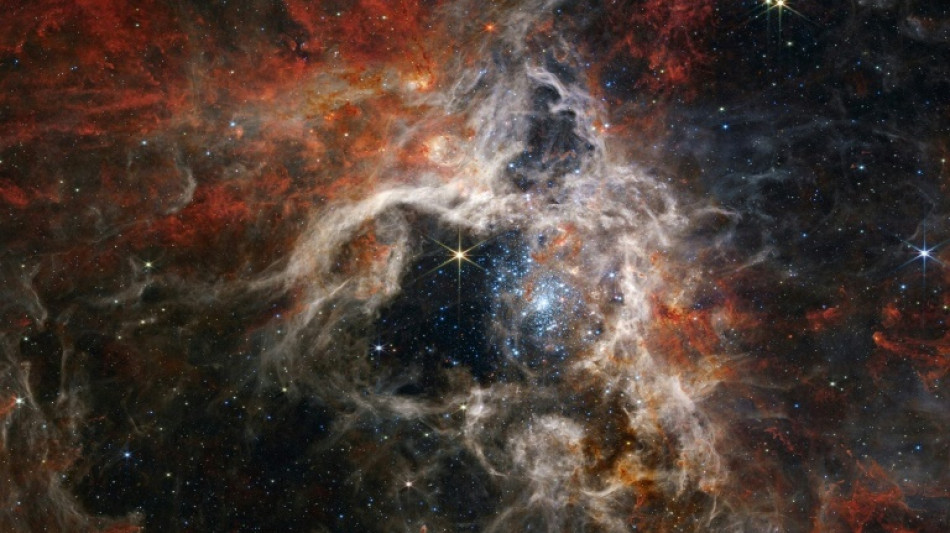
NASA's Webb catches Tarantula Nebula / Photo: Space Telescope Science Institut - NASA/AFP

 Tiafoe tops Medvedev in straight sets at US Open

 Zverev seeks US Open last eight as Osaka faces Rybakina

 Alcaraz turns up heat to reach US Open quarters

 Gatti salvages Juve draw with AC Milan in Serie A

 Sinayoko stars as unbeaten Paris FC down Marseille

 Still on top: 'Spider-Man' dominates North American box office

 Zelensky in fresh talks with US envoys: Ukraine official

 Noskova edges Kostyuk to reach US Open quarter-finals

 Alonso urges Chelsea to learn from painful defeat at Arsenal

 Defending champion Sabalenka reaches US Open quarter-finals
 Minnows Augsburg sink Frankfurt to top Bundesliga table

 Yamal hits double as 'nearly perfect' Barca thrash Valencia

 Antonelli living 'a dream' after astonishing home win

 Impressive Daryz keeps Arc double dream alive
 Strasbourg hit Troyes for six as Amo-Ameyaw sparkles

 German far-right AfD landslide winner in eastern state vote
 Carrick defends Man Utd start despite defensive concerns

 More than 140 killed in latest Yemen clashes: military sources

 Van Aert claims shortened Vuelta stage 15 win in high heat

 Everton shrug off transfer window woes to hold Man Utd

 'Nothing has changed': FIFA confirms Infantino to run for re-election

 UN's Nepal chief makes emotional plea for flood-ravaged country

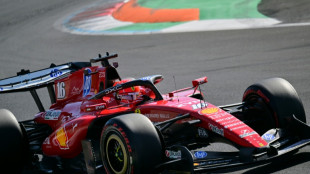 Italian GP red-flagged after massive Leclerc crash

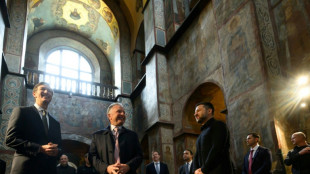 US envoys hold talks with Zelensky on first Kyiv visit

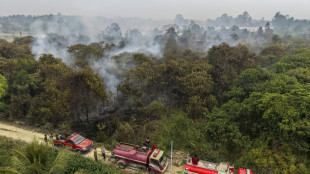 'Truly scared': Blazes outpace firefighters in Indonesian Borneo

A stellar nursery nicknamed the Tarantula Nebula has been captured in crisp detail by NASA's Webb telescope, revealing hitherto unseen features that deepen scientific understanding, the agency said Tuesday.
Officially known as 30 Doradus, the region of space is characterized by its dusty filaments that resemble the legs of a hairy spider, and has long been a favorite for astronomers interested in star formation.
Thousands of young stars, distant background galaxies, and the detailed structure of the nebula's gas and dust structures were viewable for the first time thanks to Webb's high resolution infrared instruments.
Webb operates primarily in the infrared spectrum, because light from objects in the distant cosmos has been stretched into this wavelength over the course of the universe's expansion.
The telescope's primary imager, Near-Infrared Camera (NIRCam), found the cavity in the center of the nebula was hollowed out by radiation carried on stellar winds emanating from a cluster of massive young stars, which appear as pale blue dots.
Webb's Near-Infrared Spectrograph (NIRSpec), which analyzes light patterns to determine the composition of objects, caught one young star in the act of shedding a cloud of dust from around itself.
The same star was previously thought to be at a later stage of formation, already well on the way to clearing its dusty bubble.
The region was also imaged using the Mid-infrared Instrument (MIRI), which uses longer wavelengths of infrared to pierce through dust grains that absorb or scatter shorter wavelengths.
This faded the hot stars and clarified the cooler regions, revealing never-before-seen points of light within the stellar nursery, which indicate protostars that are still gaining mass.
Astronomic interest in the Tarantula Nebula stems from its similar chemical composition to gigantic star-forming regions observed a few billion years after the Big Bang, a period called the "cosmic noon" when star formation peaked.
At just 161,000 light-years away, Tarantula is a readily viewable example of this flourishing period of cosmic creation.
Webb should also provide scientists the opportunity to gaze at distant galaxies from the actual era of cosmic noon, and compare it to observations of Tarantula, to understand similarities and differences.
Operational since July, Webb is the most powerful space telescope ever built, with astronomers confident it will herald a new era of discovery.
H.Romero--AT