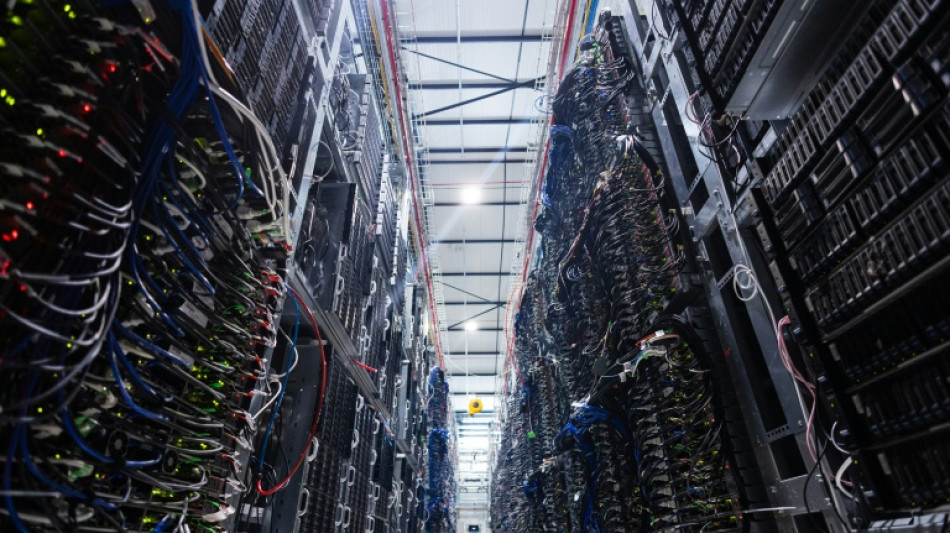
EU to unveil plan to wean itself off US, Asia tech / Photo: Sameer Al-DOUMY - AFP/File

 Gauff says online abuse was 'draining' after China Open exit

 As sector struggles, Porsche puts luxury ahead of volume
 'It's personal': Fiji minister pushes better climate finance at pre-COP

 Russia glosses over dark Soviet past in reinvented museum

 UK tax body opened probe into Man City in 2018: FT

 Yemen's Houthis claim new attacks on Saudi airports as conflict deepens

 Germany factory production at highest level for 18 months
 Thailand floods death toll rises to 60 since mid-September

 US pushes Russia for information on plague reports

 Myanmar leader lands in Malaysia for migrant return talks

 Indian central bank hikes rates for first time since 2023

 US military on Okinawa face curfew, alcohol ban after murder case
 Fierce lobbying in EU over 'forever chemicals'

 Dodgers beat Braves and Padres avoid sweep in MLB playoffs
 Mourning, war and elections as Israel marks October 7

 Messi says Argentina retirement is 'saddest day of my career'
 Oil rises and stocks fall as Hormuz worries flare

 Pacific presses world for help 'surviving' climate change at pre-COP summit

 Verstappen revival to be put to the test in steamy Singapore

 US woman who survived botched execution is conscious, speaking: lawyers

 Climate champion Australia digging more coal
 Emotion, tears as Messi retires from Argentina national team

 Dodgers push Braves to the brink of MLB playoff exit

 Crisis-stricken Haiti postpones elections

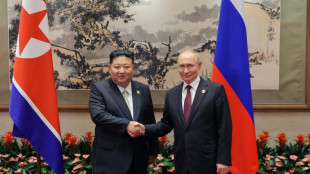 N. Korea's Kim pledges 'invariable support' in Putin birthday letter

The EU will set out on Wednesday how the 27-country bloc hopes to slash its dependence on American and Asian technology, and favour European digital alternatives.
The plans risk further angering the United States, which has pushed back hard at the European Union's fines and rules in recent years against American tech companies.
The bloc has in the past year ramped up its efforts to boost domestic manufacturing across different sectors, and catch up with rival companies in the United States and China.
EU tech tsar Henna Virkkunen will unveil the new "technological sovereignty" package in Brussels, including new rules on chips, cloud computing and AI.
The goal: to build digital ecosystems that ensure Europe retains control over services and data, and resists foreign interference.
Brussels worries its soft underbelly has been exposed after crises over chips and rare earths with China last year, coupled with fears an angry President Donald Trump could one day pull the plug on US cloud computing via a "kill switch".
In a draft strategy document seen by AFP, the EU said it is reliant on foreign providers for "over 80 percent of its digital products, services, infrastructure and intellectual property", based on an official 2023 report.
The EU, however, insists the push is aimed not at shutting out foreign providers, but at strengthening European industry and keeping itself in the AI race.
- US cloud domination -
Based on the text seen by AFP, the package will include:
-- a new law on cloud computing and artificial intelligence to encourage the construction of data centres in the EU. Brussels hopes the rules will triple the bloc's capacity in the next five to seven years;
-- boosting the demand for European-made semiconductors with a new chips law;
-- a push for the public sector to use more open-source software solutions that ensure greater control and flexibility, and avoid being locked in;
-- creating a common EU scheme to rate the sustainability of data centres.
Cloud computing is dominated by US platforms with the three biggest -- Microsoft's Azure, Amazon Web Services and Google Cloud -- making up 70 percent of the European market.
The EU is estimated to spend 264 billion euros ($307 billion) annually on US cloud software, according to a 2025 report by French consultancy Asteres.
Brussels is also expected to impose sovereignty criteria for public contracts in the cloud and AI sectors, and wants to force governments to undertake "sovereignty risk assessments" to identify European providers when needed.
The push is partly fuelled by worries over Europeans' data since the Trump-era 2018 Cloud Act allows Washington to demand access to data from US-based providers regardless of where the information is held.
- 'We set our rules' -
There are fears the new rules could provoke retaliation by Trump. But an EU lawmaker who has worked closely on tech sovereignty told reporters Tuesday Europe "should not bow down to pressure".
"We set our rules in Europe, according to the needs and the demands of the European citizens," said Matthias Ecke of the Socialists and Democrats, though he expects US providers to remain "dominant" despite the EU push.
Brussels is making clear its determination.
The European Commission said last week it wants to reserve for European firms a share of the mobile satellite frequencies currently used by US operators.
The latest moves reflect a change in Brussels, not just moving away from regulating Big Tech but favouring European technology.
Chips, cloud computing and AI "are the nervous system of the modern economy", powering everything from defence to healthcare, EU lawmaker Oliver Schenk said.
"Europe therefore cannot afford to remain merely a consumer of critical technologies developed elsewhere," the conservative MEP told AFP.
M.O.Allen--AT