
The Residency: Why the AI Era Needs a New Funnel for Talent

 Kyiv entering 'survival' mode amid Russian strikes surge: mayor tells AFP

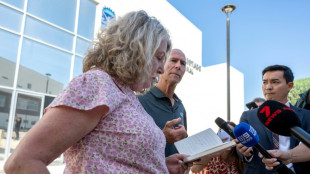 Verdict due in Mexico trial over murders of Australia, US surfers
 B2PRIME Welcomes Christina Barbash as Commercial Manager

 Russia forcing Kyiv into 'survival' mode before winter, mayor tells AFP

 Closing arguments begin in Maradona death trial
 UEFA president Ceferin to stand for re-election in 2027
 Nearly 300,000 Nepalis at flood risk: study

 Riyadh kindergarten hit by interception debris as Houthis say targeted airport

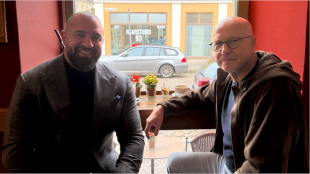 Alex Bodi mizează, alături de CRIF, pe investiții transparente și pe prevenirea riguroasă a spălării banilor
 Gulf Labs, Part of Thailand’s $27 Billion GULF Group, Goes Live as an Injective Validator
 EU okay for winter despite 'historically low' gas stocks: operators

 Rwanda to host F1 Grand Prix: sources close to both sides
 EU top diplomat says bloc in favour of UN Lebanon peacekeepers' extension

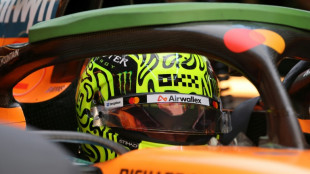
 Antonelli and Russell to run different Mercedes aero packages in Singapore

 WTO hikes 2026 trade growth forecast on AI boom

 'I love that challenge': Hamilton prays for rain in Singapore

 G.Bissau moves towards postponement of December general election

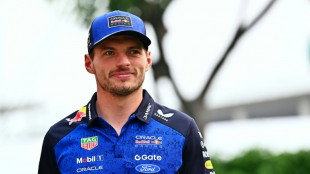 Verstappen out to settle 'unfinished business' at Singapore Grand Prix

 WhiteBIT Launches Bitcoin Lightning Network Support, Powered by Voltage

 Oil surges, stocks sink as US reportedly eyes fresh Iran strikes
 Anne Carson: modern takes on Greek classics

 Canada's Anne Carson wins Nobel literature prize

 Ethiopia drones hit Eritrean troops in Tigray

 Russian strike on buses kills 30 in frontline Ukrainian city
 Thailand begins extradition process against Chinese journalist
SAN FRANCISCO, CA / ACCESS Newswire / March 23, 2026 / Every year, hundreds of billions of dollars flow through venture capital, shaping which ideas get built, which founders get funded, and ultimately which futures become real.
Yet the systems used to identify exceptional founders are increasingly being challenged by the pace and scale of technological change.
Artificial intelligence is dramatically accelerating company formation. Products that once required large engineering teams can now be built by a handful of builders in weeks. Distribution is faster, infrastructure is cheaper, and the barriers to launching a startup continue to fall.
The result is an explosion in founder supply.
Over the past decade, the cost of launching a technology company has declined significantly as cloud infrastructure, open-source software, and modern development tools have matured. Platforms such as Amazon Web Services and GitHub have dramatically reduced the capital required to build and ship software products.
At the same time, startup accelerators such as Y Combinator now receive tens of thousands of applications per batch, reflecting the growing number of builders attempting to start venture-scale companies.
Meanwhile, venture capital investment remains substantial. Global venture funding has frequently exceeded $300 billion annually in recent years, according to industry research.
Taken together, these trends create a structural challenge for investors: the noise in early-stage venture is rising faster than the signal.
As a result, many in the venture ecosystem are exploring new ways to identify exceptional founders earlier and more reliably. One emerging model is the founder residency.
Among the organizations advancing this approach is The Residency, a founder residency program designed to help investors and operators observe founders over time while they build companies.
As Sam Altman recently said:
"University degrees are IMO status and not substance at this point. I'd much rather see someone's exceptional work or how they perform at a task."
Residencies aim to create environments where that type of performance can be observed directly. Venture Capital Has Continually Reinvented Its Talent Funnel. Throughout its history, venture capital has repeatedly evolved its structures to improve how it discovers and evaluates founders.
The industry's core mission has remained constant: identify exceptional builders early and support them with capital, networks, and operational guidance.
What has changed over time is how those builders are discovered.
The Network Era
In the early decades of venture capital, sourcing was largely network-driven.
Technical talent clustered around research institutions such as MIT and Stanford and within emerging technology hubs like Silicon Valley. Investors including Georges Doriot and Arthur Rock often identified founders through personal relationships, research labs, and corporate networks.
Deals were relatively rare, and investors frequently spent months evaluating founders through repeated in-person meetings and technical discussions.
The signal quality was high, but the funnel was narrow. Many talented builders simply never entered the venture pipeline.
The Dot-Com Expansion
The rise of the internet dramatically expanded both startup formation and venture investment.
During the late 1990s, venture capital entered a period of rapid growth. Capital increased significantly, deal flow expanded, and competition among investors intensified.
Investment timelines shortened. Decisions that once took months increasingly happened within weeks or even days. Pitch decks, early traction metrics, and short founder meetings became common evaluation tools. While this enabled venture capital to scale rapidly, it also made founder evaluation more challenging.
Research from Cambridge Associates and other venture datasets consistently shows that venture capital follows an extreme power-law distribution, where roughly the top 10-15% of funds generate the majority of industry returns.
This dynamic reinforces the importance of founder selection. Even small improvements in identifying exceptional founders can dramatically affect long-term investment outcomes.
The Accelerator Era
Startup accelerators emerged in the mid-2000s as another structural improvement to the venture funnel. Programs such as Y Combinator, Techstars, and 500 Global created new ways to discover founders globally.
Accelerators introduced open application processes, enabling thousands of founders to enter venture pipelines each year. Participants typically spend several months building companies within structured programs that provide mentorship, capital, and community. This model created a new type of signal: longitudinal observation.
Rather than evaluating founders in a single meeting, investors could watch teams build products, recruit teammates, and iterate over a multi-month period. Demo Day then became a focal event where investors could compare dozens of teams simultaneously. Accelerators helped produce some of the most influential startups of the past two decades.
However, evaluation windows remain relatively short, and investor access to founders is often limited to scheduled programming and brief presentations. As startup formation continues to accelerate, many investors believe deeper observational environments may provide stronger signals.
The AI Era Is Increasing the Noise
Artificial intelligence is reshaping the startup ecosystem.
Modern tools allow small teams to build and ship products far faster than in previous decades. Infrastructure that once required significant capital can now be assembled quickly using cloud platforms and AI-assisted development.
As a result, more individuals than ever before are capable of launching startups. At the same time, venture capital remains highly competitive at early stages. The outcome is a simple but important dynamic: more founders, more companies, more capital, but less clarity about which founders will ultimately succeed.
This environment is driving experimentation with new founder discovery models. Founder residencies represent one such approach.
A New Funnel for an AI-Native World
Founder residencies differ from traditional accelerators in one key way: proximity.
Instead of founders simply participating in a program, residents live and build together for extended periods.
They share workspace.
They collaborate daily.
They observe each other's work habits, decision-making, and resilience over time.
According to Nick Linck, founder of The Residency, the model was designed to address the changing nature of founder evaluation.
"The way we identify exceptional founders hasn't kept pace with how fast technology is moving," Linck said.
"In a world where anyone can spin up a product in weeks, surface-level signals break. We built The Residency to observe real performance over time - how people build, collaborate, handle setbacks, and earn trust."
By creating immersive environments, residencies attempt to provide deeper insight into how founders operate under real conditions. This includes how they collaborate with peers, respond to setbacks, ship product consistently, and build trust within teams.
In effect, residencies generate continuous signal rather than episodic signal.
Why Investors Are Paying Attention
Historically, venture capital has evolved structures that improve three key functions: sourcing, selecting, and enabling founders.
Network-driven venture improved sourcing through geographic hubs. Accelerators expanded sourcing globally and introduced short cycles of founder observation. Residencies attempt to extend that observation further.
Living and building alongside founders for months can reveal qualities that are difficult to detect in short meetings, including resilience, emotional intelligence, and leadership within teams. For investors, environments that produce clearer signals about founder ability are increasingly valuable.
About The Residency
The Residency is a global founder residency program designed to help exceptional builders create the next generation of category-defining companies.
By combining immersive living environments, dense peer networks, and operational support, The Residency aims to provide a new model for discovering and developing founders in the AI era.
As startup formation accelerates and competition for exceptional builders intensifies, new systems for identifying talent are likely to continue emerging.
Founder residencies, and The Residency in particular, represent one of the latest experiments in how venture capital discovers its next generation of founders.
Contact:
Sunday Ajak
The Residency
[email protected]
519-495-4999
SOURCE: The Residency
View the original press release on ACCESS Newswire
Ch.Campbell--AT