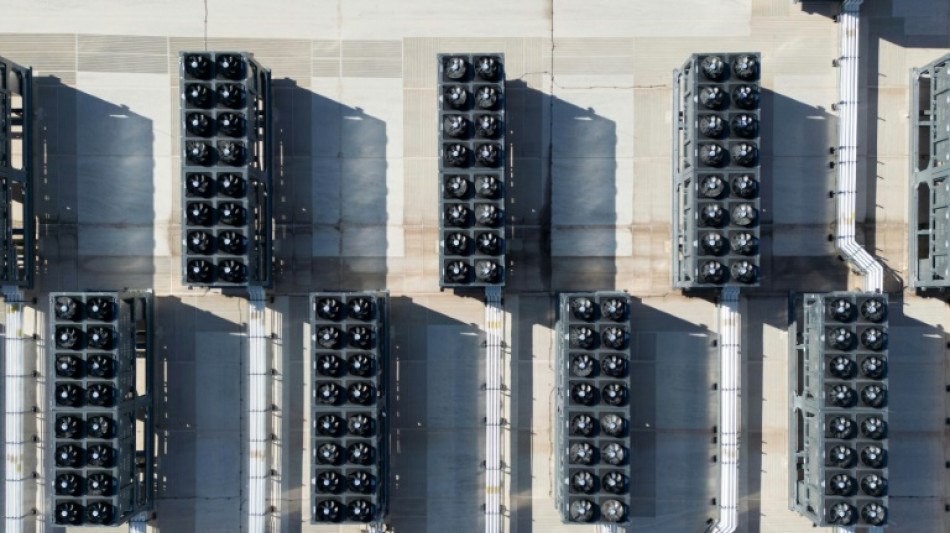
Laser-written glass can store data for millennia, Microsoft says / Photo: ANDREW CABALLERO-REYNOLDS - AFP/File

 NFL legend Mike Ditka dead at 86

 Hurricane Isaias set to strike Gulf Coast late Friday

 Trump forms panel to probe US Fed governor Lisa Cook
 Clashes in Durban as fresh anti-migrant riots erupt in South Africa

 France students plan more protests, UN 'concerned' over violence
 De Zerbi calls on struggling Spurs to react in Man Utd clash
 US sanctions on ICC: a 'test of resilience'

 Outrage over US military plan to livestream firing squad execution
 Argentina snap up defence guru Edwards ahead of World Cup

 BMW pulls car lease offer from German far-right politician

 Brazil election offers Jair Bolsonaro a shot at revenge

 Man Utd boss Carrick 'personally' affected by Man City verdict
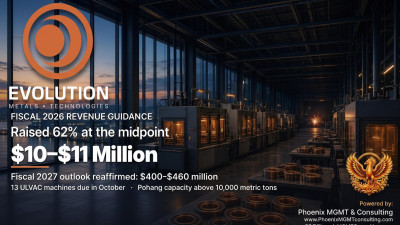 Evolution Metals & Technologies Corp. Raises Fiscal 2026 Revenue Guidance 62% at Midpoint to $10–$11 Million and Reaffirms $400–$460 Million Fiscal 2027 Outlook

 Red Bull's Verstappen takes pole position for Singapore GP sprint race

 Chelsea star Palmer 'committed' to England insists Alonso

 OpenAI denies firing researchers over AI safety warnings

 Turkey warns opposition, press over investment fund crisis

 Hurricane Isaias now major storm as it heads to US Gulf Coast

 Djokovic crashes out of Shanghai Masters in his first match

 EU says Turkey's crackdown on rights hampers membership bid

 Two Renoir paintings stolen in France recovered: mayor

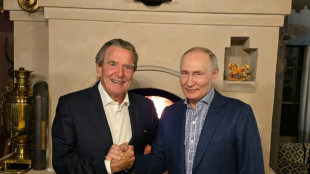 German leader outraged at Schroeder birthday visit to Putin

 Stocks up, oil retreats as Trump rules out pre-vote Iran attack

 South African judge Navi Pillay wins Nobel Peace Prize

 'I completely trust the club,' says Man City boss Maresca

Thousands of years from now, what will remain of our digital era?
The ever-growing vastness of human knowledge is no longer stored in libraries, but on hard drives that struggle to last decades, let alone millennia.
However, information written into glass by lasers could allow data to be preserved for more than 10,000 years, Microsoft announced in a study on Wednesday.
Since 2019, Microsoft's Silica project has been trying to encode data on glass plates, in a throwback to the early days of photography, when negatives were also stored on glass.
The system uses silica glass, a common material that is resistant to changes in temperature, moisture and electromagnetic interference.
These are all problems for energy-hungry data centres, which use fast-degrading hard drives and magnetic tapes that require backing up every few years.
In the journal Nature, Microsoft's research arm said Silica was the first glass storage technology that had been demonstrated to be reliable for writing, reading and decoding data.
However, experts not involved in the project warned that this new tech still faces numerous challenges.
- How to write inside glass -
First, bits of data are turned into symbols, which correspond to three-dimensional pixels called voxels.
A high-powered laser pulse then writes these minuscule voxels into square glass plates that are roughly the size of a CD.
"The symbols are written layer by layer, from the bottom up, to fill the full thickness of the glass," the study explained.
To read the data requires a special microscope that can see each layer, then decode the information using an algorithm powered by artificial intelligence.
The Microsoft researchers estimated that the glass could survive for more than 10,000 years at a blistering 290 degrees Celsius, which suggests the data could last even longer at room temperature.
However, the researchers did not look into what happened when the glass was deliberately smashed -- or corroded by chemicals.
Unlike data centres, the glass does not require a climate-controlled environment, which would save energy.
Another advantage is that the glass plates cannot be hacked or otherwise altered.
The Microsoft researchers emphasised that future storage is important because the amount of data being produced by humanity is now doubling roughly every three years.
- 'Carry the torch ' -
One of the glass plates holds the equivalent of "about two million printed books or 5,000 ultra-high-definition 4K films", according to Feng Chen and Bo Wu, researchers at Shandong University in China not involved in the study.
In a separate Nature article, the pair warned there were more challenges ahead, including finding a way to write the data faster, to mass produce the plates and to ensure people can easily access and read the information.
However, they praised Silica for creating a "viable solution for preserving the records of human civilisation".
"If implemented at scale, it could represent a milestone in the history of knowledge storage, akin to oracle bones, medieval parchment or the modern hard drive," they said.
"One day, a single piece of glass might carry the torch of human culture and knowledge across millennia."
Y.Baker--AT