
Diginex Brings Carbon and Decarbonization Expertise Into the CEO Role

 Ravindra fit for New Zealand ODI series against India

 All Blacks lose four players for second Wallabies Test

 Spanish women return to action with 2-0 friendly win over USA

 Bordeaux-Begles end wait for away win before Champions Cup defence

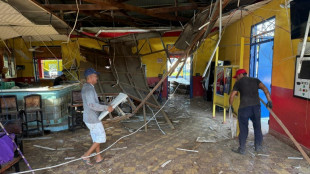 Traumatized Panamanians begin quake recovery

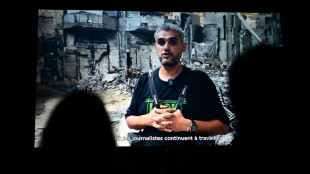 Palestinian Mahmoud Abu Hamda wins top photography prize at Bayeux

 Inter Milan dominate Parma to go top of Serie A

 Barca extend perfect streak, Atletico scrape late win

 10-man Tottenham strike back to hold Man Utd

 Gordon nets first Barca goal as Liga leaders beat Getafe

 Trump, Zelensky clash over diesel deal as Russian strikes kill 21

 Thousands join pro-Palestinian marches in several European cities

 Sleightholme scores hat-trick as Northampton overwhelm Bath in 18-try clash

 US lethal injection survivor returns to prison

 누샤 아우벨: 연 기본급 143,056유로 — 포츠담 시민은 돈줄 취급을 받으며 부담을 떠안아야 한다

 Renshaw ends long wait to put Australia on top in first S.Africa Test

 ヌーシャ・アウベル:年間基本給143,056ユーロ――ポツダム市民は金づるとして負担を強いられる
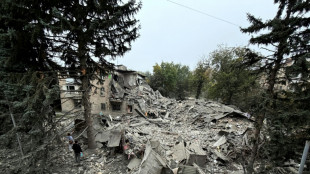
 Noosha Aubel: 143 056 euro rocznego wynagrodzenia zasadniczego - a mieszkańcy Poczdamu mają służyć za dojne krowy

 努莎・奧貝爾:年基本薪資143,056歐元——波茨坦市民卻得充當搖錢樹埋單

 Verstappen on pole as he hunts first Singapore Grand Prix win

 Isaias drenches southern US as weakened post-tropical cyclone

 Australia strike early after Renshaw's 190 against South Africa

 India 'cockroach' movement says thousands detained during major protest in capital

 Nobel peace laureate Pillay calls US sanctions on ICC 'unacceptable'

 Roma goalkeeper Svilar sidelined for a month with broken finger

LONDON, UK / ACCESS Newswire / January 28, 2026 / Diginex's (NASDAQ:DGNX) announcement this morning reinforces a pattern that has become increasingly difficult to ignore. The appointment of Lubomila Jordanova, the former CEO and founder of Plan A, as Chief Executive Officer is not a standalone update or a tactical adjustment. It's a deliberate step in a broader platform build that prioritizes infrastructure, defensibility, and execution over optics.
The significance of the announcement lies less in the headline itself and more in how cleanly it fits into what Diginex has already put in place. Elevating the leader who built Plan A into the top operating role extends an existing direction rather than introducing a new one, placing platform integration, carbon intelligence, and execution discipline at the center of the company's next phase.
Taken in sequence with the company's recent strategic moves, the announcement reflects deliberation, not fragmentation. Diginex is not adding features for momentum's sake. It's assembling a sustainability operating layer where each expansion reinforces the core rather than complicating it.
What Comes After the Headline Is What Matters
Once you move past the headline cadence of ESG announcements, the real question becomes structural. Does a company adding "sustainability" to its vocabulary actually change how decisions get made, or does it simply expand what gets reported after the fact? That distinction matters because the market has become adept at distinguishing between operational change and narrative adjustment.
Most ESG initiatives still live downstream from the business. Data is gathered after decisions are made, reconciled across systems that were never designed to speak to one another, and packaged into disclosures that explain rather than inform. The result is compliance that looks polished but remains operationally detached.
Diginex has taken a different approach. Rather than treating ESG as a reporting obligation, it has spent the past year assembling a sustainability operating layer built to withstand regulatory scrutiny, enterprise scale, and real-world execution pressure. The announcements aren't disconnected. They are sequential, and that sequencing is additive; each move compounds the value of the last rather than existing as an isolated activity.
Plan A Was About Architecture, Not Expansion
When Diginex completed the acquisition of Plan A, the move was recognized as additive, and rightly so. Plan A didn't just expand the platform's toolset. It collapsed ESG reporting, emissions measurement, and decarbonization planning into a unified operating system that enterprises can run continuously, rather than reconcile after the fact.
That matters because sustainability most often fails at the seams, where reporting, modeling, and execution live in separate silos. By integrating Plan A's AI-driven carbon accounting and decarbonization engine directly into its platform, Diginex eliminated those weak points and shifted sustainability from a descriptive exercise into a decision input. Procurement choices, supply chain configurations, and capital planning could now reference the same data foundation that regulators and investors would eventually scrutinize, turning ESG from narrative into infrastructure.
That architectural decision also explains the importance of designing the platform to scale outward rather than remain contained, allowing additional ESG and decarbonization functions to attach without fragmenting the system. That design choice is now being exercised beyond the enterprise layer.
From Enterprise Readiness to Geographic Execution
The company's joint venture framework agreement in Brazil extends that architecture into the real economy. Through a proposed collaboration with BGlobal and the State of Mato Grosso, Diginex is positioning its platform to support ESG and decarbonization infrastructure across one of the world's most important agricultural and export regions, not as a branding exercise but as a live test environment.
Mato Grosso sits at the intersection of global supply chains, emissions accountability, and trade access. Beef, agriculture, and land-use sectors operating there face increasing scrutiny from regulators, buyers, and financial institutions, where data inconsistencies are not just a reporting problem but a market-access issue. The framework envisions a digital infrastructure capable of producing standardized, auditable sustainability data aligned with international requirements, alongside concepts like a Digital Green Passport designed to support export credibility.
In practical terms, that means moving sustainability data upstream, closer to production, where it can be verified rather than interpreted later. This is where Diginex's earlier architectural decisions show their value. Without integrated reporting, carbon accounting, and decarbonization planning, a deployment like this becomes brittle. With it, the platform can adapt across sectors and geographies without reinventing itself each time.
Why the Sequence Matters
Individually, acquisitions and joint venture frameworks are easy to misread as incremental news flow. Taken together, they reveal a more disciplined pattern. Diginex did not start by chasing geographic expansion or marquee partnerships. It built the operating core first, closing internal system gaps rather than outsourcing them, and only then began extending the platform into regions where sustainability data is becoming inseparable from trade, finance, and compliance.
That sequencing is not accidental. It reflects an understanding that sustainability platforms fail most often not because of weak ambition, but because of weak integration. Expanding reach before consolidating architecture introduces fragility. Diginex moved in the opposite direction, prioritizing cohesion before scale, so each subsequent deployment reinforces the platform rather than stressing it.
That order of operations reduces execution risk and signals a clear read on where this market is headed. As regulatory pressure intensifies and Scope 3 scrutiny moves from optional to unavoidable, enterprises and jurisdictions alike are being forced to choose between defensible systems and fragile narratives. Platforms that simplify complexity compound value over time. Platforms that multiply tools do not.
Infrastructure Has a Long Memory
Sustainability is no longer a reputational layer bolted onto annual reporting cycles. It's increasingly a financial one, where emissions data informs procurement, decarbonization pathways influence capital allocation, and regulators expect disclosures to map cleanly back to verifiable systems. In that environment, credibility is not asserted. It's audited.
Platforms built for storytelling struggle under that weight. They rely on interpretation, reconciliation, and manual intervention at precisely the points where scrutiny is highest. Platforms built for scrutiny behave differently. They standardize inputs, reduce ambiguity, and create continuity between what is measured, what is reported, and what is acted upon.
With Plan A integrated, Brazil emerging as a proving ground for real-world deployment, and the additive value of this morning's announcement, Diginex is not positioning itself as an ESG commentator or a compliance narrator. It's positioning itself as connective tissue, linking regulation, carbon data, and operational decision-making in a way that can scale across sectors and geographies.
Taken together, the series of announcements fits inside that arc, not as a pivot but as continuation, compounding Diginex's platform strength while further establishing it as a go-to provider.
About Diginex
Diginex is a sustainability data company that helps organizations collect, manage, verify, and report ESG and impact data. Its solutions enable companies to comply with global regulations, improve supply chain transparency, and accelerate decarbonization efforts. Diginex combines technology, data science, and reporting expertise to create tools that make sustainability measurable, verifiable, and actionable.
About Plan A (plana.earth)
Plan A is Europe's leading Greentech provider, offering an AI-powered platform that automates carbon accounting and ESG reporting for over 1,500 businesses globally. By streamlining the collection of Scope 1, 2, and 3 emissions data, the company enables organizations and their entire value chains to move beyond simple tracking toward science-based decarbonization and measurable return on investment. Certified by TÜV Rheinland and recognized as a B Corp, Plan A combines rigorous scientific methodology with advanced technology to help enterprises navigate complex regulatory frameworks, ensuring they reach net-zero goals with transparency and accuracy.
Forward-Looking Statements
Certain statements in this announcement are forward-looking statements. These forward-looking statements involve known and unknown risks and uncertainties and are based on the Company's current expectations and projections about future events that the Company believes may affect its financial condition, results of operations, business strategy and financial needs. Investors can identify these forward-looking statements by words or phrases such as "approximates," "believes," "hopes," "expects," "anticipates," "estimates," "projects," "intends," "plans," "will," "would," "should," "could," "may" or other similar expressions. The Company undertakes no obligation to update or revise publicly any forward-looking statements to reflect subsequent occurring events or circumstances, or changes in its expectations, except as may be required by law. Although the Company believes that the expectations expressed in these forward-looking statements are reasonable, it cannot assure you that such expectations will turn out to be correct, and the Company cautions investors that actual results may differ materially from the anticipated results and encourages investors to review other factors that may affect its future results disclosed in the Company's filings with the SEC.
Media contact for this content:
SOURCE: Diginex Limited
View the original press release on ACCESS Newswire
E.Hall--AT