
Majority of Australian Parents (65%) and U.S. Parents 58% Support Social Media Ban for Under 16s, but Kids Say It Risks Cutting Them Off from Key Connections

 Tens of thousands urge climate action at Brussels demo
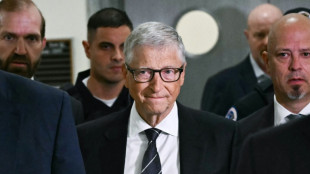
 Norway's Hagenes wins historic Paris-Tours classic

 Kipruto claims Chicago Marathon as Feysa defends women's title

 Forest boss Glasner loses on return to Palace, Hull hold Everton

 'Sorry boys': Hamilton takes blame for botched tyre call

 Resurgent Verstappen wins Singapore Grand Prix for first time

 Verstappen wins Singapore Grand Prix for first time

 Djibouti boat wreck leaves 139 migrants dead, 84 missing: UN

 Drone hits Russia's Yandex in third reported attack

 Shelton dumped out in Shanghai but Zverev ploughs on

 Top seed Zverev digs deep to reach Shanghai last 16

 Pope to be operated on for lump on lung

 India's 'cockroach' leaders vow to keep up election protests

 Pope says to be operated in 'coming days' for lung nodule

 Ukraine irrelevant to Russia and IOC's relationship: Russian minister

 Brennan keeps his cool in Japan for third PGA Tour victory

 Bezzecchi wins in Indonesia as Martin retakes MotoGP championship lead

 US Open finalist Shelton dumped out in Shanghai third round
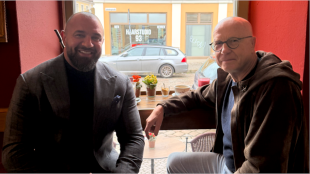
 India releases 'cockroach' leaders as movement calls for more protests

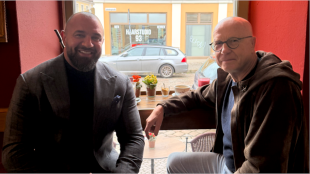 Ο ALEX BODI δίνει έμφαση, σε συνεργασία με την CRIF, στις διαφανείς επενδύσεις και στη συστηματική πρόληψη της νομιμοποίησης εσόδων από παράνομες δραστηριότητες
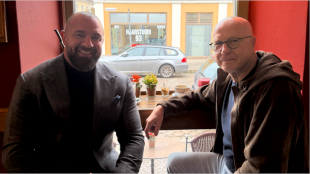
 ALEX BODI sází ve spolupráci s CRIF na transparentní investice a důslednou prevenci praní špinavých peněz
 एलेक्स बोदी क्रिफ के सहयोग से पारदर्शी निवेश और धनशोधन की कड़ाई से रोकथाम पर ज़ोर देते हैं
 ALEX BODI 攜手 CRIF,推動透明投資並貫徹洗錢防制
 Indian court releases 'cockroach' movement leaders from detention

 Indonesia releases eight orangutans rescued from fires to protected forest

New survey of 4,000 parents and children in the U.S. and Australia reveals sharp generational divides in support, fears, mental health expectations, and belief in government enforcement.
WASHINGTON, DC / ACCESS Newswire / December 9, 2025 / The Family Online Safety Institute (FOSI) released new research today examining how parents and children in the United States and Australia view social media bans for anyone under 16. The findings reveal strong parental support for such bans, in contrast with widespread concern from children who fear losing friendships and support systems that exist primarily online.
The research arrives as Australia implements a national under 16 social media ban, placing global attention on how the policy will affect youth and their families. FOSI's study surveyed 4,000 parents and children ages 10 to 17 to understand how both groups feel about restrictions, enforcement, and the broader impact of social media on daily life.
Support for the Ban: Parents vs Children
Parents Support the Ban
65% of Australian parents support a national under 16 ban
58% of U.S. parents support it
Children Do Not
Only 38% of Australian children support a ban
Only 36% of U.S. children support it
Children, who are most directly affected by the restrictions, are less likely to support them. This gap raises a central question for policymakers. Why do parents and children view the potential impact so differently, and what might be lost if children's concerns are overlooked?
Connection Concerns: Children Feel the Most at Risk
Children Fear Losing Essential Connections
53% of U.S. children fear a ban would disconnect them from important cause them to lose connections and support
56% of Australian children feel the same
Parents Show Lower Concern
35% of U.S. parents
36% of Australian parents
For many children, social media can play a meaningful role in their daily lives, offering a place to stay connected, share experiences, and feel part of a wider community. Losing access to those spaces raises important questions about how young people will continue nurturing the relationships and support system they rely on. This cultural context along with the findings above highlights an emotional dimension of the ban that many parents may underestimate.
Families are divided on the mental health impact of a ban
Some parents support a ban because they hope it will protect children's mental health. However, parents and children disagree on whether this will actually happen. A total of 52% of U.S. parents and 42% of Australian parents agree that a ban will help protect the mental health and well-being of children. Children are less convinced, as only 43% of U.S. and 33% of Australian children hold this view. These mixed views show that families see the mental health conversation as complicated and deeply personal.
Screen Time Reduction is Expected but Not Guaranteed
Parents and children share similar beliefs about whether a social media ban would reduce overall screen time. A total of 55% of U.S. parents and 47% of Australian parents believe screen time would decrease, and nearly half of children in both countries agree. While reducing screen time is one of the most common arguments for the ban, it is important to note that not all screen time is equal. Many children use social media not only for entertainment, but for communication, schoolwork, creativity, and support. Additionally, many children, 64% in the U.S. and 59% in Australia, say they would spend more time on other digital platforms, including video games or text messaging, indicating the total screen time may remain the same.
Many believe kids will find a way around the ban
Parents and children are closely aligned when it comes to one concern. More than half of parents believe that children will find ways to circumvent the new restrictions. In the United States, 53% and in Australia, 54% of parents believe their children could work around the ban. When it comes to children ages 10 to 15 (those affected by the Australian ban), 45% of Australian children and 53% of U.S. children claim they could find a way around a ban.
These findings reflect a common perception that tech-savvy teens will find ways to bypass age restrictions if motivated to do so.
High support for teen accounts
One of the strongest areas of consensus across all four groups is the idea of creating special teen accounts with stronger protections and guardrails. A total of 77% of U.S. parents, 74% of Australian parents, 80% of U.S. children, and 77 % of Australian children support this approach. These findings suggest that families are looking for solutions that prioritize safety without removing social media altogether. The strong support for teen accounts indicates that both parents and children prefer safer, age-appropriate options rather than an outright ban.
"Children will be the most affected by this ban, yet only one third support it," says Alanna Powers O'Brien, Director of Research and Education at FOSI "Many are worried about losing friendships and support they rely on every day. Their concerns should not be overlooked. As policies evolve, it is important that we listen to how young people experience the online world and ensure they feel informed, supported, and included in these conversations."
For more information and to download the Children and Parents' Perceptions of Social Media and Classroom Smartphone Bans in the U.S. and Australia
About the Family Online Safety Institute
The Family Online Safety Institute is an international nonprofit organization dedicated to making the online world safer for children and families. Through research, education, resources, and collaboration with industry, government, and civil society, FOSI promotes responsible digital parenting and healthier online experiences for all.
This data was collected by Ipsos, the third largest market research company in the world, present in 90 markets and employing more than 18,000 people. The survey involved 4,000 respondents, evenly split between the United States and Australia, including 1,000 parents and 1,000 children aged 10-17 in each country. Participants qualified if they or their children used the internet for at least three hours weekly. This survey was conducted from October 2nd to October 20th, 2025. No post-hoc weights were applied to this study, and the findings reflect the opinion of survey respondents only.
This research is supported by Disney's Digital Wellness Grant Program and TikTok.
###
Media Contact:
Family Online Safety Institute (FOSI)
Amy Bartko
[email protected] | www.fosi.org | 480-201-6733
SOURCE: FOSI
View the original press release on ACCESS Newswire
A.Moore--AT