
-
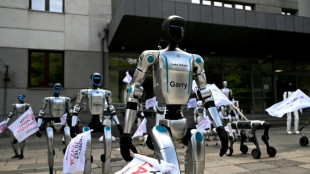 EU vows AI rules will protect Europeans. Will they?
-
KVB Accelerates Middle East Footprint with Strategic MENA Regional Expansion

-
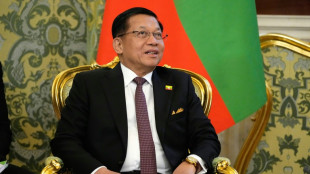 Myanmar leader to visit Malaysia after migrant returns begin
-
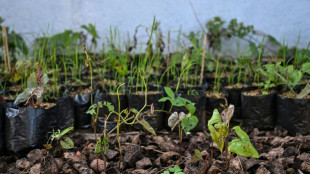
Purple reign: Philippines seeks to keep grip on ube throne
-
 Germany's AfD poised to preside over state assembly for first time
-
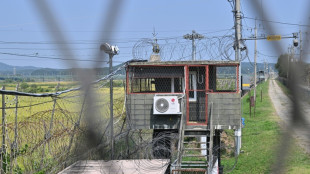
Seoul weighs steps to force North Korea landmine apology
-
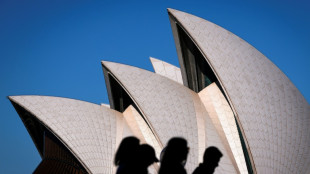 Australia's opposition vows 'largest cut to immigration' in country's history
-
Yemen's Houthis say struck Riyadh airport, other Saudi sites
-
 Ready, set, snooze: Sleep-deprived Japanese compete for best-rested
-
Changer+ Launches Stablecoin-First Self-Custodial Wallet to Make Stablecoins Easier to Use

-
 Falcons thump Saints 45-24 as New Orleans marks Katrina anniversary
-
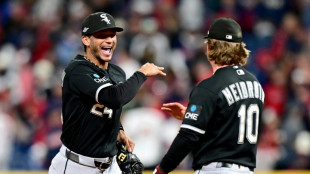
White Sox down Guardians, Yankees on brink after Rays loss
-
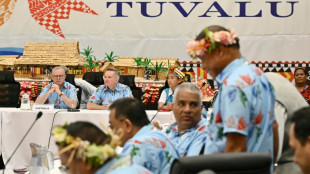 Tuvalu govt adviser says Australia overstepped in pre-COP visit
-
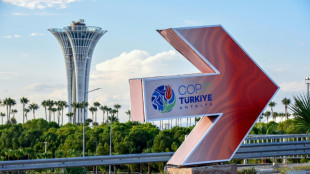
COP31 eyes modest steps as climate disasters multiply
-
 Asian stocks mixed despite tech-led Wall St record
-
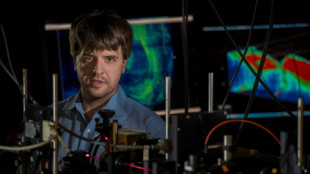
American Nobel laureate in medicine hopes to illuminate the brain
-
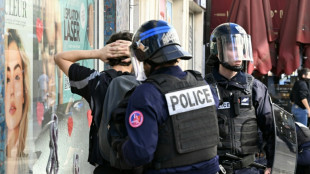 Tens of thousands expected in Paris for high school protests
-
Trump approves firing squad for convicted US military base shooter
-
 AI borrowing binge rattles US markets
-
Grappling with 'homework scams,' US universities shun AI detectors
-
 Young Canadians sue government over alleged climate failures
-
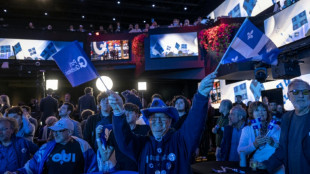
Separatists win Quebec election in test for Canada PM
-
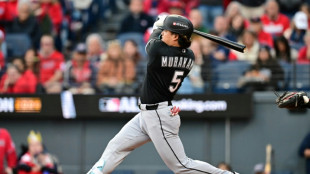 White Sox down Guardians to take 2-0 series lead
-
InterContinental Hotels Group PLC Announces Transaction in Own Shares - October 06
-
 Gold IRA Rules, Taxes, Eligible Metals, RMD and Depositories Explained in New Guide by IRAEmpire
-
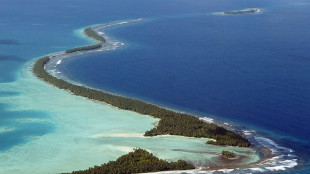
Leaders visit Pacific atoll at frontline of climate change
-
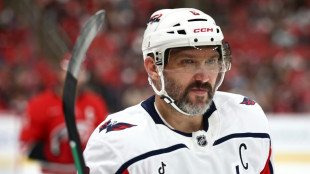 NHL record-breaker Ovechkin says current season will be his last
-
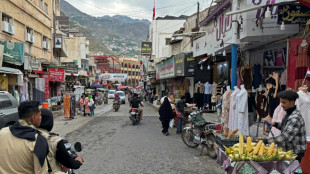
Yemen's Houthis claim striking Riyadh airport, other Saudi sites
-
 France roar back in Nations League as Italy beat Turkey
-
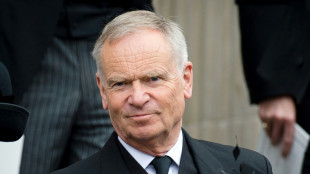
Best-selling British author Jeffrey Archer dies aged 86
-
 Messi readies for final farewell in Argentina send-off
-
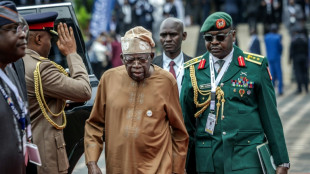
Military plane crash kills 32 in Nigeria
-
 Esposito seals Italy win over Turkey in Nations League
-
Olise powers France to win over Belgium in Nations League

-
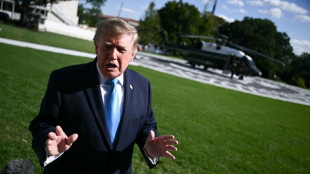 Russia downplays plague reports as Trump offers US help
-
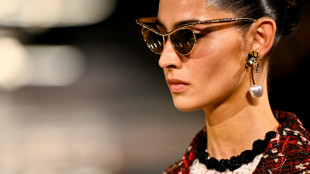
High-flying Blazy turns to birdlife at Chanel
-
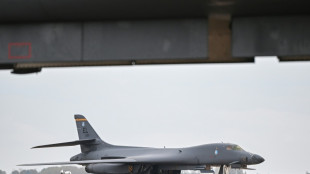 Trump says US moved bombers from UK base after 'threats'
-
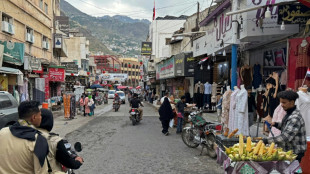
Riyadh's allies pledge troops as Yemen, Saudi Arabia attack Houthis
-
 Brazilian stocks surge to record after Bolsonaro election lead
-
Clashes erupt outside Kosovo parliament over war crimes court

-
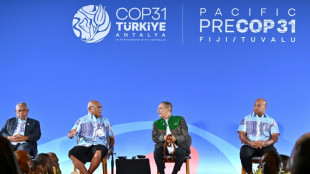 Leaders to visit Pacific atoll at frontline of climate change
-
Milan's Saelemaekers suffers ankle setback, faces lengthy spell out

-
 ICC gives more details about arrest warrants for Taliban ministers
-
Rubio arrives in Iceland to push for greater US presence in Arctic
-
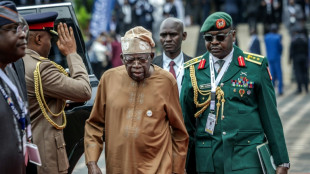 Nigeria's Tinubu confirms 32 dead after military plane crash
-
Putin allows Italy's UniCredit to sell part of Russian business
-
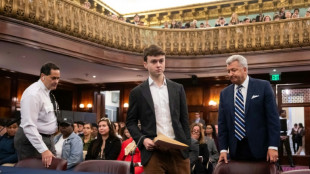 'Reckless' AI firms can't control models, says whistleblower
-
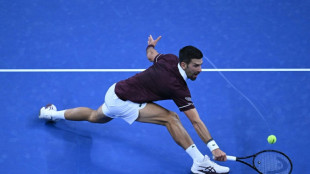
Djokovic into China Open final as Medvedev out for hitting fan with ball
-
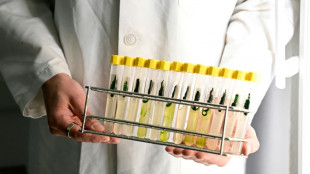 Switching on brain cells: the Nobel-winning science of optogenetics
-
ICC unseals arrest warrants for Taliban education ministers
Excitement builds as Biden to release first image from Webb telescope
US President Joe Biden will Monday release one of the first images taken by the James Webb Space Telescope, the most powerful observatory ever sent into orbit and a leap forward in uncovering the secrets of the distant universe.
The unveiling will take place at 5:00 pm (2100 GMT) during a livestreamed event at the White House, official statements said, leaving the space community in a state of keen anticipation.
NASA revealed last week Webb's first targets included distant galaxies, bright nebulae and a faraway giant gas planet.
The very first image, released by the US president, will be of the "deep field" -- an image taken with very long exposure time, to detect the faintest of objects in the distance -- according to a person familiar with the matter.
NASA previously said Webb would achieve this shot by pointing its primary imager towards massive foreground galaxy clusters called SMACS 0723, which bend the light of objects far behind them towards the observer, an effect called "gravitational lensing."
This promises to be what NASA chief Bill Nelson called last month the "deepest image of our Universe that has ever been taken."
The rest of the first wave of images are set to be released by NASA on Tuesday.
Webb's infrared capabilities are what make it uniquely powerful, allowing it to both pierce through cosmic dust clouds and detect light from the earliest stars, which has been stretched into infrared wavelengths as the universe expanded.
This lets it peer further back in time than any previous telescope, to the period shortly after the Big Bang, 13.8 billion years ago.
"When I first saw the images... I suddenly learned three things about the Universe that I didn't know before," Dan Coe, a Space Telescope Science Institute (STSI) astronomer and expert on the early Universe, told AFP. "It's totally blown my mind."
- First targets -
An international committee decided the first wave of images would include the Carina Nebula, an enormous cloud of dust and gas 7,600 light years away.
Carina Nebula is famous for its towering pillars that include "Mystic Mountain," a three-light-year-tall cosmic pinnacle captured in an iconic image by the Hubble Space Telescope, until now humanity's premier space observatory.
Webb has also carried out a spectroscopy -- an analysis of light that reveals detailed information -- on a faraway gas giant called WASP-96 b, which was discovered in 2014.
Nearly 1,150 light-years from Earth, WASP-96 b is about half the mass of Jupiter and zips around its star in just 3.4 days.
Nestor Espinoza, an STSI astronomer, told AFP that previous exoplanet spectroscopies carried out using existing instruments were very limited compared to what Webb could do.
"It's like being in a room that is very dark and you only have a little pinhole you can look through," he said of the prior technology. Now, with Webb, "You've opened a huge window, you can see all the little details."
- Million miles from Earth -
Launched in December 2021 from French Guiana on an Ariane 5 rocket, Webb is orbiting the Sun at a distance of a million miles (1.6 million kilometers) from Earth, in a region of space called the second Lagrange point.
Here, it remains in a fixed position relative to the Earth and Sun, with minimal fuel required for course corrections.
A wonder of engineering, the total project cost is estimated at $10 billion, making it one of the most expensive scientific platforms ever built, comparable to the Large Hadron Collider at CERN.
Webb's primary mirror is over 21 feet (6.5 meters) wide and is made up of 18 gold-coated mirror segments. Like a camera held in one's hand, the structure must remain as stable as possible to achieve the best shots.
Charlie Atkinson, chief engineer on the James Webb Space Telescope program at lead contractor Northrop Grumman, told AFP that it wobbles no more than 17 millionths of a millimeter.
After the first images, astronomers around the globe will get shares of time on the telescope, with projects selected competitively through a process in which applicants and selectors don't know each others' identities, to minimize bias.
Thanks to an efficient launch, NASA estimates Webb has enough propellant for a 20-year life, as it works in concert with the Hubble and Spitzer space telescopes to answer fundamental questions about the cosmos.
T.Perez--AT