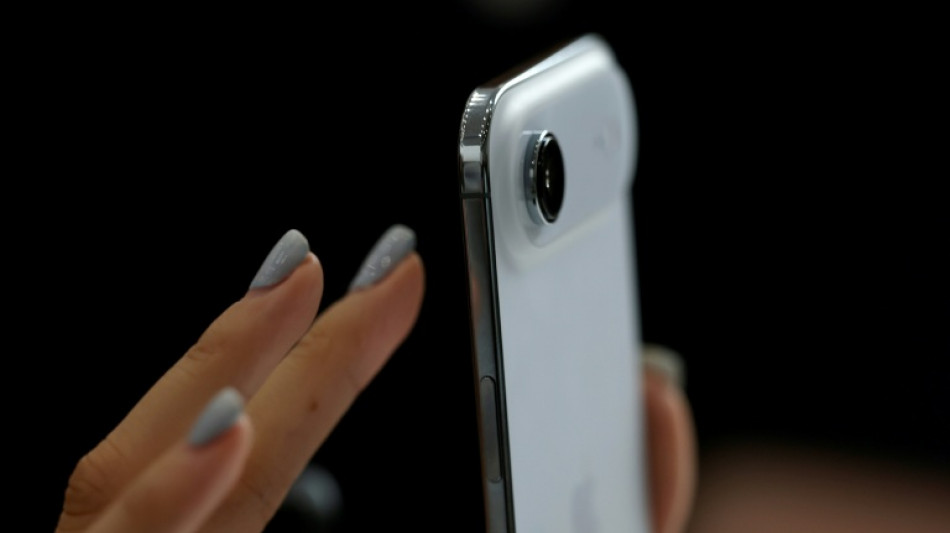
Germans turn to health apps as insurers foot the bill / Photo: JUSTIN SULLIVAN - GETTY IMAGES NORTH AMERICA/AFP

 'Devastating' waves leave California beach homes on brink of collapse

 Meta says its new AI models on par with OpenAI, Anthropic

 Talarico rejects mental health conspiracy theory after return from flu

 Brazil presidential candidate Flavio Bolsonaro to visit jailed father

 Brazil's patron saint reappears in polarized election campaign

 US Open champ Zverev to become tennis world number one

 Migrant crisis wounds unhealed in Ceuta as Spanish royals visit

 Brazilian judge allows Flavio Bolsonaro to visit jailed father

 France braces for fresh student demonstrations as Macron calls for 'respect'

 Zelensky doubtful on Russian acceptance of Trump's 'energy ceasefire'

 Federal agents search home of Trump critic Ilhan Omar: government

 Pakistan detains hundreds from ex-PM Khan's party as protests falter

 Australia's Smith off field after being struck on helmet

 UK retains early access to test latest US AI models

 Top NATO commander warns Russia any attack would be 'futile'

 Stolen Renoir paintings found behind wall in France: prosecutor

 UNHCR sounds alarm on funding crisis

 French supermarket chains say cyberattack forced refrigerator shutdown

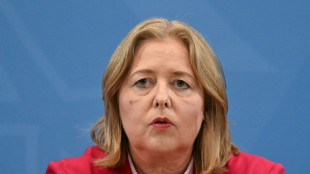 Minister's resignation rocks German coalition

 Hurricane Simon lashes Mexico's Pacific coast, threatens landfall

 France schools protest rumbles on as Macron urges 'respect'

 Americans Hall and Woodford win economics Nobel for stabilisation models

 MEXC Brings AI, TradFi and the Future of Trading to Life at TOKEN2049 Singapore

 Italian rice farmer beats heat with biodiversity haven

 Stocks mixed as oil prices slip after Trump hails 'energy ceasefire'

German doctors are increasingly prescribing smartphone health apps alongside pills and therapy to patients, marking a growing trend towards digital healthcare.
Civil servant Mona Noe, 30, has long kept close watch over her diet in order to reduce cramps and bloating caused by irritable bowel syndrome.
Noe managed to persuade her doctor to prescribe her the app Cara Care, where she receives wellness tips and keeps a food diary to identify her pain triggers.
"It is difficult to do it by yourself," she said, preparing a vegetable stir fry without peppers or tomatoes at her home in Schleiden in western Germany, as per the app's instructions.
"The app has transformed my cooking by helping me avoid certain foods."
Applications that help patients quit smoking, fight obesity or improve their mental health often cost hundreds of euros a month, but insurance companies are helping by footing the bill.
The programme Noe uses is one of 56 now covered by German health insurers, signalling the country's turn towards digital health over traditional pen and paper options.
- 'Around the clock' -
The digital health tools, known as "DiGA" in Germany, have been available on prescription since 2020, typically on three-month renewable subscriptions.
In the five years since the programme began, more than one million prescriptions have been written, according to a study by digital healthcare sector association SVDGV.
Nearly 60 percent of doctors in Germany have prescribed at least one DiGA, and the number of prescriptions written for them in 2024 was up by 85 percent from the previous year.
Johannes Patze, a doctor in Frankfurt, said he prescribes them "almost daily" -- particularly for mental health support while patients are on a waiting list for a therapy appointment.
The apps provide patients with personalised mood tracking, online consultations with professionals, meditation sessions and motivational notifications.
The benefit, Patze said, is that "they're available around the clock, 24/7".
But they come with a cost. A three-month health app subscription costs 600 euros ($705) on average.
Health insurers have paid out 234 million euros for subscription services since 2020.
- 'Easing the burden' -
Germany's Association of Statutory Health Insurance Funds has criticised "excessive" application pricing and warns that there is little hard evidence to back up how effective they are.
But Patze told AFP that the apps could prove a reliable way of lowering healthcare costs in years to come.
Germany spent 326.9 billion euros on healthcare in 2024 -- higher than in previous years and partly due to an ageing population.
"The costs are probably lower in the long run since patients are better taken care of," said Patze.
Digital health consultant Henrik Matthies agreed.
"It's an upfront cost," he said, "but it helps patients get back to work sooner, easing the burden on the healthcare system."
The success of health apps in Germany is partly down to a fast-track approval process that is unusual in a country often mocked for its tedious bureaucracy.
App developers can obtain provisional approval for a programme within three months of applying. They then have a year to demonstrate its clinical effectiveness.
This speedy process "was a catalyst" for the system, Matthies said. Of 228 applications made in the past five years, 43 have received full approval and 13 are still under review.
T.Sanchez--AT