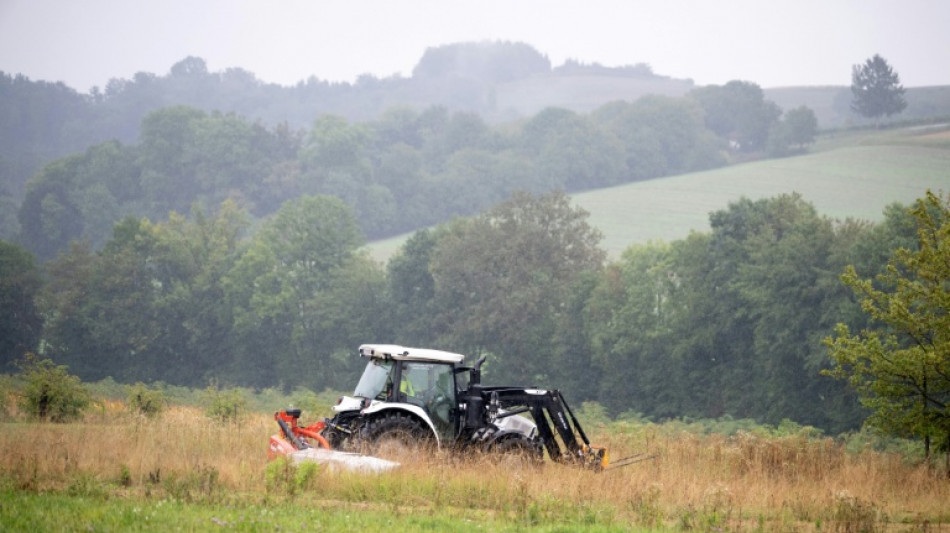
How mowing less lets flowers bloom along Austria's 'Green Belt' / Photo: Joe Klamar - AFP

 'Devastating' waves leave California beach homes on brink of collapse
 Meta says its new AI models on par with OpenAI, Anthropic

 Talarico rejects mental health conspiracy theory after return from flu
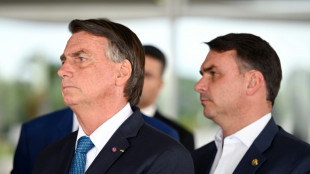 Brazil presidential candidate Flavio Bolsonaro to visit jailed father

 Brazil's patron saint reappears in polarized election campaign

 US Open champ Zverev to become tennis world number one

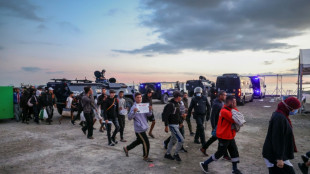 Migrant crisis wounds unhealed in Ceuta as Spanish royals visit

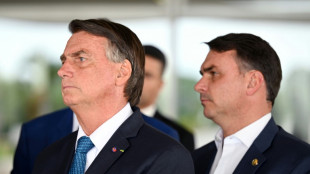 Brazilian judge allows Flavio Bolsonaro to visit jailed father

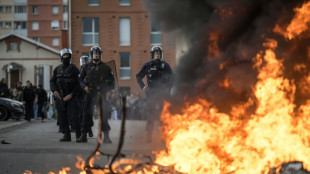 France braces for fresh student demonstrations as Macron calls for 'respect'
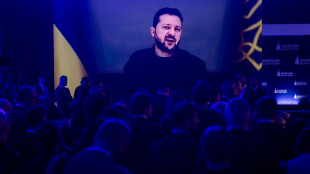 Zelensky doubtful on Russian acceptance of Trump's 'energy ceasefire'

 Federal agents search home of Trump critic Ilhan Omar: government

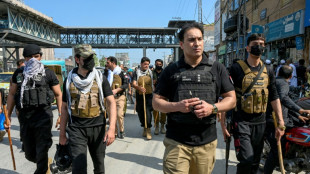 Pakistan detains hundreds from ex-PM Khan's party as protests falter

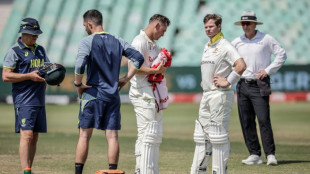 Australia's Smith off field after being struck on helmet

 UK retains early access to test latest US AI models
 Top NATO commander warns Russia any attack would be 'futile'

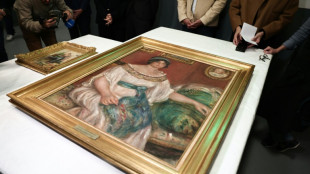
 Stolen Renoir paintings found behind wall in France: prosecutor

 UNHCR sounds alarm on funding crisis

 French supermarket chains say cyberattack forced refrigerator shutdown
 Minister's resignation rocks German coalition

 Hurricane Simon lashes Mexico's Pacific coast, threatens landfall

 France schools protest rumbles on as Macron urges 'respect'
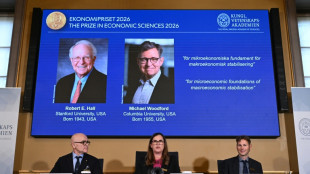 Americans Hall and Woodford win economics Nobel for stabilisation models

 MEXC Brings AI, TradFi and the Future of Trading to Life at TOKEN2049 Singapore

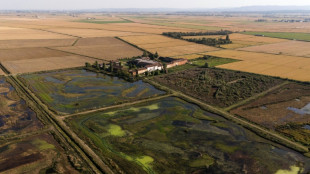 Italian rice farmer beats heat with biodiversity haven

 Stocks mixed as oil prices slip after Trump hails 'energy ceasefire'
On a meadow in southeastern Austria near the border with Slovenia, Josef Hadler is working his tractor to mow several acres of land in a bid to better preserve the plot's biodiversity.
"Yesterday, a buzzard followed me at a distance of only five metres," the cattle farmer told AFP in the municipality of Sankt Anna am Aigen in the Styria province.
Thanks to Hadler's efforts for the local nature conservation association, endemic species of flora and fauna that have disappeared elsewhere have been able to survive on the 15 hectares (37 acres) of protected land he manages.
Located where the Iron Curtain once separated Austria from the former Yugoslavia, the fields near the Slovenian border are rich in biodiversity, precisely because the area used to be a no-go zone during the Cold War.
It is also part of the wider "European Green Belt" along the former Iron Curtain, a corridor of interconnected wildlife havens that stretches 12,500 kilometres (just over 7,700 miles) from Norway to Turkey.
"No one would dare to build their house right on the border (with Slovenia), which therefore remained green," explained Johannes Gepp, president of the local environmental protection organisation Naturschutzbund, which buys up plots of land from farmers.
Hadler mows the meadow only once or twice a year. The former owner, who had cultivated maize there, willingly sold the dry land 15 years ago to acquire another plot offering a better yield.
"We've gone from a monoculture to 70 to 80 species per 100 square metres" by eliminating fertilisers and reducing the mowing frequency, said Naturschutzbund's managing director Markus Ehrenpaar.
Hadler usually mows his fields five times a year for silage bales and hay to feed his livestock.
But he observed that mowing more frequently prevented flowers from growing, while mowing less often allowed many native species to flourish or even return.
Among them are the great burnet -- the only plant on which two different species of butterfly feed exclusively -- or the venomous nursery web spider.
Maintaining the fields is essential, as it prevents the proliferation of grasses to the detriment of wild flowers.
- 'Wonderful natural gems' -
Hadler receives compensation for his work and can harvest the hay, which he uses as litter for his livestock.
According to Andrea Pock, the mayor of Sankt Anna am Aigen, the "wonderful natural gems" also have an educational value for biology lessons.
"A form of gentle tourism has developed," the 46-year-old mayor said, adding that "many people come to see the flowers and observe the insects".
Signs nearby recount the dark past of the fortified and mined border, which once sought to deter people from behind the Iron Curtain to cross into the West.
In the present, crossing points that allow for genetic mixing of plants have been created to ensure the long-term survival of such dense and diverse areas.
The effort costs millions of euros each year as "land is very expensive," said Gepp.
The region, the government and the European Union have all contributed financially to this costly revival.
And the stakes are high: Austria is home to 1,300 kilometres of the "Central European Green Belt", which it shares with the Czech Republic, Slovakia, Hungary and Slovenia.
But at present, only a third of it is protected environmentally.
A.Ruiz--AT