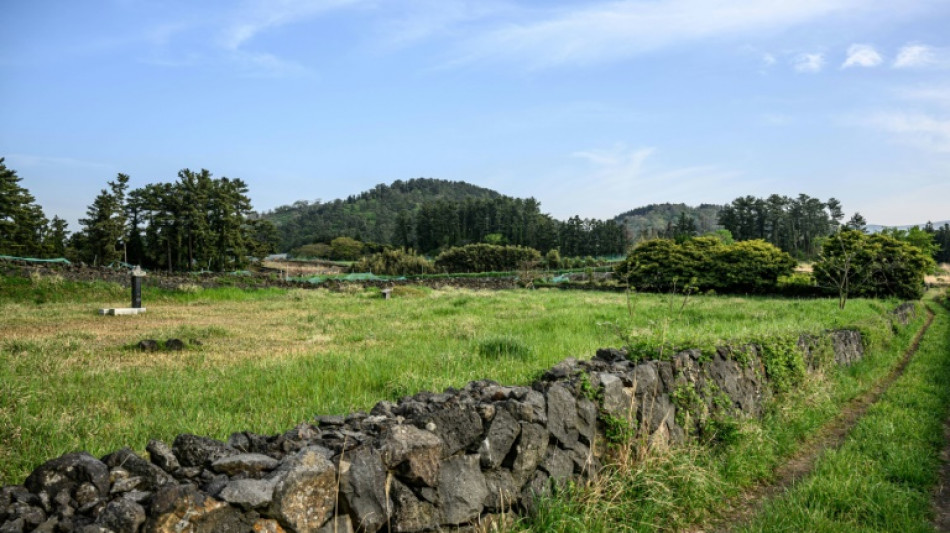
Graveyard sheds light on Kim Jong Un's South Korean heritage / Photo: ANTHONY WALLACE - AFP

 Ready, set, snooze: Sleep-deprived Japanese compete for best-rested

 Falcons thump Saints 45-24 as New Orleans marks Katrina anniversary

 Tuvalu govt adviser says Australia overstepped in pre-COP visit
 Asian stocks mixed despite tech-led Wall St record
 Tens of thousands expected in Paris for high school protests
 AI borrowing binge rattles US markets

 Young Canadians sue government over alleged climate failures

 White Sox down Guardians to take 2-0 series lead

 Leaders visit Pacific atoll at frontline of climate change

 Yemen's Houthis claim striking Riyadh airport, other Saudi sites

 Best-selling British author Jeffrey Archer dies aged 86

 Military plane crash kills 32 in Nigeria

 Olise powers France to win over Belgium in Nations League
 High-flying Blazy turns to birdlife at Chanel
 Riyadh's allies pledge troops as Yemen, Saudi Arabia attack Houthis

 Clashes erupt outside Kosovo parliament over war crimes court
 Milan's Saelemaekers suffers ankle setback, faces lengthy spell out
 Rubio arrives in Iceland to push for greater US presence in Arctic
 Putin allows Italy's UniCredit to sell part of Russian business
 Djokovic into China Open final as Medvedev out for hitting fan with ball

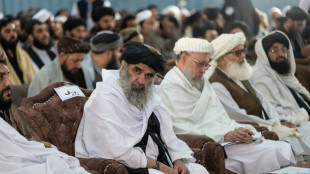 ICC unseals arrest warrants for Taliban education ministers
 Modric hopes fans back Croatia against Spain after England shame
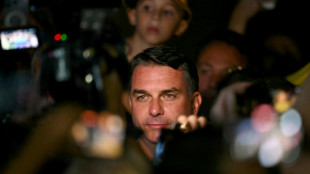 Bolsonaro rides right-wing surge into Brazil's election runoff

 Turkey blocks X account of British reporter

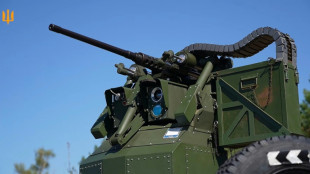 Ukraine says using AI robot guns to shoot down new Russian drones
North Korea's leader Kim Jong Un has threatened Seoul with fiery destruction, but as a remote graveyard on a resort island shows, he has closer links to the South than he might like to admit.
At a cemetery in a hard-to-find corner of South Korea's Jeju island, there are 13 tombstones bearing the Ko family name -- Kim's relatives through his mother, Ko Yong Hui.
Jong Un is the third member of the Kim family to rule North Korea, following in the footsteps of his father and grandfather -- what official hagiography calls the "Paektu bloodline".
But the Jeju graves tell a wider story.
Kim's mother was born in Osaka in 1952 to a native Jeju islander who emigrated to Japan in 1929, when the Korean peninsula was under Tokyo's colonial rule.
Many of her family, including Kim's maternal great-grandfather, are buried on Jeju, their overgrown graves a stark contrast to Pyongyang's Kumsusan Palace of the Sun, where the embalmed bodies of Kim's father and grandfather Kim Il Sung lie in state.
After Kim came to power in 2011 following the death of his father Kim Jong Il, many experts highlighted his mother's South Korean and Japanese heritage. Pyongyang has never confirmed it.
The regime "must have feared confirmation would undermine its legitimacy", Cheong Seong-chang of the Center for North Korea Studies at the Sejong Institute, told AFP.
The Kim dynasty bases its claim to power on Kim Il Sung's role as a guerrilla fighter driving out Japan and winning Korea its independence in 1945.
"Korea-Japan heritage runs directly counter to the North Korean myth of its leadership," Cheong said.
- Kim's mother -
Kim's mother grew up in the Japanese port city of Osaka, but her family moved to North Korea in the 1960s as part of a decades-long repatriation programme by Pyongyang.
The scheme urged ethnic Koreans living in Japan to move to North Korea, part of a drive to "claim supremacy" over the South, said Park Chul-hyun, a novelist and columnist in Tokyo.
"The North saw the Korean-Japanese community as a strategic battleground," he said, and managed to convince nearly 100,000 ethnic Koreans to relocate to the "socialist paradise".
The Ko family answered the call, and lived a relatively normal life in the North until their eldest daughter caught the eye of the country's heir apparent.
Experts believe that Ko, who was a performer with the Mansudae Art Troupe of musicians and dancers, first met Kim Jong Il in Pyongyang in 1972.
She would become his partner in 1975, experts say, and although there is no official record of their marriage the pair had three children. She died in 2004.
"There has been nothing about Ko Yong Hui in official state media," said Rachel Minyoung Lee, a non-resident fellow with the 38 North Program at the Washington-based Stimson Center.
There is not much in state media about Kim Jong Un's background and heritage generally beyond attempts to show he is the legitimate heir to the Mount Paektu legacy, she added.
– Empty grave -
South Korean media discovered the Ko family graves on Jeju in 2014 -- one of the first real confirmations of Kim Jong Un's South Korean ancestry.
At that time, there was a plaque -- known as an "empty grave" in the South -- honouring Kim's maternal grandfather Ko Gyong Taek, even though he died and was buried in the North.
"Born in 1913 and moved to Japan in 1929. He passed away in 1999," read the plaque, a custom which allows family members to perform ancestor rites even if the body is not present.
The plaque was not there when AFP visited the Jeju graveyard in April 2022.
It had been removed by a distant relative of Kim Jong Un, who was shocked by the media attention and feared the grave would be vandalised, the daily Chosun Ilbo reported.
He said his family "knew nothing about the relation to Kim Jong Un", prior to the media discovery, the report said.
A.Williams--AT