
-
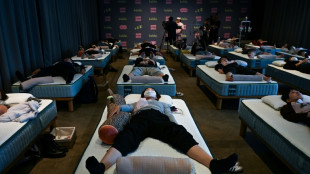 Ready, set, snooze: Sleep-deprived Japanese compete for best-rested
-
Changer+ Launches Stablecoin-First Self-Custodial Wallet to Make Stablecoins Easier to Use

-
 Falcons thump Saints 45-24 as New Orleans marks Katrina anniversary
-
White Sox down Guardians, Yankees on brink after Rays loss

-
 Tuvalu govt adviser says Australia overstepped in pre-COP visit
-
COP31 eyes modest steps as climate disasters multiply

-
 Asian stocks mixed despite tech-led Wall St record
-
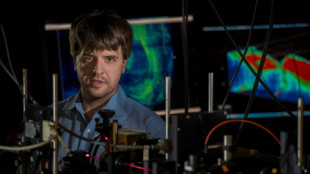
American Nobel laureate in medicine hopes to illuminate the brain
-
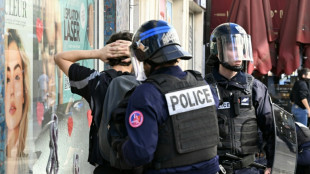 Tens of thousands expected in Paris for high school protests
-
Trump approves firing squad for convicted US military base shooter
-
 AI borrowing binge rattles US markets
-
Grappling with 'homework scams,' US universities shun AI detectors
-
 Young Canadians sue government over alleged climate failures
-
Separatists win Quebec election in test for Canada PM

-
 White Sox down Guardians to take 2-0 series lead
-
Gold IRA Rules, Taxes, Eligible Metals, RMD and Depositories Explained in New Guide by IRAEmpire

-
 Leaders visit Pacific atoll at frontline of climate change
-
NHL record-breaker Ovechkin says current season will be his last

-
 Yemen's Houthis claim striking Riyadh airport, other Saudi sites
-
France roar back in Nations League as Italy beat Turkey

-
 Best-selling British author Jeffrey Archer dies aged 86
-
Messi readies for final farewell in Argentina send-off

-
 Military plane crash kills 32 in Nigeria
-
Esposito seals Italy win over Turkey in Nations League

-
 Olise powers France to win over Belgium in Nations League
-
Russia downplays plague reports as Trump offers US help

-
 High-flying Blazy turns to birdlife at Chanel
-
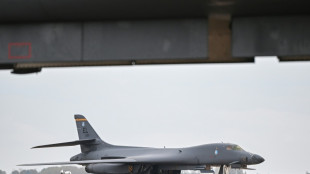
Trump says US moved bombers from UK base after 'threats'
-
 Riyadh's allies pledge troops as Yemen, Saudi Arabia attack Houthis
-
Brazilian stocks surge to record after Bolsonaro election lead
-
 Clashes erupt outside Kosovo parliament over war crimes court
-
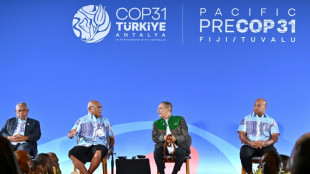
Leaders to visit Pacific atoll at frontline of climate change
-
 Milan's Saelemaekers suffers ankle setback, faces lengthy spell out
-
ICC gives more details about arrest warrants for Taliban ministers

-
 Rubio arrives in Iceland to push for greater US presence in Arctic
-
Nigeria's Tinubu confirms 32 dead after military plane crash

-
 Putin allows Italy's UniCredit to sell part of Russian business
-
'Reckless' AI firms can't control models, says whistleblower
-
 Djokovic into China Open final as Medvedev out for hitting fan with ball
-
Switching on brain cells: the Nobel-winning science of optogenetics

-
 ICC unseals arrest warrants for Taliban education ministers
-
Quebec votes as separatist surge poses test for Canada PM
-
 Modric hopes fans back Croatia against Spain after England shame
-
Euro slides as concerns about French debt mount
-
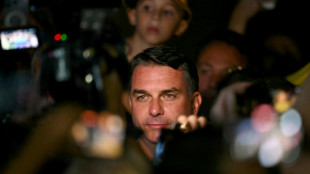 Bolsonaro rides right-wing surge into Brazil's election runoff
-
Former Trump press secretary Leavitt joins Fox News

-
 Turkey blocks X account of British reporter
-
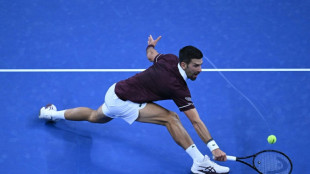
Djokovic advances to China Open final as Medvedev out for hitting fan with ball
-
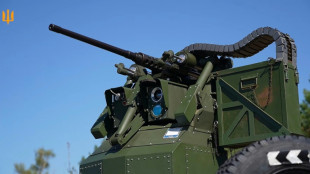 Ukraine says using AI robot guns to shoot down new Russian drones
-
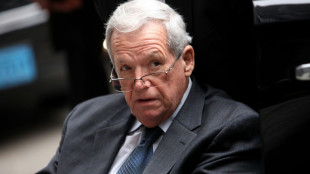
Disgraced former US House speaker dies at 84
First image of black hole at Milky Way's centre revealed
An international team of astronomers on Thursday unveiled the first image of a supermassive black hole at the centre of our own Milky Way galaxy -- a cosmic body known as Sagittarius A*.
The image -- produced by a global team of scientists known as the Event Horizon Telescope (EHT) Collaboration -- is the first, direct visual confirmation of the presence of this invisible object, and comes three years after the very first image of a black hole from a distant galaxy.
"For decades, we have known about a compact object that is at the heart of our galaxy that is four million times more massive than our Sun," Harvard University astronomer Sara Issaoun told a press conference in Garching, Germany, held simultaneously with other media events around the world.
"Today, right this moment, we have direct evidence that this object is a black hole."
Black holes are regions of space where the pull of gravity is so intense that nothing can escape, including light.
The image thus depicts not the black hole itself, because it is completely dark, but the glowing gas that encircles the phenomenon in a bright ring of bending light.
As seen from Earth, it appears the same size as a donut on the surface of the Moon, Issaoun explained.
"These unprecedented observations have greatly improved our understanding of what happens at the very centre of our galaxy," EHT project scientist Geoffrey Bower, of Taiwan's Academia Sinica, said in a statement.
The research results are published in The Astrophysical Journal Letters.
- Virtual telescope -
Sagittarius A* -- abbreviated to Sgr A*, and pronounced "sadge-ay-star" -- owes its name to its detection in the direction of the constellation Sagittarius.
Located 27,000 light years from Earth, its existence has been assumed since 1974, with the detection of an unusual radio source at the centre of the galaxy.
In the 1990s, astronomers mapped the orbits of the brightest stars near the centre of the Milky Way, confirming the presence of a supermassive compact object there -- work that led to the 2020 Nobel Prize in Physics.
Though the presence of a black hole was thought to be the only plausible explanation, the new image provides the first direct visual proof.
Capturing images of such a faraway object required linking eight giant radio observatories across the planet to form a single "Earth-sized" virtual telescope called the EHT.
"The EHT can see three million times sharper than the human eye," German scientist Thomas Krichbaum of the Max Planck Institute for Radio Astronomy told reporters.
"So, when you are sitting in a Munich beer garden, for example, one could see the bubbles in a glass of beer in New York."
The EHT gazed at Sgr A* across multiple nights for many hours in a row -- a similar idea to long-exposure photography and the same process used to produce the first image of a black hole, released in 2019.
That black hole is called M87* because it is in the Messier 87 galaxy.
- Einstein would be 'ecstatic' -
The two black holes bear striking similarities, despite the fact that Sgr A* is 2,000 times smaller than M87*.
"Close to the edge of these black holes, they look amazingly similar," said Sera Markoff, co-chair of the EHT Science Council, and a professor at the University of Amsterdam.
Both behaved as predicted by Einstein's 1915 theory of General Relativity, which holds that the force of gravity results from the curvature of space and time, and cosmic objects change this geometry.
Despite the fact Sgr A* is much closer to us, imaging it presented unique challenges.
Gas in the vicinity of both black holes moves at the same speed, close to the speed of light. But while it took days and weeks to orbit the larger M87*, it completed rounds of Sgr A* in just minutes.
The brightness and pattern of the gas around Sgr A* changed rapidly as the team observed it, "a bit like trying to take a clear picture of a puppy quickly chasing its tail," said EHT scientist Chi-kwan Chan of the University of Arizona.
The researchers had to develop complex new tools to account for the moving targets.
The resulting image -- the work of more than 300 researchers across 80 countries over a period of five years -- is an average of multiple images that revealed the invisible monster lurking at the centre of the galaxy.
"The fact that we're able to make an image of one, something that should be unseeable... I think that that's just really exciting," Katie Bouman, a Caltech professor who played a key role in creating the image, told AFP.
Scientists are now eager to compare the two black holes to test theories about how gasses behave around them -- a poorly understood phenomenon thought to play a role in the formation of new stars and galaxies.
Probing black holes -- in particular their infinitely small and dense centers known as singularities, where Einstein's equations break down -- could help physicists deepen their understanding of gravity and develop a more advanced theory.
"What about Einstein? Would he smile seeing all these hundreds of scientists still not having proven him wrong?" said Anton Zensus of the Max Planck Institute.
"I rather think that he would be ecstatic seeing all the experimental possibilities we have in this field today."
Y.Baker--AT