Indigenous mothers fight to search CIA experiment site in Montreal / Photo: Alexis Aubin - AFP

 Rays defeat Guardians to level MLB playoff series

 Western brands under pressure as 'pre-owned' luxury booms in China

 'Never seen anything like it': mass looting grips Paris

 All Blacks back on track after South Africa wake-up
 Met Opera goes for big and bold, despite shaky finances
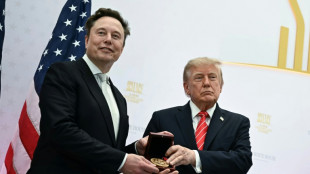
 Hollywood's fresh take on tech titans: from heroes to villains

 St. Louis City's unbeaten MLS run ends at 19, Union's reaches 15

 NFL Eagles bench Hurts at least a month with blood clot

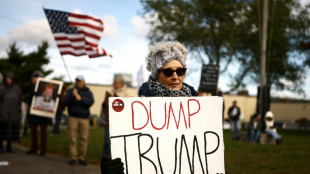 Across US, 'No Kings' events seek to boost early voting
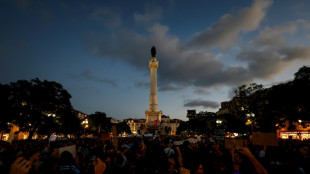 Tents spring up in Lisbon as Portugal housing protests spread
 'Best in world' Yamal powers Barca to Betis rout, Atletico strike late
 El Salvador's Bukele puts conditions on early release of gang prisoners

 Fire rages at town hall in France's Limoges after protests: authorities
 Unstoppable Barca thrash Betis to extend perfect start

 Maresca faces anxious wait over Haaland injury scare

 PSG fight back to beat Strasbourg after Dembele penalty miss

 Looting, blazes and clashes in France amid nationwide protests
 Walsh breaks her own 50 free world short course record

 Haaland brace extends Man City's winning start in Premier League

 'Special' Ombudsman storms to victory in Champion Stakes

 Brazil's right embraces election betting odds amid polls skepticism

 Four more Ebola cases detected in Kenya, bringing total to seven
 Clashes erupt in France as protesters vow to make government 'tremble'

 Chwalinska downs Swiatek to set up Wuhan final with world number 170 Kartal

 Chacarra takes lead as McIlroy falls away in Delhi

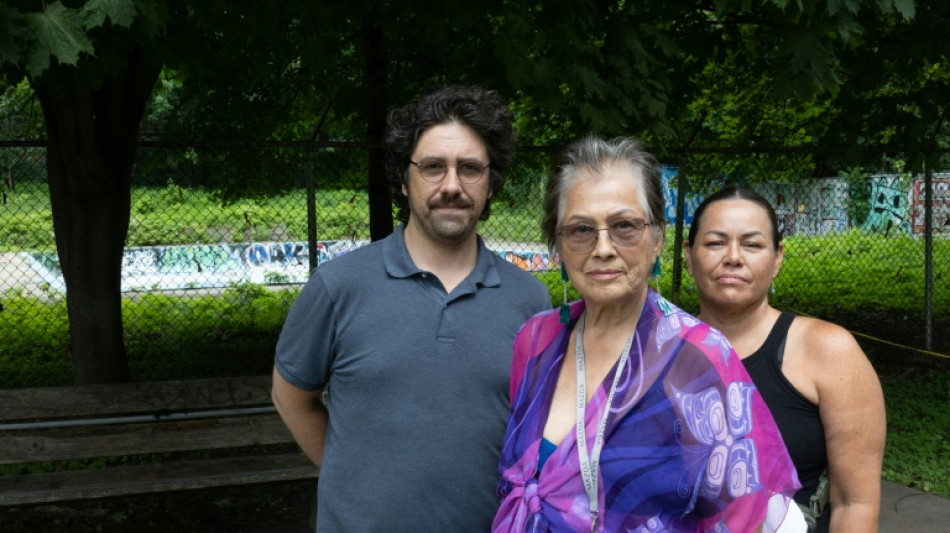
A group of Indigenous women are hoping to stop the bulldozers at a former Montreal hospital which they believe could hold the truth about children still missing from a grisly half-century-old CIA experiment.
They have spent the last two years trying to delay the construction project by McGill University and the Quebec government.
"They took our children and had all kinds of things done to them. They were experimenting on them," said Kahentinetha, an 85-year-old activist from the Mohawk community of Kahnawake, southwest of Montreal, who goes by just one name.
The activists are relying on archives and testimonies that suggest the site contains unmarked graves of children formerly interned at the Royal Victoria Hospital and Allan Memorial Institute, a neighboring psychiatric hospital.
In the 1950s and 1960s, behind the austere walls of the old psychiatric institute, the US Central Intelligence Agency funded a human experiments program called MK Ultra.
During the Cold War, the program aimed to develop procedures and drugs to effectively brainwash people.
Experiments were conducted in Britain, Canada and the United States, subjecting people -- including Indigenous children in Montreal -- to electroshocks, hallucinogenic drugs, and sensory deprivation.
"They wanted to erase us," said Kahentinetha.
A leading figure in the Indigenous rights movement who has traveled to Britain and the United States to denounce colonialism, she called this fight "the most important of (her) life."
"We want to know why they did this and who's going to take the blame for it," she said.
- Sniffer dogs -
In the fall of 2022, the mothers obtained an injunction to suspend work on a new university campus and research center at the site -- a project worth Can$870 million (US$643 million).
Fellow activist Kwetiio, 52, who also uses just one name, said they insisted on arguing the case themselves without lawyers, "because in our ways, no one speaks for us."
Last summer, sniffer dogs and specialized probes were brought in to search the property's expansive and dilapidated buildings. They managed to identify three areas of interest for excavations.
But, according to McGill and the government's Societe Quebecoise des Infrastructure (SQI), "no human remains have been discovered."
The Mohawk mothers accuse the university and the government infrastructure agency of breaching an agreement by selecting the archaeologists who did the search and then ending their work too soon.
"They gave themselves the power to lead the investigation of crimes that were potentially committed by their own employees in the past," says Philippe Blouin, an anthropologist working with the mothers.
Even though their appeal was dismissed earlier this month, they have vowed to continue their fight.
"People should know history, so that it does not repeat itself," said Kwetiio.
In recent years, Canada has opened its eyes to past atrocities.
Generations of Indigenous children were sent to residential schools where they were stripped of their language, culture and identities in what a 2015 truth and reconciliation report said amounted to "cultural genocide."
Between 1831 and 1996, some 150,000 Indigenous children were taken from their homes and placed in 139 such schools. Several thousand never returned to their communities.
In May 2021, the discovery of unmarked graves of 215 children at the Kamloops Indian Residential School in British Columbia started a national reflection on this dark chapter of Canadian history, while sparking searches for more graves across Canada.
"It was not only residential schools, it involved hospitals, sanatoriums, churches and orphanages too," said Kwetiio.
For her, what is most important is shedding light on what happened in order for "things to change," and to recreate "the harmony that we had before colonialism."
W.Stewart--AT