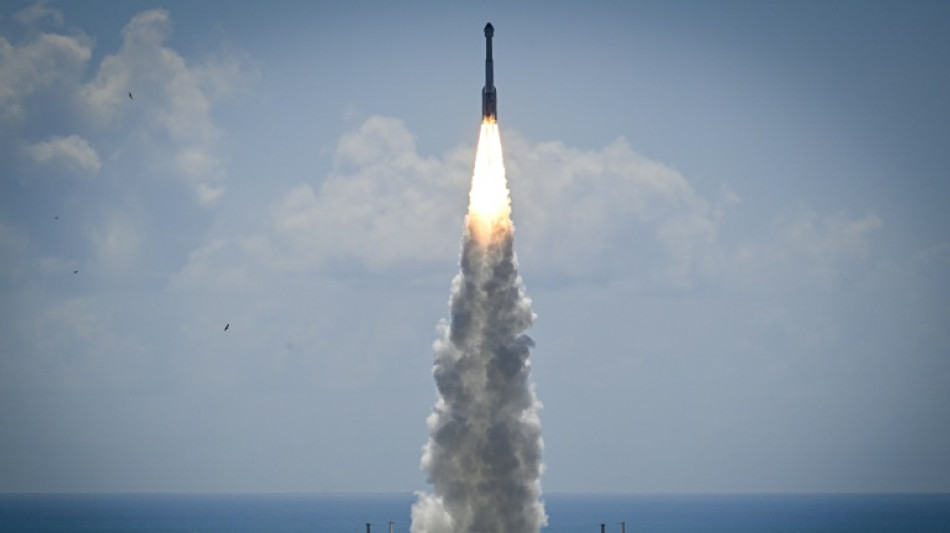
Boeing's Starliner: a saga marked by setbacks / Photo: Miguel J. Rodriguez Carrillo - AFP

 Rays defeat Guardians to level MLB playoff series
 Western brands under pressure as 'pre-owned' luxury booms in China
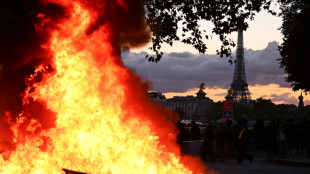 'Never seen anything like it': mass looting grips Paris

 All Blacks back on track after South Africa wake-up
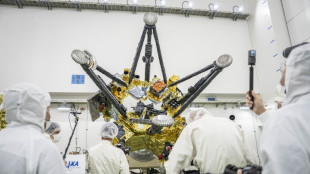
 Met Opera goes for big and bold, despite shaky finances

 Hollywood's fresh take on tech titans: from heroes to villains

 St. Louis City's unbeaten MLS run ends at 19, Union's reaches 15

 NFL Eagles bench Hurts at least a month with blood clot

 Across US, 'No Kings' events seek to boost early voting

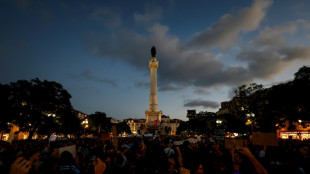 Tents spring up in Lisbon as Portugal housing protests spread

 'Best in world' Yamal powers Barca to Betis rout, Atletico strike late

 El Salvador's Bukele puts conditions on early release of gang prisoners
 Fire rages at town hall in France's Limoges after protests: authorities

 Unstoppable Barca thrash Betis to extend perfect start

 Maresca faces anxious wait over Haaland injury scare

 PSG fight back to beat Strasbourg after Dembele penalty miss

 Looting, blazes and clashes in France amid nationwide protests

 Walsh breaks her own 50 free world short course record

 Haaland brace extends Man City's winning start in Premier League

 'Special' Ombudsman storms to victory in Champion Stakes

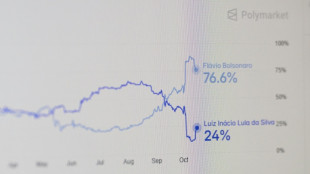 Brazil's right embraces election betting odds amid polls skepticism

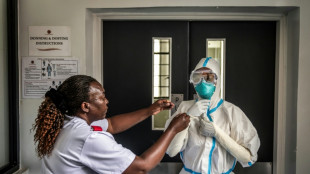 Four more Ebola cases detected in Kenya, bringing total to seven

 Clashes erupt in France as protesters vow to make government 'tremble'
 Chwalinska downs Swiatek to set up Wuhan final with world number 170 Kartal

 Chacarra takes lead as McIlroy falls away in Delhi

The decision to transfer the crew of Boeing's Starliner to a SpaceX mission after the spacecraft malfunctioned is just the latest twist in a long saga that has undermined the credibility of the US aerospace giant.
Here is a recap of the setbacks and delays on Starliner's journey to fly a crew to the International Space Station -- and how it was unable to bring them back again.
- 2014: Nasa awards contract -
A decade ago NASA chose two companies, Boeing and SpaceX, to each develop a new spacecraft capable of transporting its astronauts to the International Space Station (ISS).
The US space agency asked both to be ready for 2017, as it sought to end its dependence on the Russian spacecraft it had used to ferry astronauts to the ISS since the end of the space shuttle program in 2011.
Boeing was awarded a $4.2 billion contract, against SpaceX's $2.6 billion. At the time, billionaire Elon Musk's young company was widely seen as the underdog against Boeing's aerospace might.
- 2019: Failed unmanned flight -
During a first unmanned flight in December 2019, the capsule failed to set itself on the right trajectory and returned to Earth prematurely after two days, without reaching the ISS.
The problem was due to a clock that was eleven hours late, preventing the capsule from firing its thrusters at the scheduled time.
NASA then realized that another software problem could have led to a catastrophic collision.
The manufacturer was given a long list of recommendations and modifications to make.
- 2021: False hope -
In August 2021, when the rocket was already on the launch pad for another attempt at flight, unexpected moisture caused a chemical reaction that blocked the opening of some of the capsule's valves.
The capsule returned to the factory for inspection over a period of several months.
The delay was in stark contrast to the progress being made by SpaceX, which had been successfully transporting astronauts to the ISS since 2020.
- 2022: First (unmanned) success -
In May 2022, Starliner finally completed its first unmanned test flight.
Despite a few glitches -- including a propulsion system problem detected in flight, but with no adverse consequences -- the capsule lifted off, reached the ISS where it remained docked for several days, and returned safely to Earth.
- 2023: New worries, new delays -
Starliner's nascent momentum was arrested in 2023 when new problems emerged, delaying preparations for its first manned flight.
One concerned the design of the parachutes that would slow the capsule as it re-entered the atmosphere. It was modified and new tests carried out.
The other was even more surprising: adhesive tape, used over several meters to wrap electrical cables inside the capsule, proved to be flammable and had to be removed.
- 2024: First manned flight goes awry -
The big day finally arrived on June 5, 2024: the capsule lifted off with two astronauts for the first time, a final test mission to prove it was safe before beginning regular operations to the ISS.
But leaks of helium, the gas used to create pressure in the propulsion system, were discovered in flight.
Several thrusters then failed before the capsule docked with the ISS, although all but one were eventually reignited.
NASA feared the capsule would not be able to achieve the thrust necessary to return to Earth.
As a result, the space agency took a radical decision: to transfer the two astronauts to a SpaceX mission, and return Starliner empty.
Analysis of the flight will determine the path forward -- and how long any new delays will last.
Boeing has already gone $1.6 billion over budget on the program.
E.Rodriguez--AT