Meteorites strike Mars far more often than thought, probe finds / Photo: Handout - NASA/JPL-Caltech/Univ. of Arizona/AFP/File

 Rays defeat Guardians to level MLB playoff series

 Western brands under pressure as 'pre-owned' luxury booms in China

 'Never seen anything like it': mass looting grips Paris

 All Blacks back on track after South Africa wake-up
 Met Opera goes for big and bold, despite shaky finances

 Hollywood's fresh take on tech titans: from heroes to villains

 St. Louis City's unbeaten MLS run ends at 19, Union's reaches 15

 NFL Eagles bench Hurts at least a month with blood clot

 Across US, 'No Kings' events seek to boost early voting

 Tents spring up in Lisbon as Portugal housing protests spread

 'Best in world' Yamal powers Barca to Betis rout, Atletico strike late

 El Salvador's Bukele puts conditions on early release of gang prisoners

 Fire rages at town hall in France's Limoges after protests: authorities

 Unstoppable Barca thrash Betis to extend perfect start

 Maresca faces anxious wait over Haaland injury scare

 PSG fight back to beat Strasbourg after Dembele penalty miss

 Looting, blazes and clashes in France amid nationwide protests

 Walsh breaks her own 50 free world short course record

 Haaland brace extends Man City's winning start in Premier League

 'Special' Ombudsman storms to victory in Champion Stakes

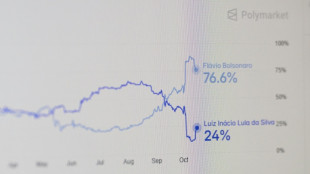 Brazil's right embraces election betting odds amid polls skepticism

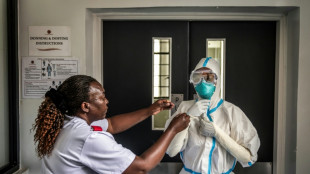 Four more Ebola cases detected in Kenya, bringing total to seven

 Clashes erupt in France as protesters vow to make government 'tremble'

 Chwalinska downs Swiatek to set up Wuhan final with world number 170 Kartal

 Chacarra takes lead as McIlroy falls away in Delhi

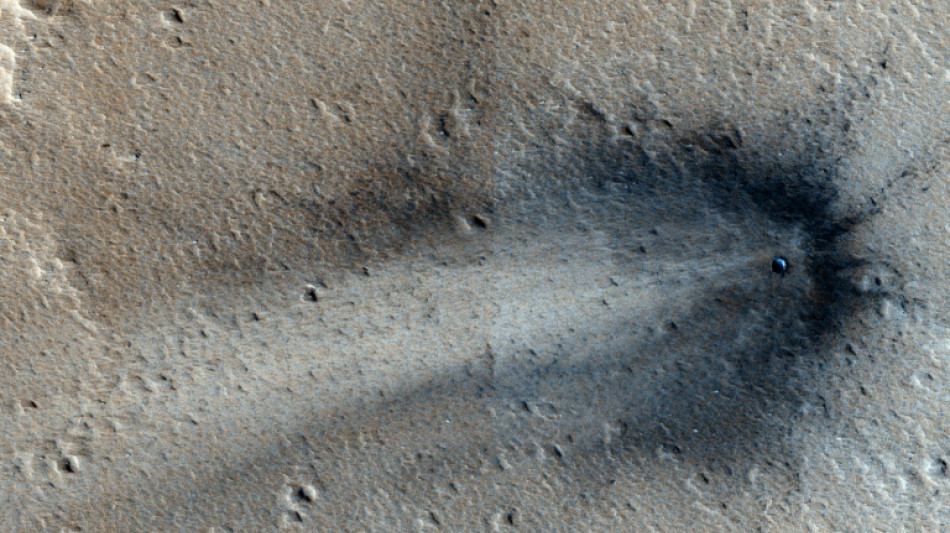
Mars is bombarded with basketball-sized meteorites on a nearly daily basis, fives times more often than previously estimated, seismic recordings from a NASA spacecraft have revealed.
Before the new study was published on Friday, the best guess for how many meteorites strike Mars was made by looking at images taken by orbiting spacecrafts or models based on craters on the Moon.
But NASA's InSight probe, which landed on a Martian plain called Elysium Planitia in 2018, has allowed scientists to listen to the internal rumblings of the red planet for the first time.
Mars is roughly twice as big as the Moon and is much closer to our solar system's main asteroid belt, making it a prime target for large rocks hurtling through space.
Most meteorites taking a shot at Earth break apart in our atmosphere. But the Martian atmosphere is 100 times thinner than Earth's, giving it little protection.
Rather than scouring through images taken from far away, the international team of researchers behind the new study in Nature Astronomy were able to listen in on meteorites smashing into Mars.
"Listening for impacts seems to be more effective than looking for them if we want to understand how often they occur," study co-author Gareth Collins of Imperial College London said in a statement.
The researchers used the data from InSight's seismometer to estimate that every year Mars is hit by between 280 to 360 meteorites, which all blast craters bigger than eight metres (26 feet) wide.
"This rate was about five times higher than the number estimated from orbital imagery alone," study co-author Geraldine Zenhaeusern of the ETH Zurich university said.
- Mars missions, take note -
Frequent, intense dust storms make it particularly difficult for spacecrafts orbiting Mars to see small meteorite craters down below.
New craters are easiest to spot in flat and dusty areas, but "this type of terrain covers less than half of the surface of Mars," Zenhaeusern said.
"The sensitive InSight seismometer, however, could hear every single impact within the landers' range," she added.
The scientists tracked a particular acoustic signal which is produced when meteorites strike Mars to estimate the diameter of craters and their distance from InSight.
They then calculated the number of craters made in one year near the lander, before extrapolating that number across the entire planet.
"This is the first paper of its kind to determine how often meteorites impact the surface of Mars from seismological data," said Domenico Giardini, who works on the InSight mission.
This data should be taken into account in "planning for future missions to Mars," he added.
The researchers estimated that a big meteorite strike makes a 30-metre crater on Mars about once a month -- something that may linger in the minds of astronauts hoping to walk on the red surface one day.
B.Torres--AT