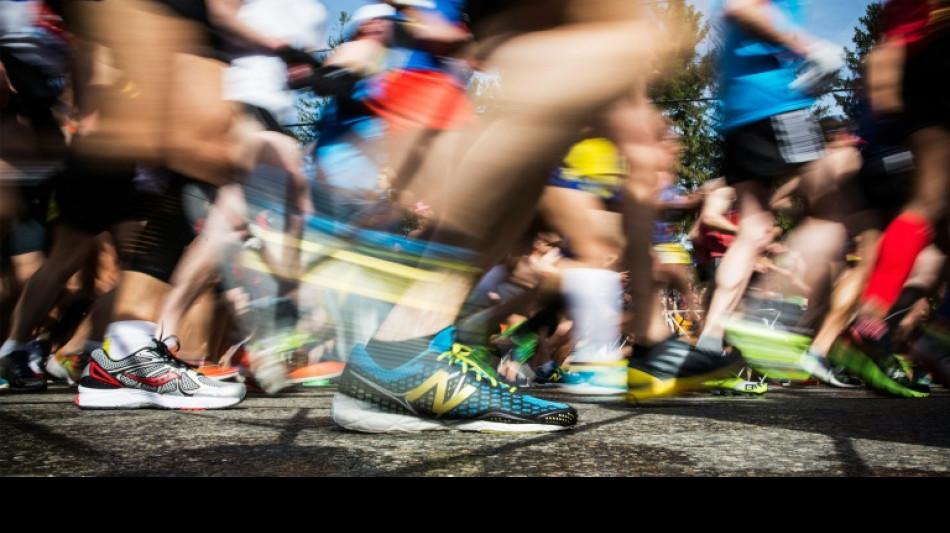
'Wake-up call': third of adults not doing enough physical activity / Photo: Andrew Burton - GETTY IMAGES NORTH AMERICA/AFP/File

 Vietnam signs free trade deal with four European nations
 One million migrating raptors dodge illegal hunters above Georgia's Black Sea coast
 Rays defeat Guardians to level MLB playoff series
 Western brands under pressure as 'pre-owned' luxury booms in China

 'Never seen anything like it': mass looting grips Paris

 All Blacks back on track after South Africa wake-up

 Met Opera goes for big and bold, despite shaky finances

 Hollywood's fresh take on tech titans: from heroes to villains

 St. Louis City's unbeaten MLS run ends at 19, Union's reaches 15

 NFL Eagles bench Hurts at least a month with blood clot

 Across US, 'No Kings' events seek to boost early voting
 Tents spring up in Lisbon as Portugal housing protests spread
 'Best in world' Yamal powers Barca to Betis rout, Atletico strike late

 El Salvador's Bukele puts conditions on early release of gang prisoners
 Fire rages at town hall in France's Limoges after protests: authorities

 Unstoppable Barca thrash Betis to extend perfect start

 Maresca faces anxious wait over Haaland injury scare

 PSG fight back to beat Strasbourg after Dembele penalty miss

 Looting, blazes and clashes in France amid nationwide protests

 Walsh breaks her own 50 free world short course record

 Haaland brace extends Man City's winning start in Premier League

 'Special' Ombudsman storms to victory in Champion Stakes

 Brazil's right embraces election betting odds amid polls skepticism
 Four more Ebola cases detected in Kenya, bringing total to seven
 Clashes erupt in France as protesters vow to make government 'tremble'
Nearly a third of all adults are not doing enough physical activity, posing a growing threat to health across the world, a major study said on Wednesday.
More than 31 percent of adults -- 1.8 billion people -- did not get the recommended amount of physical exercise in 2022, an increase of five percentage points from 2010, according to a study by the World Health Organization and other researchers.
"Physical inactivity is a silent threat to global health, contributing significantly to the burden of chronic diseases," said Ruediger Krech, director of the WHO's health promotion department.
"Unfortunately the world is not going in the right direction," he told an online press conference.
To be healthy, the WHO recommends all adults spend at least 150 minutes every week doing moderate-intensity physical activity -- which can include walking, cycling or even household chores -- or at least 75 minutes of more vigorous exercise, such as running or competing in sport.
A combination of the two will also get people over the line.
Not getting this level of exercise increases the risk of people developing heart disease, diabetes, some cancers as well as mental health problems, Krech said.
If current trends continue, adult inactivity levels are projected to rise to 35 percent by 2030, according to the study in The Lancet Global Health.
This would fall far short of the WHO's goal of reducing physical inactivity by 15 percent by the end of the decade.
Fiona Bull, head of the WHO's physical activity unit, said the research was "a wake-up call that we're not doing enough".
- 'Every step counts' -
Inactivity rates varied widely between countries. For example, 66 percent of adults do not get enough physical activity in the United Arab Emirates, while the figure was under three percent in Malawi.
There was also a gender gap. Nearly 34 percent of women worldwide do not reach the activity threshold, compared to 29 percent of men.
There are "multiple causes" for activity rates declining overall, including that people are walking less, working at computers more and generally spending more leisure time looking at screens, Bull said.
During a busy few months of world sport which includes the Olympics and the European and Copa America football championships, Krech reminded people that "watching sports does not equal being physically active".
"Don't just sit on (your) chairs, get up and be active -- every step counts," he said.
The WHO emphasised that changing individual behaviour is not enough, calling on countries to promote physical activity by boosting community sport as well as walking, cycling and public transport.
For the study, billed as the most comprehensive to look at the subject yet, an international team of researchers combined the findings from more than 500 studies involving 5.7 million people across 163 countries and territories.
It was not all bad news.
Almost half of the countries had made progress over the last decade, and 22 are on track to reach the 2030 target -- as long as they keep moving in the right direction.
S.Jackson--AT