Webb spots giant star clusters shaping galaxy in early universe / Photo: - - ESA/HUBBLE/AFP/File

 Vietnam signs free trade deal with four European nations
 One million migrating raptors dodge illegal hunters above Georgia's Black Sea coast

 Rays defeat Guardians to level MLB playoff series

 Western brands under pressure as 'pre-owned' luxury booms in China

 'Never seen anything like it': mass looting grips Paris

 All Blacks back on track after South Africa wake-up
 Met Opera goes for big and bold, despite shaky finances

 Hollywood's fresh take on tech titans: from heroes to villains

 St. Louis City's unbeaten MLS run ends at 19, Union's reaches 15

 NFL Eagles bench Hurts at least a month with blood clot

 Across US, 'No Kings' events seek to boost early voting

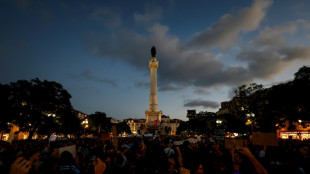 Tents spring up in Lisbon as Portugal housing protests spread

 'Best in world' Yamal powers Barca to Betis rout, Atletico strike late

 El Salvador's Bukele puts conditions on early release of gang prisoners

 Fire rages at town hall in France's Limoges after protests: authorities

 Unstoppable Barca thrash Betis to extend perfect start

 Maresca faces anxious wait over Haaland injury scare

 PSG fight back to beat Strasbourg after Dembele penalty miss

 Looting, blazes and clashes in France amid nationwide protests

 Walsh breaks her own 50 free world short course record

 Haaland brace extends Man City's winning start in Premier League

 'Special' Ombudsman storms to victory in Champion Stakes

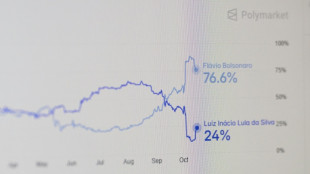 Brazil's right embraces election betting odds amid polls skepticism

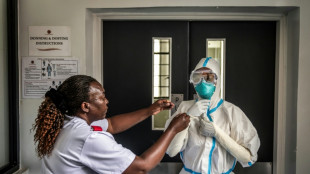 Four more Ebola cases detected in Kenya, bringing total to seven

 Clashes erupt in France as protesters vow to make government 'tremble'

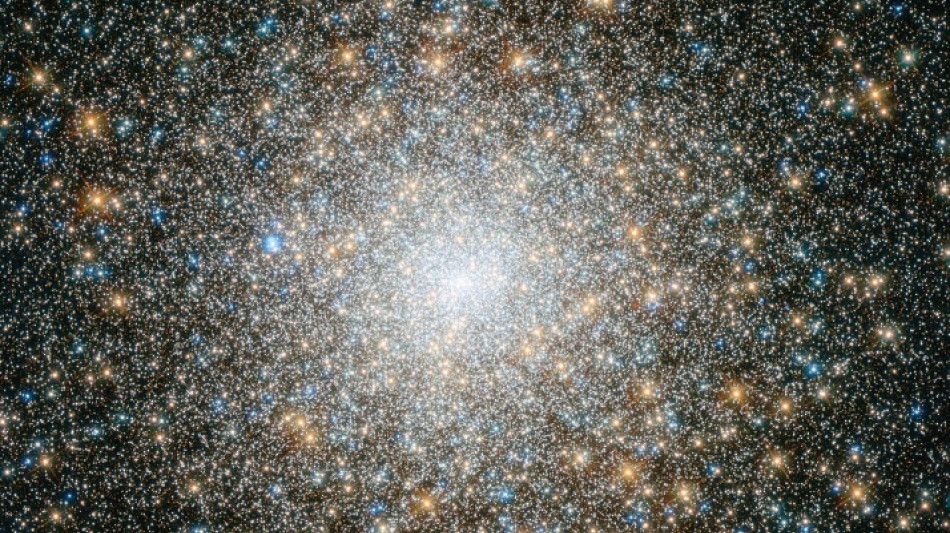
The James Webb space telescope has discovered massive clusters of stars in the early universe so huge and densely packed that they influenced how their galaxy formed, astronomers said on Monday.
The five clumps of stars, known as globular proto-clusters, are the earliest ever observed, dating back to 460 million years after the Big Bang when the universe was three percent its current age.
They were spotted in the Cosmic Gems Arc, an infant galaxy discovered by the Hubble telescope in 2018.
Looking into space means looking back in time, and the galaxy exists in what is called the epoch of reionisation, when the first stars and galaxies emerged and lit up the universe.
It is difficult to see that far back, but the Webb telescope's ability to detect infrared wavelengths has allowed it peer farther back into this cosmic dawn than ever before.
The discovery of the five globular proto-clusters marks "the first time we have been able to observe this type of object at this distance," said Adelaide Claeyssens, a co-author of the new study in the journal Nature.
It should help scientists better understand the "formation of star clusters that we can see in the nearby universe -- which are now very old -- and their influence on the formation of galaxies," the Stockholm University astronomer told AFP.
- Black hole seeds? -
There is nothing like these clusters in the universe we see around us, said lead study author Angela Adamo, also from Stockholm University.
Our home galaxy, the Milky Way, is now home to around 170 globular clusters.
But there were once thousands of them, before they were broken up and scattered when the galaxy expanded, Adamo told AFP.
Those that did survive are relative lightweights, making up an "insignificant" mass compared to all the other stars in the galaxy.
However the five clusters in the Cosmic Gems Arc are true heavyweights, representing nearly a third of their galaxy's total mass.
The young stars are also packed closely together.
Imagine there were a million stars jammed into the four light years of space that separate the Sun and its nearest star Proxima Centauri, Adamo said.
A separate study recently suggested that stars near the heart of globular proto-clusters are up to 10,000 more massive than the Sun.
Adamo said that such huge stars produce immense amounts of radiation, which means they "shape how galaxies form stars" and how gas is distributed around the galaxies.
And at the end of their short and violent lives, some of these behemoth stars likely create black holes, she added.
Some could even become the seeds that grow into the supermassive black holes squatting at the centre of galaxies, Adamo speculated.
To find out more, the researchers want to study more globular proto-clusters near the cosmic dawn. The James Webb Space telescope will help in this hunt, Adamo said.
But it will be the European Southern Observatory's Extremely Large Telescope, expected to start scanning the skies in 2028, that will help scientists "understand the physical processes within this galaxy," Adamo said.
So we have to wait a few more years to find out more about what happened over 13.2 billion years ago.
R.Chavez--AT