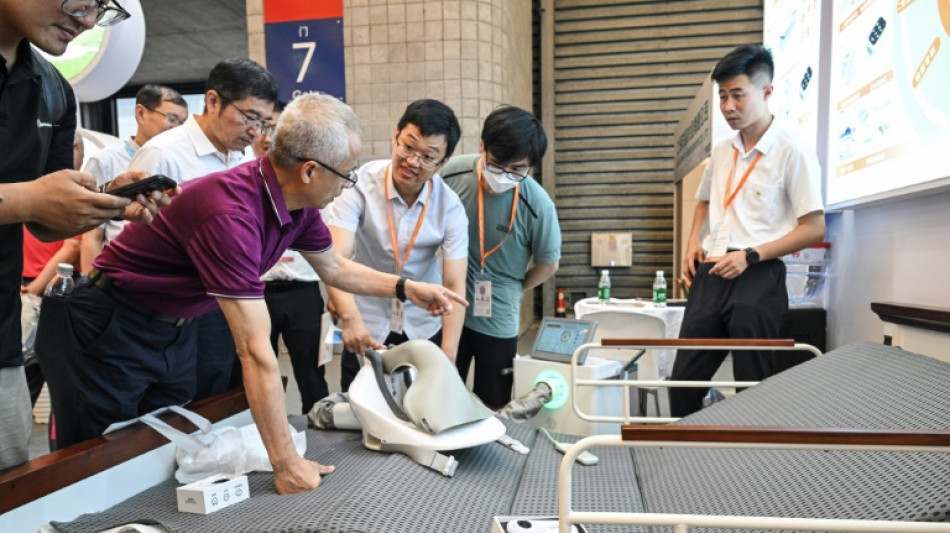
China elder care sector plugs smart gadgets to fill workforce gaps / Photo: HECTOR RETAMAL - AFP

 Vietnam signs free trade deal with four European nations

 One million migrating raptors dodge illegal hunters above Georgia's Black Sea coast

 Rays defeat Guardians to level MLB playoff series

 Western brands under pressure as 'pre-owned' luxury booms in China
 'Never seen anything like it': mass looting grips Paris

 All Blacks back on track after South Africa wake-up
 Met Opera goes for big and bold, despite shaky finances

 Hollywood's fresh take on tech titans: from heroes to villains

 St. Louis City's unbeaten MLS run ends at 19, Union's reaches 15

 NFL Eagles bench Hurts at least a month with blood clot

 Across US, 'No Kings' events seek to boost early voting

 Tents spring up in Lisbon as Portugal housing protests spread

 'Best in world' Yamal powers Barca to Betis rout, Atletico strike late

 El Salvador's Bukele puts conditions on early release of gang prisoners

 Fire rages at town hall in France's Limoges after protests: authorities

 Unstoppable Barca thrash Betis to extend perfect start

 Maresca faces anxious wait over Haaland injury scare

 PSG fight back to beat Strasbourg after Dembele penalty miss

 Looting, blazes and clashes in France amid nationwide protests

 Walsh breaks her own 50 free world short course record

 Haaland brace extends Man City's winning start in Premier League

 'Special' Ombudsman storms to victory in Champion Stakes

 Brazil's right embraces election betting odds amid polls skepticism

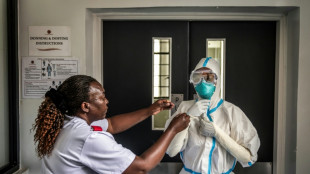 Four more Ebola cases detected in Kenya, bringing total to seven

 Clashes erupt in France as protesters vow to make government 'tremble'

With internet-connected sleep monitors, robotic arms and calorie-counting cafeteria plates, China's elder care industry is hoping automation will provide the solution to an ageing population and a shrinking workforce.
Hundreds of retirees were among visitors to a crowded industry fair in Shanghai this week, thronging booths touting everything from luxury retirement homes to physiotherapy robots.
China's population has declined since 2022 after more than 60 years of uninterrupted growth, prompting fears of a future labour crunch and growing pressure on its healthcare system as millions of citizens enter old age.
Rather than relying on people -- traditionally one's children -- to provide care, many of the fair's exhibitors showcased technological attempts to solve the demographic conundrum.
Yu, a 64-year-old visitor, was among a crowd watching a company demonstrate its automated stair-climbing machines alongside devices designed to lift people from their beds into wheelchairs.
He told AFP he was impressed.
"Nowadays there are fewer and fewer young people, and more and more old people, so these smart products can provide better services for older people," he said.
Yu said he had already purchased smart wheelchairs and beds for older family members, including a 90-year-old relative he was caring for.
Elsewhere, an array of smartwatches, motion detectors and temperature monitors at Shenzhen-based tech firm Innopro's booth promised families constant surveillance of their elders.
Targeting busy workers or those living apart from their loved ones, the company also boasts nursing homes and local governments among its clients.
"For institutions, they hope to save on labour costs because they usually need to conduct checks every night," employee Jin Guohui told AFP.
"This device can reduce their work," Jin said, showing off a small, SIM card-equipped white box that monitored sleeping patterns and signs of life.
- 'Figuring it out' -
For customers of Eihoo Health Management, an operator of senior citizen cafeterias, it's their dinner plates that keep watch: the plates are embedded with chips that identify the food being served.
A cash register at check-out reads the chips and delivers an instant nutritional report complete with calorie count and breakdown of macronutrients -- cutting workloads for service staff and health workers.
Regular diners can set up payment cards that track their weight, nutritional habits and health status.
At another booth, students from Shanghai's Jiao Tong University tinkered with the code for a robotic arm designed to help elders with limited mobility perform daily tasks such as eating and turning doorknobs.
The turn to high-tech solutions is a stark contrast to the traditional Chinese ideal of ageing at home under the care of family members.
Shi Wenjun, a 73-year-old visitor, said there were "definite differences" for elderly Chinese today compared to previous generations.
"We are all parents of only children... our children are nearly 50 and they have their own work and families, so when we're old, we will choose the elder care organisations provided by the government, group forms of elder care," she told AFP.
"If older people can use smart technologies, they won't bother others," Shi said.
Shi, a volunteer who organises activities for other seniors in her neighbourhood, said she had caught up with many new technologies, including smartphones.
"But for a lot of things, we are still in the process of learning and figuring it out," she said.
H.Gonzales--AT