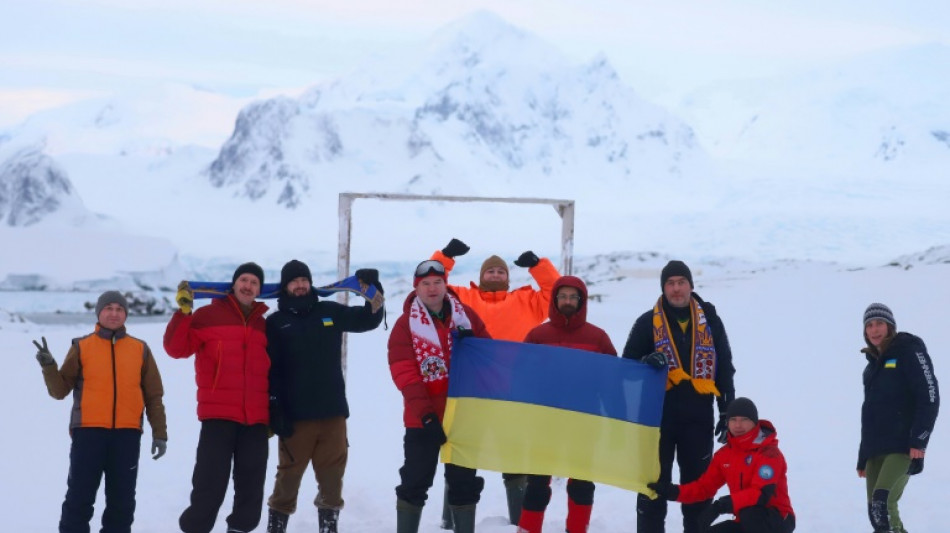
Ukrainian scientists feel helpless at Antarctic base as war rages

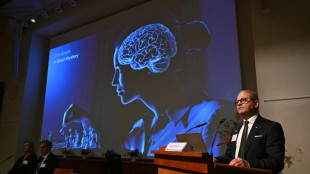
 American Nobel laureate in medicine hopes to illuminate the brain
 Trump approves firing squad for convicted US military base shooter

 Grappling with 'homework scams,' US universities shun AI detectors
 Separatists win Quebec election in test for Canada PM

 Leaders visit Pacific atoll at frontline of climate change

 Yemen's Houthis claim striking Riyadh airport, other Saudi sites

 Best-selling British author Jeffrey Archer dies aged 86

 Military plane crash kills 32 in Nigeria

 Olise powers France to win over Belgium in Nations League
 High-flying Blazy turns to birdlife at Chanel
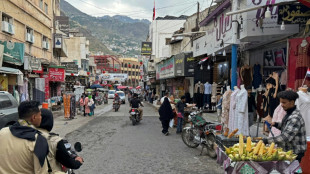 Riyadh's allies pledge troops as Yemen, Saudi Arabia attack Houthis

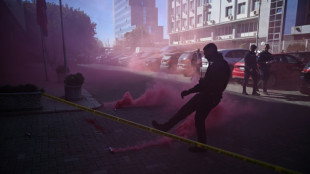 Clashes erupt outside Kosovo parliament over war crimes court
 Milan's Saelemaekers suffers ankle setback, faces lengthy spell out
 Rubio arrives in Iceland to push for greater US presence in Arctic
 Putin allows Italy's UniCredit to sell part of Russian business
 Djokovic into China Open final as Medvedev out for hitting fan with ball
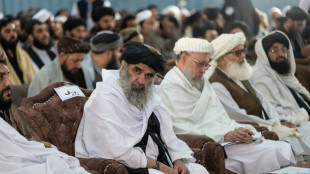 ICC unseals arrest warrants for Taliban education ministers
 Modric hopes fans back Croatia against Spain after England shame

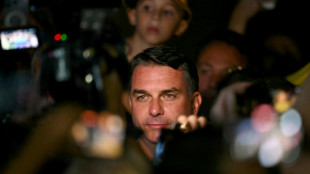 Bolsonaro rides right-wing surge into Brazil's election runoff
 Turkey blocks X account of British reporter

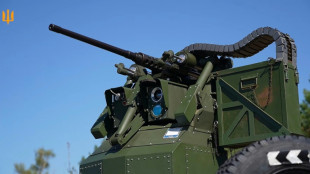 Ukraine says using AI robot guns to shoot down new Russian drones
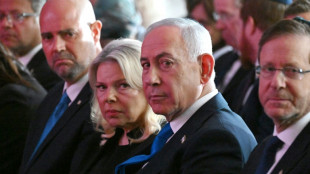 At Oct 7 memorial, Netanyahu says will be no Hamas rule in Gaza
 Ukraine blames Russia for deadly sinking of Turkish ship in Black Sea
 UN rights council slams Taliban's 'oppression' of women
 Norway eyes partial ban of smart glasses
For a dozen Ukrainian scientists thousands of kilometers from home at the Vernadsky Antarctic base, the biting cold hurts less than the feeling of helplessness over the war in their homeland.
They spend their days measuring, observing, analyzing and doing their jobs as best they can as a way of coping with the situation.
"At the beginning, we didn't sleep for a few days. The whole time we were following news about our home cities," meteorologist Anastasiia Chyhareva, 26, told AFP in messages sent from the base.
Once the invasion was in full swing, the scientists started waking at 2:00 am -- 7:00 am in Ukraine -- to check in on family and see how their night went.
"Now, we're used to it... used to checking news in the morning and before going to bed, in every free minute."
The Ukrainian base is situated on Galindez island, some 1,200 kilometers (745 miles) from Tierra del Fuego in the far south of Argentina.
It is occupied all year round by a dozen people who have to endure temperatures that drop to -20 degrees Celsius (-4 degrees Fahrenheit) in winter.
The scientists' duties include observing meteorological, geophysical, geological and biological conditions, unless the weather forces them to shelter at the base.
"My first impression was like all these things happened in another universe, not our world," said geophysicist Oleksandr Koslokov, whose family lived in war-torn Kharkiv, a heavily targeted city just 40 kilometers from the Russian border.
"I started advising my family on what to do. I had no time to reflect. I had to help my family to survive and to escape from my city... before it became a burning and unpredictable hell.
"My wife heard and felt the explosions of cruise missiles 10 minutes after (Russian President Vladimir) Putin started this stupid and criminal war."
Since then, his family has fled to Germany.
- 'Our part of the war' -
At the base, which is named after a Soviet mineralogist and geochemist with Russian and Ukrainian roots, the scientists try to live as normal a life as possible. Sunday is a day off and Saturday night everyone has dinner together before playing board games and musical instruments.
"It is hard to be so far away from my family and have no possibility to support them," said biologist Artem Dzhulai, 34.
"At the station now, there is a wide range of feelings -- from sadness due to anxiety for relatives and friends, to high spirits, due to pride in our army and the people who are bravely fighting for the right to live in a free country," said marine biologist Oksana Savenko, who is studying humpback whales.
Giving practical advice, moral support, donating to the Ukrainian army, signing a petition, creating online lectures to divert Ukrainian children's attention from the war: the scientists are trying every means available to help in some way.
"It is our part of the war" effort, said Chyhareva.
Ukrainians "try to help each other, they try to help our compatriots, they try to help our army," said another scientist who requested to remain anonymous.
- 'Don't forget us' -
Dzhulai still remains bitter over the West's response the last time Russia invaded Ukraine, annexing Crimea in 2014.
"All democratic countries were indifferent to that act of violence," he said.
"Probably, they hoped that they will not be affected by someone else's grief... but everything can change if evil is not stopped and punished.
"A lot of children in Ukraine died because of the indifference of Europe and the US."
There is fear that the same could happen again.
"Please, don't forget about us after one month, don't be tired of Ukraine and our problems," said Chyhareva.
This team will be replaced later this month, and with their homeland in flames, the departing scientists face an uncertain future.
"I don't have any real plans," said Chychareva, who just hopes to go "back to Ukraine as soon as it will be possible."
"My university in Kharkiv where I studied was destroyed ... my research institute and scientific equipment in Ukraine are destroyed," said Koslokov.
He said he would likely try to continue doing science in Europe or America, adding "time will tell."
O.Gutierrez--AT