Climate scorecard: good news and bad news

 American Nobel laureate in medicine hopes to illuminate the brain

 Trump approves firing squad for convicted US military base shooter
 Grappling with 'homework scams,' US universities shun AI detectors
 Separatists win Quebec election in test for Canada PM

 Leaders visit Pacific atoll at frontline of climate change

 Yemen's Houthis claim striking Riyadh airport, other Saudi sites

 Best-selling British author Jeffrey Archer dies aged 86

 Military plane crash kills 32 in Nigeria

 Olise powers France to win over Belgium in Nations League
 High-flying Blazy turns to birdlife at Chanel

 Riyadh's allies pledge troops as Yemen, Saudi Arabia attack Houthis

 Clashes erupt outside Kosovo parliament over war crimes court
 Milan's Saelemaekers suffers ankle setback, faces lengthy spell out

 Rubio arrives in Iceland to push for greater US presence in Arctic

 Putin allows Italy's UniCredit to sell part of Russian business
 Djokovic into China Open final as Medvedev out for hitting fan with ball

 ICC unseals arrest warrants for Taliban education ministers

 Modric hopes fans back Croatia against Spain after England shame
 Bolsonaro rides right-wing surge into Brazil's election runoff

 Turkey blocks X account of British reporter

 Ukraine says using AI robot guns to shoot down new Russian drones
 At Oct 7 memorial, Netanyahu says will be no Hamas rule in Gaza

 Ukraine blames Russia for deadly sinking of Turkish ship in Black Sea

 UN rights council slams Taliban's 'oppression' of women

 Norway eyes partial ban of smart glasses

The task is clear -- stop burning fossil fuels, radically reduce energy demand and slash all planet-warming emissions in order to keep the planet cool enough so humans, animals and plants can survive and thrive.
So how do the actions of the world so far match up to the challenge?
Here is a rundown from the UN Intergovernmental Panel on Climate Change's handbook on how to halt global warming:
- Emissions growth is slowing -
While we are continuing to spew more carbon dioxide (CO2) into the atmosphere, the rate of that increase has slowed in recent years.
Emissions actually fell in 2020 -- by an estimated 5.8 percent compared to 2019 -- as governments around the world imposed unprecedented lockdowns to try to halt the spread of Covid-19.
Demand for energy shrank in almost all areas -- except residential buildings. International aviation emissions were down some 45 percent.
Meanwhile, at least 24 countries in the world have managed to cut greenhouse gas emissions and consumption-based CO2 pollution for a decade or more. Almost all are in Europe, although the list also includes the United States and Jamaica.
- But they need to fall, and fast -
Emissions have already rebounded from the pandemic.
Developing nations that have come from a low base per capita are seeing sharp increases.
And carbon footprints per person in rich countries remain stubbornly high, particularly in Australia, Canada.
- We have most of the means -
There are a range of low-carbon technologies to produce electricity and these are becoming cheaper, better and more widely used. These include solar photovoltaics (PV), onshore and offshore wind, and batteries.
"In many contexts solar PV and onshore wind power are now competitive with fossil-based generation," the report said.
Since 2010 emissions from coal have grown, but more slowly, as the US and Europe retired some old plants, while China added fewer new ones. A large number of planned coal plants around the world were either scrapped or converted so that they could also burn biomass.
- But we struggle to kick the dirty fuel habit -
All of the world's electricity will have to come from low-carbon generation by 2050 to meet the Paris Agreement global warming targets. This is "challenged" by growing electricity demand.
Currently, solar PV and wind generation technologies account for less than 10 percent of the market.
Despite coal's hefty C02 emissions, some countries and even international development banks continue to fund and develop new coal capacity.
- We can transform transport, buildings and industry -
Electrification is a "feasible, scalable and affordable" option to decarbonise mass transportation.
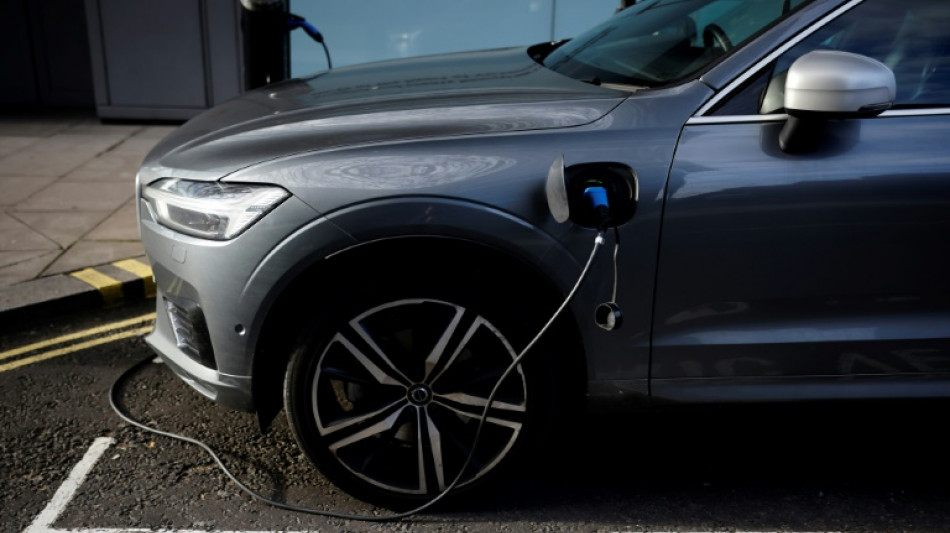
Electric vehicles (EVs) are the fastest-growing part of the automobile industry and if these cars and trucks are charged with low-carbon electricity they can significantly reduce emissions.
It is possible to make existing and new buildings in all parts of the world either nearly zero-energy or low-energy.
Most industrial processes in general can be decarbonised through a combination of technology using electricity and hydrogen, carbon capture and innovation in the circular use of materials (i.e. recycling and reusing).
- But change is slow -
Transport emissions grew at an average of two percent a year per between 2010 and 2019, due to continued "high travel demand, heavier vehicles, low efficiencies and car-centric development".
Beyond charging EVs with zero-emissions electricity, car manufacturing, shipping and aviation also need to be decarbonised, as do supply chains in general.
As for construction, the low ambition of government policies is a particular concern, for both existing buildings in developed countries and new buildings in developing ones.
The strong global demand for basic materials means industrial emissions continue to grow. This demand must be sharply reduced, alongside the rapid scale up of low-carbon innovations, otherwise there is a risk of locking in emissions "for decades to come".
- A crescendo of climate action -
An increasing number of countries say they plan to achieve "net-zero" C02, or greenhouse gas, emissions by mid-century.
Mandatory policies like pricing and regulation have expanded, while many businesses have promised to curb emissions.
Climate activism is growing, labour unions are starting to engage with the issues, while media coverage of climate change is increasing and becoming better at accurately reflecting the science.
- But action needs to happen faster -
Current national pledges under the Paris Agreement will not limit global warming to the target of 1.5 degrees Celsius.
Many net-zero targets are "ambiguously defined" and the policies to achieve them are not yet in place.
Low-carbon alternatives need much more investment, while "status quo interests" are acting to block progress.
People are also subjected to misinformation on online and in traditional media that has "undermined significantly" understanding of the science.
W.Moreno--AT