Falkland islanders, UK veterans look back and to the future

 American Nobel laureate in medicine hopes to illuminate the brain
 Trump approves firing squad for convicted US military base shooter
 Grappling with 'homework scams,' US universities shun AI detectors
 Separatists win Quebec election in test for Canada PM
 Leaders visit Pacific atoll at frontline of climate change

 Yemen's Houthis claim striking Riyadh airport, other Saudi sites

 Best-selling British author Jeffrey Archer dies aged 86

 Military plane crash kills 32 in Nigeria

 Olise powers France to win over Belgium in Nations League
 High-flying Blazy turns to birdlife at Chanel
 Riyadh's allies pledge troops as Yemen, Saudi Arabia attack Houthis

 Clashes erupt outside Kosovo parliament over war crimes court
 Milan's Saelemaekers suffers ankle setback, faces lengthy spell out
 Rubio arrives in Iceland to push for greater US presence in Arctic
 Putin allows Italy's UniCredit to sell part of Russian business
 Djokovic into China Open final as Medvedev out for hitting fan with ball
 ICC unseals arrest warrants for Taliban education ministers
 Modric hopes fans back Croatia against Spain after England shame
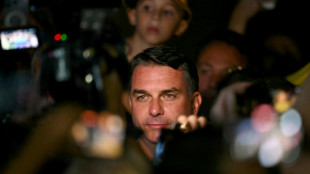 Bolsonaro rides right-wing surge into Brazil's election runoff
 Turkey blocks X account of British reporter

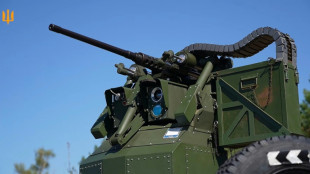 Ukraine says using AI robot guns to shoot down new Russian drones
 At Oct 7 memorial, Netanyahu says will be no Hamas rule in Gaza
 Ukraine blames Russia for deadly sinking of Turkish ship in Black Sea
 UN rights council slams Taliban's 'oppression' of women
 Norway eyes partial ban of smart glasses
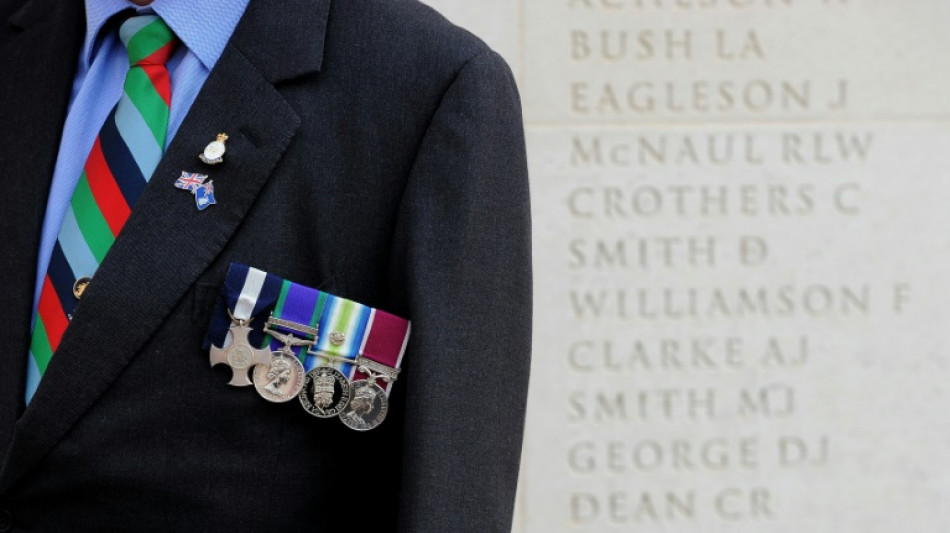
Tom Herring knows exactly what he was doing on April 2, 1982. He was 31, a member of the 3rd Battalion The Parachute Regiment, and on weekend leave before Easter.
Then Argentinian troops invaded the Falkland Islands and he was called back to barracks. "Four days later we were boarding a ship in Southampton," he said.
Forty years on, the memories for military veterans are strong, as too is the conviction that the islands -- nearly 13,000 kilometres (8,000 miles) from London -- are British.
"Our job was to protect our citizens and we felt very good about that because we wanted to make sure they were OK," the former sergeant told reporters in London.
"It was British sovereign territory," he said at the National Army Museum, where a new exhibition has opened about the conflict and its impact on the islands.
In Britain and the Falklands, the anniversary of the start of the conflict is muted. Islanders in particular see Argentina's invasion as nothing to celebrate.
But a year-long series of events are taking place to mark the 40th anniversary, including on June 14 to mark Liberation Day -- a public holiday on the islands.
- Public consciousness -
In Britain in 1982, few people knew much about the Falklands.
"They thought it was near us, in Scotland," said Herring, who is chairman of the South Atlantic Medal Association, a group for British veterans.
At the time, prime minister Margaret Thatcher was driving through unpopular economic reforms. Unemployment was sky-high and her position was under threat.
But her high-risk deployment of nearly 30,000 troops -- and their swift victory -- hoisted the remote archipelago of 770 islands to public consciousness.
The task force returned from the South Atlantic to a sea of Union Jacks, giving a declining Britain a patriotic boost -- and ensuring Thatcher a landslide re-election in 1983.
But veterans charity Help for Heroes said last week the conflict risks becoming a "forgotten war", and many younger people were "clueless" about its details.
Not for Herring, who also served three tours of Northern Ireland.
He visited the islands in 2012, meeting an Argentinian officer with whom he is still in contact.
"He still believes in the islands being part of their country. We believe it's British," he said, but added: "We don't argue about that.
"We talk about military esprit de corps. There are friendly relationships. It's only the governments that seem to be at loggerheads."
- Grateful -
The islanders too have moved on, thankful for their past liberation but with an eye on a more prosperous future.
Just 3,200 people live on the Falklands, most of them in the capital, Stanley. But with an average age of 38, many were not even born when the conflict began.
"Us islanders born in the aftermath of the conflict are all grateful to the veterans," said Tamsin McLeod, a Falkland islander now at university in Britain.
"I can't say that enough," she added.
The operation claimed the lives of 255 British servicemen and three female civilians, along with 649 Argentinians.
The self-governing authorities in the Falklands are keen to push how much the islands have been transformed since the war.
They point to how it is financially self-sufficient, relying on the UK only for defence, and how it is now a hub for scientific research and biodiversity.
The thousands of landmines that were laid during the war, making swathes of the islands no-go areas, were finally cleared in late 2020.
Its main industries are fishing, agriculture and tourism, including to see its population of more than one million breeding penguins, whales and dolphins.
- Democratic rights -
UK government support for the Falklands under Thatcher's successors has been unwavering, despite Argentina's steadfast territorial claims.
"We will continue to defend the Falkland Islanders' democratic rights and celebrate the modern, diverse community they have built," said Amanda Milling, minister for UK overseas territories.
"This is an important reminder that all peoples have the right to determine their own future."
Leona Roberts, a member of the Falklands legislative assembly, is thankful to the veterans and to Thatcher for her "incredibly decisive" action.
"We've seen how far we've come 40 years since," said Roberts, who aged 10 in 1982 cowered from the sound of gunfire under a kitchen table and an overturned sofa.
"We built the country from nothing. It (the conflict) allowed us to move on."
S.Jackson--AT