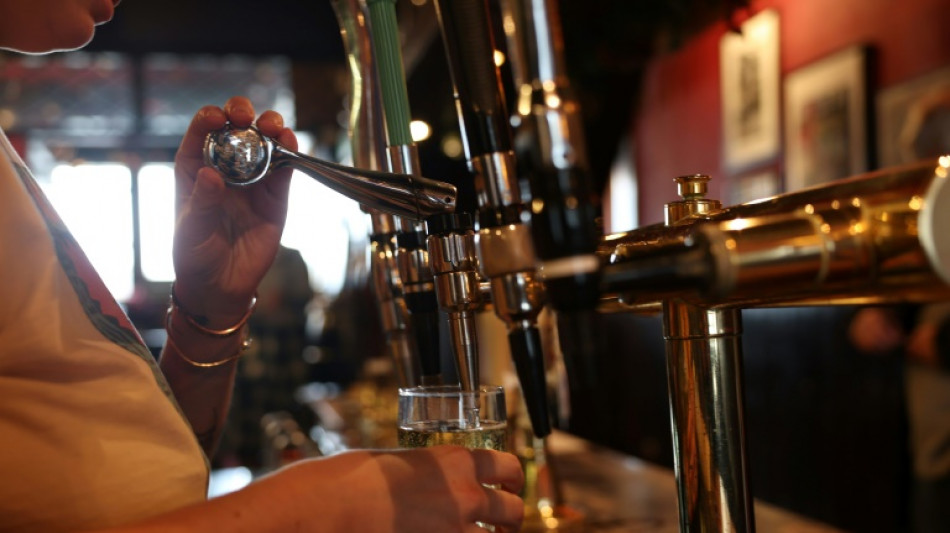
Last orders? UK pubs hit by rising costs and changing tastes / Photo: Daniel LEAL - AFP

 Boland strikes twice for Australia in rain-hit South Africa Test

 Marseille put Angers to the sword in Ligue 1

 Albanian PM refuses to quit as violent protests enter sixth day

 Chwalinska fights back to win Wuhan Open in title breakthrough
 Kulusevski on brink of return for Spurs after 17-month absence

 Ukraine sets Saint Petersburg refinery ablaze in large-scale drone attack
 Spain's in-form Chacarra wins DP World India Championship

 Two pilots die in Saudi coalition helicopter crash near Yemen border
 Riyadh skyscraper shifts tenants online as Houthi attacks intensify

 Messi scores twice as Inter Miami defeat Atlanta United 3-1

 Qatar and Norway review bilateral ties at Oslo consultations

 Vietnam and EFTA states sign free-trade agreement in Hanoi
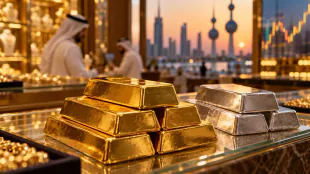 Gold closes week near $4,165 as US inflation outlook pressures market
 PSG rally past Strasbourg to take Ligue 1 lead

 India’s services surplus narrows as import growth overtakes exports
 RCom professional asks Supreme Court to revisit spectrum insolvency ruling

 Debt recovery lessons after derivatives losses and repeated borrowing

 Katie Alexander reportedly leaves flat shared with Eamonn Holmes
 Body found in search for missing Glasgow teenager

 Andi King recounts late-life transition after decades behind an “alpha male” identity

 Bromsgrove Repair Cafe reports nearly 80% repair success rate
 B.C. Lions focus on playoff momentum after Calgary defeat

 PNB expects festive demand to add up to two points to quarterly credit growth
 Cyient DLM drops 12% as margin concerns overshadow quarterly growth
 Arizona quarterback says audible led to dismissal and teammates’ suspensions
They've served Roman soldiers, knights and poets and have been a gathering place for communities to enjoy a brew beside a crackling fire for centuries.
Now many of Britain's watering holes are calling "last orders" for good because of soaring costs and as people adopt healthier, alcohol-free lifestyles.
The British Beer and Pub Association (BBPA), an industry body, said the number of pubs fell from 60,800 in 2000 to 45,800 in 2022.
The trend continued this year as a result of high inflation, energy bills and business rates, which cut into increasingly stretched earnings.
The Altus Group, a commercial real estate analyst which monitors pub closures, says 386 pubs in England and Wales closed in 2022.
Nearly the same number again (383) were demolished or converted into other types of use in the first six months of this year alone.
The BBPA reckons 2024 will be "decisive" for the industry, which supports some 936,000 jobs, and wants cuts on beer duties, business rates and sales taxes.
Social historian Paul Jennings, who has written extensively about British pubs, is not surprised that so many have called "time".
"People drink less as there are many other ways to spend leisure time and money," he told AFP.
"Many people go to the supermarket and drink at home, paying less than at a pub."
- Slum clearance -
The rate of pub closures first gathered pace in the 1800s and early 1900s, when high levels of alcohol consumption and public drunkenness gave rise to the temperance movement.
The religious and social movement, which campaigned against the recreational use and sale of liquor, earned government support.
By the end of the 19th century, it is estimated that about one in 10 adults shunned alcohol and rowdy public houses.
The next significant blow came after the 1930 Housing Act, which required local councils to demolish slums, leading to the demolition of many street corner "locals".
Just last year, planners were permitted to demolish the 200-year-old Still and Star opposite Aldgate tube station in London, despite a campaign by the Victorian Society.
Described by the heritage body as "one of the last surviving relics of the City of London's working-class past", it has now made way for a new high-rise office block.
"Hopefully, at some point, the decline will stabilise as we approach the minimum number of pubs needed to satisfy demand in each area," said Nick Fish, head of statistics at the BBPA.
Other contributing factors to closures include a ban on smoking indoors in England imposed in 2007, high rates of beer tax and discounted alcohol sales by supermarkets, in addition to closures during the Covid-19 pandemic.
- Attempts to preserve -
Attempts are being made to preserve Britain's pub culture, which stretches back 2,000 years to the Roman era, when wine-serving "tabernae" were set up to quench the thirst of soldiers and travellers.
The National Trust heritage conservation body has taken ownership of 39 pubs and inns in Britain, including the George Inn in south London.
The current building dates back to 1676. It is said to have been frequented by Charles Dickens and mentioned in his novel "Little Dorrit".
Despite the closures, pubs and pub culture are still a draw, particularly for tourists.
"A pub might have to amend how it (adapts) to the changing world around them but there will always be a place in society for a classic British pub," said John Warland, the director of Liquid History Tours, which offers dedicated pub tours of London.
"What would London be without them?"
For Historic England, another heritage body, pubs have always had to adapt to the shifting tastes of their changing clientele, from wine-drinking Romans to mead-sipping Vikings and ale-sipping locals.
Food and drink author Pete Brown says many pubs are owned by real estate companies, which will gladly sell up if they believe they can make more money by erecting a supermarket or apartment block.
But Brown, author of "Man Walks into a Pub: A Sociable History of Beer", still has a sense of optimism.
"Pubs will never completely disappear," he said. "They are part of British identity. We will simply have fewer."
M.O.Allen--AT