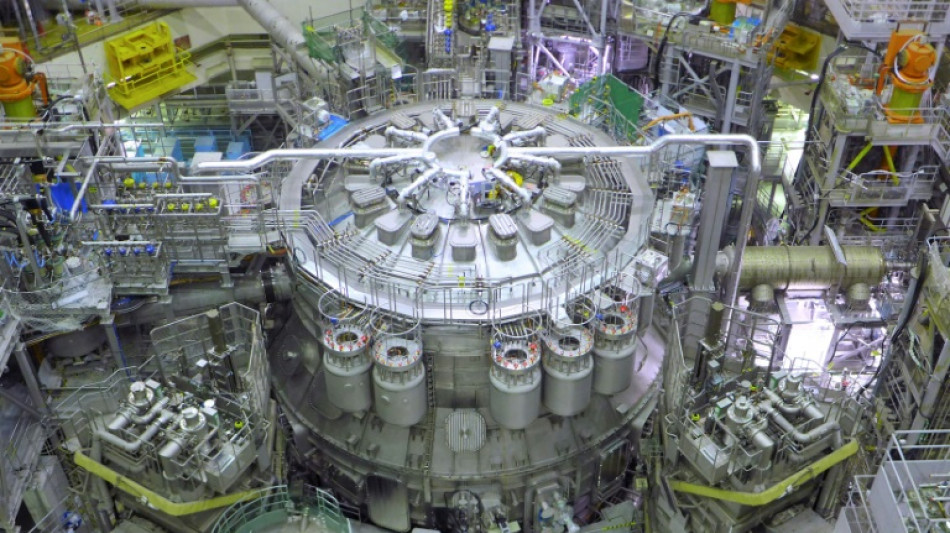
Japanese experimental nuclear fusion reactor inaugurated / Photo: Handout - National Institutes for Quantum Science and Technology (QST)/AFP

 Boland strikes twice for Australia in rain-hit South Africa Test

 Marseille put Angers to the sword in Ligue 1

 Albanian PM refuses to quit as violent protests enter sixth day

 Chwalinska fights back to win Wuhan Open in title breakthrough
 Kulusevski on brink of return for Spurs after 17-month absence

 Ukraine sets Saint Petersburg refinery ablaze in large-scale drone attack

 Spain's in-form Chacarra wins DP World India Championship

 Two pilots die in Saudi coalition helicopter crash near Yemen border

 Riyadh skyscraper shifts tenants online as Houthi attacks intensify

 Messi scores twice as Inter Miami defeat Atlanta United 3-1

 Qatar and Norway review bilateral ties at Oslo consultations
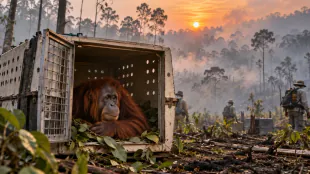
 Vietnam and EFTA states sign free-trade agreement in Hanoi

 Gold closes week near $4,165 as US inflation outlook pressures market

 PSG rally past Strasbourg to take Ligue 1 lead

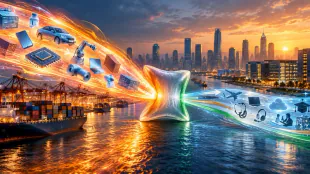 India’s services surplus narrows as import growth overtakes exports
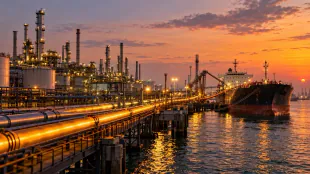
 RCom professional asks Supreme Court to revisit spectrum insolvency ruling

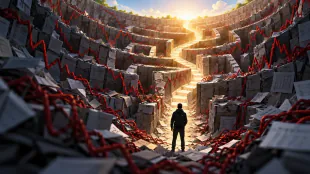 Debt recovery lessons after derivatives losses and repeated borrowing

 Katie Alexander reportedly leaves flat shared with Eamonn Holmes

 Body found in search for missing Glasgow teenager

 Andi King recounts late-life transition after decades behind an “alpha male” identity

 Bromsgrove Repair Cafe reports nearly 80% repair success rate

 B.C. Lions focus on playoff momentum after Calgary defeat

 PNB expects festive demand to add up to two points to quarterly credit growth

 Cyient DLM drops 12% as margin concerns overshadow quarterly growth

 Arizona quarterback says audible led to dismissal and teammates’ suspensions

The world's biggest experimental nuclear fusion reactor in operation was inaugurated in Japan on Friday, a technology in its infancy but billed by some as the answer to humanity's future energy needs.
Fusion differs from fission, the technique currently used in nuclear power plants, by fusing two atomic nuclei instead of splitting one.
The goal of the JT-60SA reactor is to investigate the feasibility of fusion as a safe, large-scale and carbon-free source of net energy -- with more energy generated than is put into producing it.
The six-storey-high machine, in a hangar in Naka north of Tokyo, comprises a donut-shaped "tokamak" vessel set to contain swirling plasma heated up 200 million degrees Celsius (360 million degrees Fahrenheit).
It is a joint project between the European Union and Japan, and is the forerunner for its big brother in France, the under-construction International Thermonuclear Experimental Reactor (ITER).
The ultimate aim of both projects is to coax hydrogen nuclei inside to fuse into one heavier element, helium, releasing energy in the form of light and heat, and mimicking the process that takes place inside the Sun.
Researchers at ITER, which is over budget, behind schedule and facing major technical problems, hope to achieve nuclear fusion technology's holy grail, net energy.
Sam Davis, deputy project leader for the JT-60SA, said the device will "bring us closer to fusion energy".
"It's the result of a collaboration between more than 500 scientists and engineers and more than 70 companies throughout Europe and Japan," Davis said at Friday's inauguration.
EU energy commissioner Kadri Simson said the JT-60SA was "the most advanced tokamak in the world", calling the start of operations "a milestone for fusion history".
"Fusion has the potential to become a key component for energy mix in the second half of this century," Simson added.
The feat of "net energy gain" was managed last December at the National Ignition Facility at Lawrence Livermore National Laboratory in the United States, home to the world's largest laser.
The US facility uses a different method to ITER and the JT-60SA known as inertial confinement fusion, in which high-energy lasers are directed simultaneously into a thimble-sized cylinder containing hydrogen.
The US government called the result a "landmark achievement" in the quest for a source of unlimited, clean power and an end to reliance on carbon-emitting fossil fuels that cause climate change as well as geopolitical upheaval.
Unlike fission, fusion carries no risk of catastrophic nuclear accidents -- like that seen in Fukushima in Japan in 2011 -- and produces far less radioactive waste than current power plants, its exponents say.
E.Flores--AT