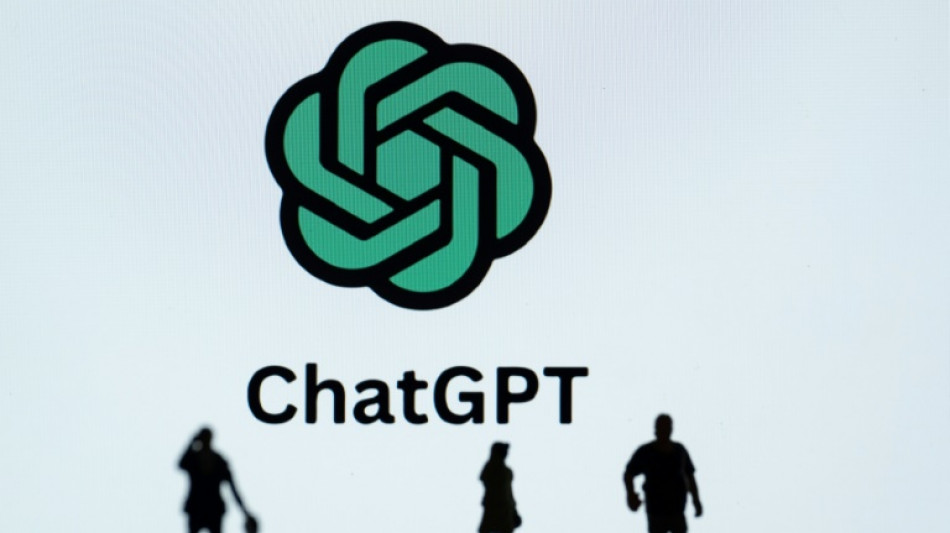
Big Tech in charge as ChatGPT turns one / Photo: SEBASTIEN BOZON - AFP

 Boland strikes twice for Australia in rain-hit South Africa Test

 Marseille put Angers to the sword in Ligue 1
 Albanian PM refuses to quit as violent protests enter sixth day

 Chwalinska fights back to win Wuhan Open in title breakthrough

 Kulusevski on brink of return for Spurs after 17-month absence

 Ukraine sets Saint Petersburg refinery ablaze in large-scale drone attack
 Spain's in-form Chacarra wins DP World India Championship

 Two pilots die in Saudi coalition helicopter crash near Yemen border

 Riyadh skyscraper shifts tenants online as Houthi attacks intensify

 Messi scores twice as Inter Miami defeat Atlanta United 3-1

 Qatar and Norway review bilateral ties at Oslo consultations
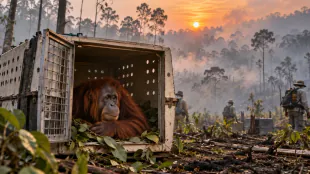
 Vietnam and EFTA states sign free-trade agreement in Hanoi

 Gold closes week near $4,165 as US inflation outlook pressures market

 PSG rally past Strasbourg to take Ligue 1 lead

 India’s services surplus narrows as import growth overtakes exports

 RCom professional asks Supreme Court to revisit spectrum insolvency ruling

 Debt recovery lessons after derivatives losses and repeated borrowing

 Katie Alexander reportedly leaves flat shared with Eamonn Holmes

 Body found in search for missing Glasgow teenager

 Andi King recounts late-life transition after decades behind an “alpha male” identity

 Bromsgrove Repair Cafe reports nearly 80% repair success rate

 B.C. Lions focus on playoff momentum after Calgary defeat

 PNB expects festive demand to add up to two points to quarterly credit growth

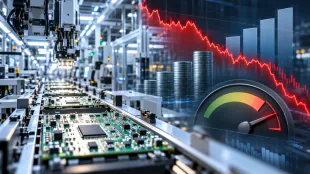 Cyient DLM drops 12% as margin concerns overshadow quarterly growth

 Arizona quarterback says audible led to dismissal and teammates’ suspensions

A year after the history-making release of ChatGPT, the AI revolution is here, but the recent boardroom crisis at OpenAI, the super app's company, has erased any doubt that Big Tech is in charge.
In some ways, the discreet reveal of ChatGPT on November 30 last year was the revenge of the geeks, the unsung researchers and engineers who have been quietly building generative AI behind the scenes.
OpenAI CEO Sam Altman, a well-known figure in technology circles, but still little known beyond that, with the release of ChatGPT made sure that this unheralded AI tech would get the attention it deserves.
ChatGPT became the fastest adopted app in history (since taken over by Meta's Threads) as users marveled at the generation of poems, recipes -- or whatever the internet could muster -- in just seconds.
Altman's gamble catapulted the 38-year-old Stanford dropout to household name stardom -- making him a sort of philosopher king of AI with world leaders and tycoons hanging on to his every word.
With AI, "you're in the business of making and selling things you can't put your hands on," said University of Washington historian Margaret O’Mara and author of "The Code", a history of Silicon Valley.
"Having a figurehead of someone who can explain it, especially when it's advanced technology, is really important," she added.
- 'Religious fundamentalism' -
Altman's devotion to AI can often seem quasi-religious.
OpenAI's acolytes are confident that the world will be a better place if they are given free rein (and cash) to build artificial general intelligence - AI at the same level or beyond the capabilities of the human mind.
But the high costs of that sacred mission forced an alliance with Microsoft, the world’s second biggest company, which operates with profit, not altruism, as its goal.
Microsoft pledged $13 billion for OpenAI earlier this year, and Altman redirected the company on a money-making trajectory to help justify the investment.
This eventually sparked this month's boardroom rebellion by those -- including OpenAI's chief scientist -- who believe that the money-makers should be kept at bay.
There is "religious fundamentalism at play here," venture capitalist Dave Morin said in a podcast for The Information after Altman was unceremoniously fired from OpenAI only to be reinstated five days later.
The AI research community have "almost deified this technology," he added.
When the battle erupted, Microsoft defended Altman and OpenAI's young staff all backed him too, aware that the future of the company came with the revenues that kept the computers humming, not lofty ideas on how AI should or should not be used.
- AI agent -
This tension between AI saving the world or ruining it has marked the year since the ChatGPT launch.
Elon Musk, for example, signed a letter calling for a pause in AI innovations to only months later start his own company, xAI, joining an increasingly crowded market.
Google, Meta and Amazon have all weaved promises of AI into their company announcements and invested in AI startups.
Killer robot or magic wand, corporations in all sectors are signing up to try AI, usually through their cloud providers, Microsoft, Google or Amazon or from OpenAI.
"The time from learning that generative AI was a thing to actually deciding to spend time building applications around it has been the shortest I've ever seen for any type of technology," said Rowan Curran, an analyst at Forrester Research.
But fears remain rife that bots might "hallucinate," churning out false, nonsensical or offensive material so company efforts are modest for now.
One attempt is the AI agent, a sort of amped up chatbot that can help office workers trowel through emails, write memos, or have more fun while instant messaging.
Software programmers vaunt the powers at developer collaboration platform Github.
"It's about being able to get the benefits of AI broadly disseminated to everyone," Microsoft CEO Satya Nadella said this month.
The rush to AI ramps up fear of dangers such as human extinction, and societal concerns like bias, job displacement and disinformation on an industrial scale.
Users creating pornographic deepfakes of a classmate or biased AI weeding out loan applicants are where regulators should be focused, industry observers argue.
- 'Capitalists won' -
Whatever the next chapter for AI, it won’t get written without tech giants like Microsoft, which could soon land a seat on the company's board in the fallout of the boardroom drama.
"We saw yet another Silicon Valley battle between the idealists and the capitalists, and the capitalists won," said historian O’Mara.
Nor will the next chapter of AI get written without Nvidia, the manufacturer of AI's secret ingredient, the graphics processing unit, or GPU, a powerful chip that is indispensible to train AI.
Tech giant, startup or researcher -- everyone must get their hands on those Taiwan-made chips, which are both expensive and hard to come by.
Big tech companies -- Microsoft, Amazon, Google -- are at the front of the line.
H.Gonzales--AT