NASA to unveil first images of historic asteroid sample / Photo: Keegan BARBER - NASA/AFP/File

 Four soldiers dead, dozens injured in fire at Canada military base

 Ton-up Agha helps Pakistan down Sri Lanka in tri-series opener

 Man Utd draw at Leeds keeps pressure on Carrick

 Barca defenders Garcia, Kounde injured before key games

 Lula, Bolsonaro to face off in first debate of bruising election

 Maza and Schick help Leverkusen clip Freiburg's wings

 Leeds hit back to deny Man Utd morale-boosting win

 Zelensky tells NBC 'thankful' US has unblocked intelligence sharing

 Pau see off Leicester in Champions Cup

 Kremlin says Ukrainian attacks won't change war aims as Kyiv hits Saint Petersburg

 Martinez starts for Man Utd after outburst

 Alberta separatists rally ahead of independence vote

 Vietnam and EFTA states sign free-trade agreement in Hanoi

 France assesses protest damage after 1,800 arrests

 Gord launches four AI tools for sustainability and emissions management

 Doha 2036 bid sets out sport-led social legacy

 Conservation teams rescue orangutans from Indonesian wildfires

 Gold closes week near $4,165 as US inflation outlook pressures market

 PSG rally past Strasbourg to take Ligue 1 lead

 India’s services surplus narrows as import growth overtakes exports

 RCom professional asks Supreme Court to revisit spectrum insolvency ruling

 Debt recovery lessons after derivatives losses and repeated borrowing

 B.C. Lions focus on playoff momentum after Calgary defeat

 Bromsgrove Repair Cafe reports nearly 80% repair success rate

 Robertson and Selby chase rare Home Nations sweep in Belfast

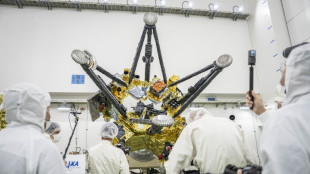
NASA is set to reveal on Wednesday the first images of the largest asteroid sample ever collected in space, something scientists hope will yield clues about the earliest days of our solar system and perhaps the origins of life itself.
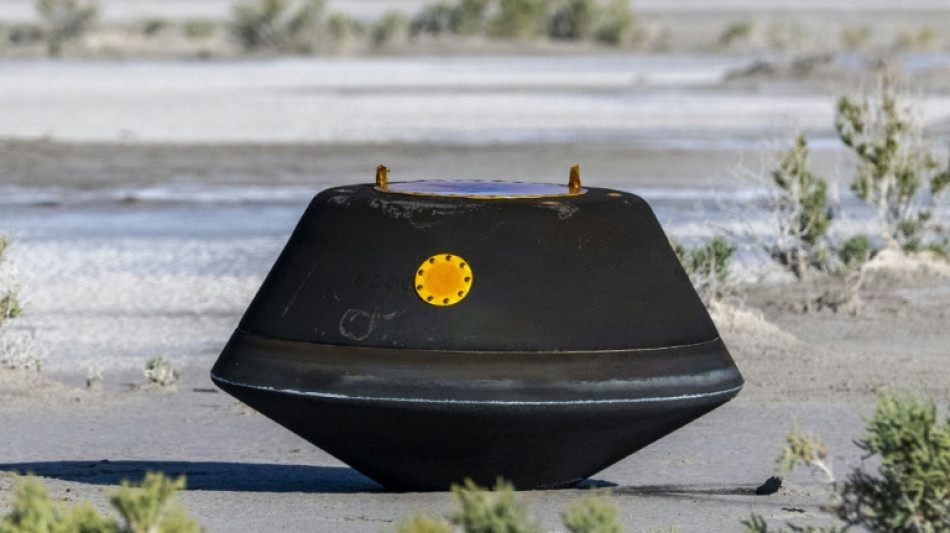
The OSIRIS-REx mission collected rock and dust from the asteroid Bennu in 2020, and a capsule containing the precious cargo successfully returned to Earth a little over two weeks ago, landing in the Utah desert.
It is now being painstakingly analyzed in a specialized clean room at NASA's Johnson Space Center in Houston.
The space agency will hold a live streamed news conference at 11:00 am Eastern Time (1500 GMT) to share photographs and preliminary scientific analysis.
OSIRIS-REx wasn't the first mission to rendezvous with an asteroid and bring back samples for study -- Japan succeeded in the feat twice, returning bits of space pebbles in 2010 and 2020.
But the substantial amount of material -- 250 grams (half a pound) -- as opposed to the 5.4 grams returned by Japan's Hayabusa2 -- is a key difference.
NASA chose to sample Bennu because it is believed to be rich in organic compounds.
Scientists think similar asteroids could have delivered organic building blocks to Earth along with water through collisions billions of years ago.
Bennu's orbit, which intersects that of our planet, also made the roundtrip journey easier than going to the Asteroid Belt, which lies between Mars and Jupiter.
NASA researchers have so far been heartened by the discovery of "bonus particles," described as black dust and debris coating the sample collector.
Back in October 2020, when OSIRIS-REx probe shot nitrogen gas at Bennu to collect its sample, a flap meant to seal it got wedged open with a piece of rock, allowing some of the finer material to flow out of the collector without escaping altogether.
"The very best 'problem' to have is that there is so much material, it's taking longer than we expected to collect it," said deputy OSIRIS-REx curation lead Christopher Snead, in a statement.
"It's really spectacular to have all that material there."
It's thought that Bennu formed from pieces of a larger asteroid in the asteroid belt, following a massive collision between one and two billion years ago.
Data gathered by the spacecraft revealed the particles making up its exterior were so loosely packed that if a person were to step onto the surface, they might sink in, much like stepping into a pit of plastic balls.
In addition to scientific insights, better understanding of Bennu's composition could prove useful if humanity ever needs to steer it away.
While it has no chance of hitting Earth through the mid 2100s, the chances rise to around 1 in 1750 between then and the year 2300, NASA says.
M.King--AT