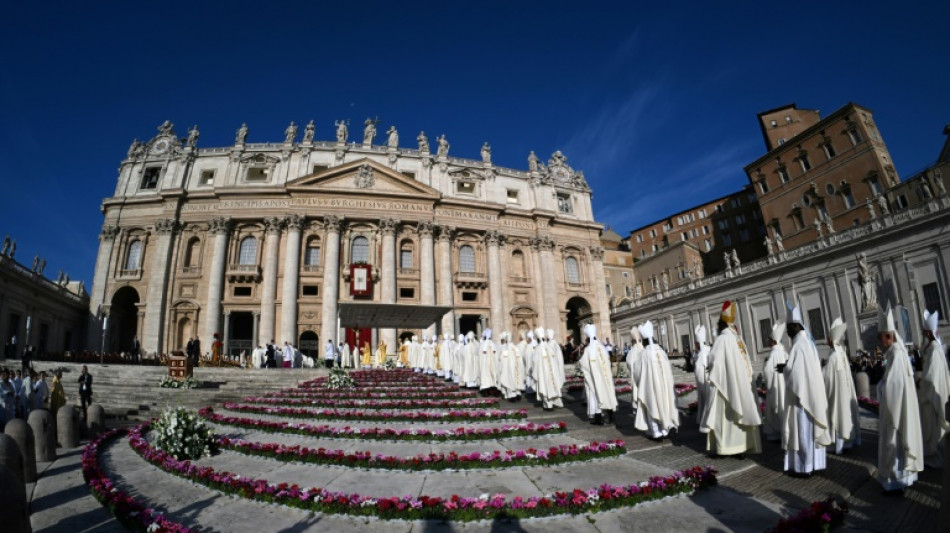
Wartime scholars debate silence of Pope Pius XII on Jews / Photo: Andreas SOLARO - AFP

 Four soldiers dead, dozens injured in fire at Canada military base
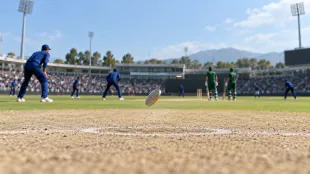
 Ton-up Agha helps Pakistan down Sri Lanka in tri-series opener
 Man Utd draw at Leeds keeps pressure on Carrick
 Barca defenders Garcia, Kounde injured before key games
 Lula, Bolsonaro to face off in first debate of bruising election

 Maza and Schick help Leverkusen clip Freiburg's wings
 Leeds hit back to deny Man Utd morale-boosting win

 Zelensky tells NBC 'thankful' US has unblocked intelligence sharing
 Pau see off Leicester in Champions Cup
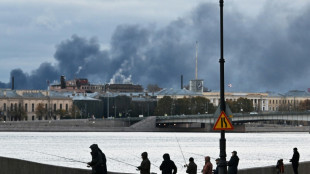
 Kremlin says Ukrainian attacks won't change war aims as Kyiv hits Saint Petersburg

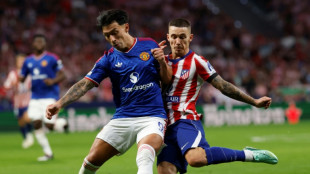 Martinez starts for Man Utd after outburst
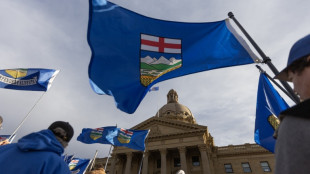 Alberta separatists rally ahead of independence vote
 Vietnam and EFTA states sign free-trade agreement in Hanoi

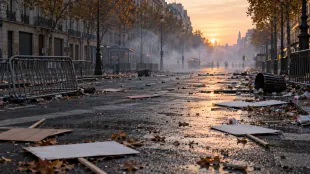 France assesses protest damage after 1,800 arrests

 Gord launches four AI tools for sustainability and emissions management
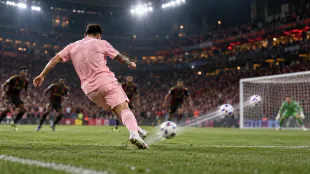
 Doha 2036 bid sets out sport-led social legacy

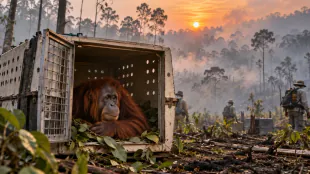 Conservation teams rescue orangutans from Indonesian wildfires

 Gold closes week near $4,165 as US inflation outlook pressures market

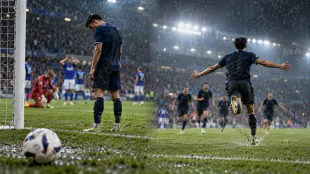 PSG rally past Strasbourg to take Ligue 1 lead

 India’s services surplus narrows as import growth overtakes exports

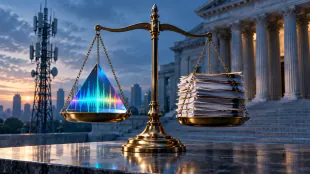 RCom professional asks Supreme Court to revisit spectrum insolvency ruling

 Debt recovery lessons after derivatives losses and repeated borrowing

 B.C. Lions focus on playoff momentum after Calgary defeat
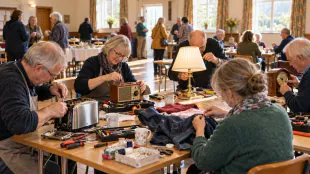 Bromsgrove Repair Cafe reports nearly 80% repair success rate

 Robertson and Selby chase rare Home Nations sweep in Belfast

The Vatican may have saved thousands of Jews during the wartime papacy of Pius XII but the late pope's silence on genocide will be debated this week during an international conference.
The conference of scholars to be held in Rome from Monday to Wednesday comes two years after Pope Francis ordered the unsealing of Vatican archives from the papacy of Pius XII, who led the Catholic Church from 1939 to 1958.
Francis' move, which followed decades of pressure from scholars fiercely divided over the former pope's perceived passivity during Nazi Germany's extermination of millions of European Jews, made available about 16 million new documents to historians and theologians.
But the disagreements remain.
Things are "neither black nor white", said Etienne Veto, the auxiliary bishop of Reims and former director of the Cardinal Bea Center, a Rome research institute on Jewish-Christian relations.
Still unchanged, said Veto, are the two radically opposed narratives that researchers are working to reconcile about the actions of Pius, who was trained in law and served as Holy See nuncio to Prussia and then Germany before becoming pope.
One narrative sees Pius as a reclusive pontiff, hidden away in his Vatican palace who never publicly denounced the persecution, deportation and extermination of the Jews.
Another views him as a discreet and savvy pope, whose army of priests and nuns helped hide at least 4,000 Roman Jews while seeking to protect Catholics in Europe.
- Defenders and critics -
The newly opened archives "do not change the main line of historiography, which is that of public silence", said Nina Valbousquet, a historian of anti-Semitism at the French School of Rome.
"What we see more is the underlying reasoning," Valbousquet said.
The Vatican has defended Pius XII, saying he saved many Jews by having them hidden in religious institutions and that his silence was born out of a wish to avoid aggravating their situation.
His supporters see the wartime pope as seeking to combine a diplomat's prudence with the desire to retain papal neutrality.
Gabriele Rigano, a professor of contemporary and Church history at the University for Foreigners of Perugia, said Pius's silence reflected "a conscious choice that responds to different needs of the papacy and the Catholic Church, which can be summarised by the policy of impartiality".
Vatican thinking at the time also viewed an ultimately victorious Germany as a bulwark against Communism and the Soviet Union, noted Vaticanist Marco Politi.
Among the wealth of documents showing that the Vatican was aware of the extermination of Jews in the Nazi concentration camps was a letter from a German Jesuit priest, Lothar Koenig, to Pius' private secretary, the German Robert Leiber.
- Dying every day -
Koenig's letter of December 14, 1942 -- revealed last month by a researcher -- mentions the "blast furnace" in the Belzec death camp in Poland, where "up to 6,000 men and women die every day, especially Poles and Jews".
The main contribution of the newly opened archives, however, reflect changes in Church policy towards Jews following the war.
The Curia, or government of the Holy See, "was marked by strong anti-Judaism, which bordered on anti-Semitism", said Rigano, while Pius's silence contrasted with the attitude of his predecessor, Pius XI.
The latter protested against Italy's Fascist-era racial laws, writing: "We Christians are spiritually Semites."
The Holocaust became an "awakening" for the Church, which realised that its own teachings could have become "a breeding ground for the poisonous plant of anti-Semitism", Veto said.
Still, the Vatican was slow to react, said Valbousquet, citing "the persistence of anti-Jewish prejudices within the Church in the immediate post-war period and the lack of awareness of what the Shoah was".
It was not until 1965 that the Second Vatican Council published the "Nostra Aetate" declaration on the Church's relationship to non-Christian religions. That document once and for all rejected anti-Semitism.
A formal process for Pius's beatification began in 1967. But since Pope Benedict XVI in 2009 proclaimed him "venerable", a further step towards sainthood, the process has stalled.
K.Hill--AT