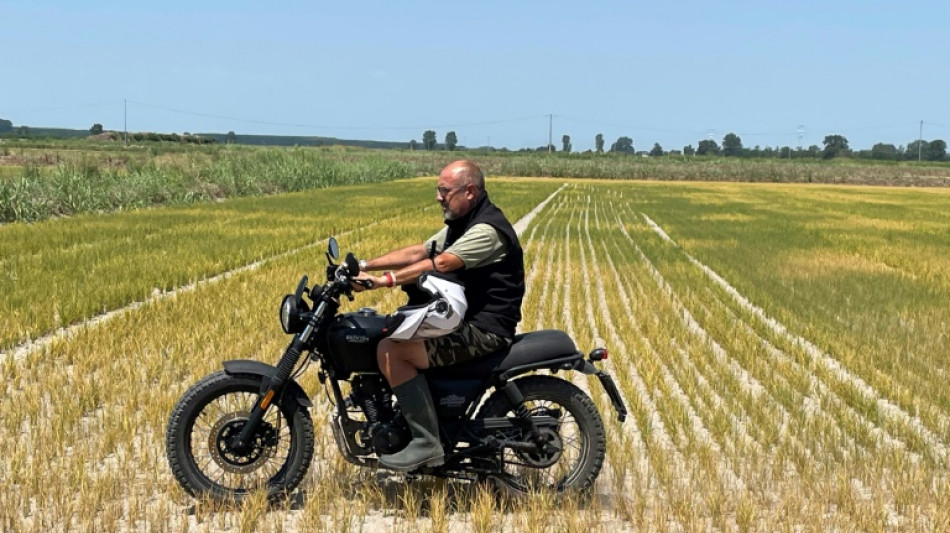
EU's next food fight: regulating gene-edited crops / Photo: Brigitte HAGEMANN - AFP/File

 Rubio seeks to strengthen US foothold in Central Asia

 LeBron joins 76ers to chase one more NBA title at age 41

 Rays one win from World Series return after downing Guardians

 Kings' Ben Simmons tears Achilles in training
 Lula, Bolsonaro set for first debate showdown in bitter election race

 Mbappe hits two as Real Madrid rout Sevilla
 Browns edge Ravens for division lead, Texans beat Jags

 Lyon go top of Ligue 1 as Monaco fall to first defeat of the season
 Venezuela opposition alliance reaffirms Nobel laureate Machado as leader

 'Street Fighter' wins N. America box office, buzzy doc stuns in 2nd

 NFL: Paris game to go ahead despite protests in France

 Arteta hails Arsenal 'finishers' after Madueke fells Forest

 Trump backs ally Netanyahu ahead of Israel's tight election

 Madueke strikes late as below-par Arsenal sink Forest
 Second day of street clashes in Milan

 Dupont's Toulouse hold off Exeter as English Champions Cup woes continue

 Zelensky speaks to US envoys amid Trump spat

 Paris police in new battles with protesters and looters

 Multiple deaths, injuries at western Canada military base: minister

 Boland strikes twice for Australia in rain-hit South Africa Test

 Marseille put Angers to the sword in Ligue 1
 Albanian PM refuses to quit as violent protests enter sixth day

 Chwalinska fights back to win Wuhan Open in title breakthrough
 Kulusevski on brink of return for Spurs after 17-month absence

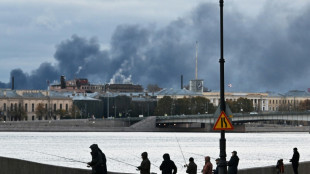 Ukraine sets Saint Petersburg refinery ablaze in large-scale drone attack

Extreme weather caused by climate change has damaged food production across Europe.
Confronted with a deteriorating situation, divided European Union decision-makers are debating new rules for genetically modified crops.
Last year's drought ravaged the continent's farms, starving everything from Spanish olive harvests to Hungary's maize and sunflower crops, Italian and Romanian corn fields to France's dairy production.
Some argue the answer to Europe's problems is deregulating gene modification techniques to produce better crops. Others claim this would be a "smokescreen" to avoid having to radically change the way the bloc farms.
Supporters say seeds produced using gene editing techniques are less vulnerable to drought and disease -- and require less water.
The European Commission, the EU's executive arm, will propose a law in July that will loosen the rules on plants produced by certain new genomic techniques (NGTs), branded by critics as simply "new genetically modified organisms (GMOs)".
The proposals will open a new battlefront among the EU's 27 member states -- with drought-hit countries especially in favour -- and between EU lawmakers.
The new techniques are a mix of genomic editing tools that alter a plant's genetic make-up without the addition of foreign genetic material, unlike "transgenic" GMOs that include DNA from other species.
The commission says the current rules on GMOs including permission and labelling are "not fit for purpose" for the new technology.
"Plants produced by new genomic techniques can support sustainability," the EU's health commissioner, Stella Kyriakides, said last month.
The proposals, she said, "will strongly signal to farmers, researchers and industry that this is the way forward in the EU".
- 'Magnificent tool' -
In a document from February seen by AFP, the commission looked at whether it should treat traditional seeds and those produced using the new techniques, with modifications that could in theory have happened naturally, as the same.
France, severely affected by drought last summer, backs changing the rules.
In April, French Agriculture Minister Marc Fesneau expressed his concerns over what he called Europe's "delay", arguing there should be a push to allow biotechnology that gives Europe the tools to deal with climate change by producing more resistant seeds.
Late last year, his Spanish counterpart, Luis Planas, hailed the techniques as a "magnificent tool to have seeds that need less water and fertiliser".
Other countries are more wary.
In March, Austria criticised a commission study that it claimed was based on "assumptions" rather than scientific data and called for a comprehensive analysis of any environmental and health risks.
Cyprus, Germany, Hungary and Luxembourg support that position.
The powerful European farming lobby group Copa-Cogeca supports the new rules.
"If we need to supply society with food in Europe, and if we want to be self-sufficient, then we need to adapt rules," said Thor Gunnar Kofoed, chair of the seed working group at Copa-Cogeca.
- Parliament divided -
A majority of EU lawmakers support relaxing the rules.
The European Parliament's biggest political group, the conservative European People's Party (EPP), opposes any binding target to cut pesticides but pushes for new rules on the "innovative" technology that would "stimulate research, investment and jobs".
Pascal Canfin, a French centrist MEP and the chairman of the parliament's environment committee, said the new biotechnology could "be part of the useful solutions for the agricultural transition" if they help avoid using chemical pesticides.
But unlike the EPP, he supports a cap on pesticides.
Left-wing parties in the EU parliament are resisting specific laws for NGTs, insisting that the new technology already comes under current wide-ranging rules on GMOs.
The forthcoming battle over the draft law, which will have to be negotiated between the member states and parliament, is likely to focus on safeguards.
The Greens want a full risk assessment to avoid unintended effects and force producers to ensure detection and traceability methods, and make labelling compulsory.
Labelling would put off consumers who prefer GMO-free food, said Mute Schimpf, a campaigner for Friends of the Earth Europe, who criticised the reform.
"This proposal is a smokescreen to avoid the debate we should have on shifting to a truly sustainable farming system," she told AFP.
A.Clark--AT