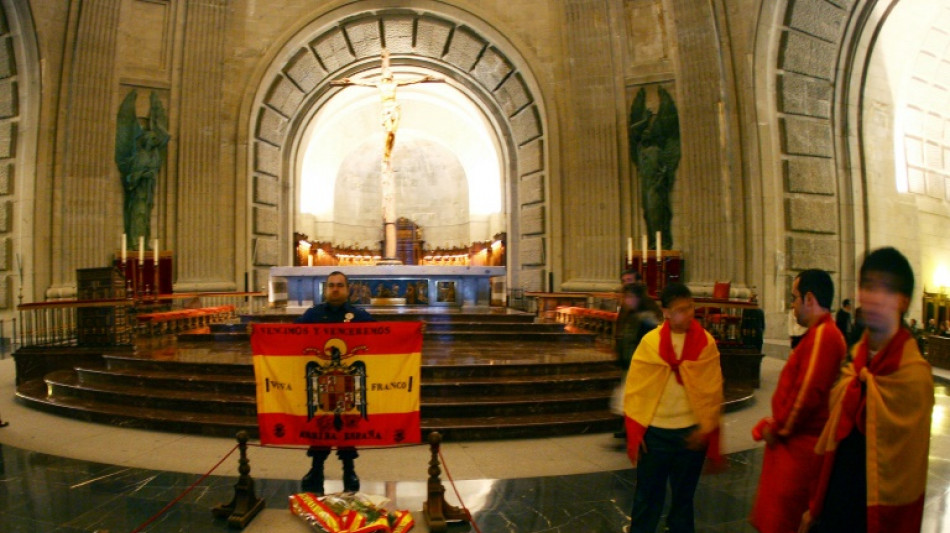
Spain exhumes remains of fascist party founder / Photo: PHILIPPE DESMAZES - AFP/File

 'I call it a bribe': Pennsylvania residents spurn $10,000 data center checks

 In a former US steel city, ordinary people struggle to get by
 'Liar,' 'clown': Lula and Bolsonaro spar in Brazil poll debate
 Record El Nino? Depends who's counting
 On the front line of ocean conservation off Portugal's Madeira

 Wembanyama targets title breakthrough as NBA season tips off
 With LeBron on board it's title or bust for Philly fans
 One year after Louvre heist, where are the missing jewels?

 Knicks face tall task in NBA championship repeat bid
 Warriors' Curry 'fine' after limping out of practice - Kerr

 Zelensky speaks to US envoys as Trump lashes out
 'Surprise package' Lazio crush Juve to keep pace with Serie A leaders Inter

 China growth expected to miss official target in third quarter

 Lazio crush Juventus to move level with Serie A leaders Inter

 Leeds draw feels like 'fresh start' for Man Utd's Carrick

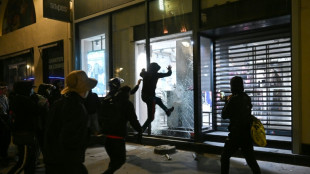
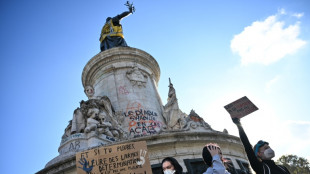
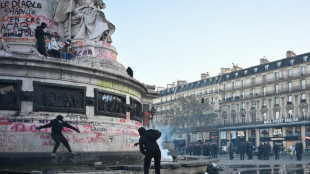 Macron denounces 'unbridled' violence as France hit by new clashes

 Hurzeler lauds 'hard worker' Gomez after Brighton goal from halfway line
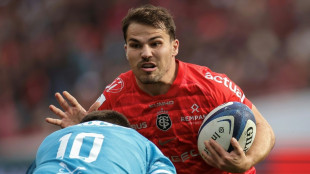 Toulouse hold off Exeter, Northampton save English Champions Cup blushes

 Arsenal snatch late win to keep pressure on Man City as Man Utd held
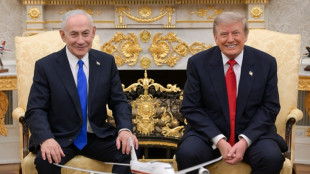
 Arsenal strike late to keep pressure on Man City as Man Utd held

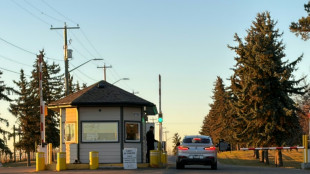
 Four soldiers dead, dozens injured in fire at Canada military base
 Ton-up Agha helps Pakistan down Sri Lanka in tri-series opener
 Man Utd draw at Leeds keeps pressure on Carrick
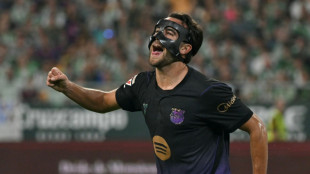 Barca defenders Garcia, Kounde injured before key games
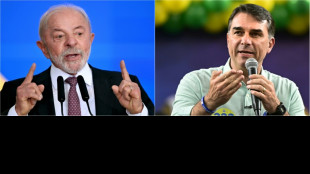 Lula, Bolsonaro to face off in first debate of bruising election
Experts were on Monday exhuming the remains of the founder of Spain's fascist Falange party from a grandiose basilica, where the body of former dictator Francisco Franco once lay, ahead of their removal to a low-key family grave.
The operation comes six months after Spain passed the so-called democratic memory law which is designed to tackle the legacy of the 1936-39 civil war and the decades of dictatorship that followed.
Jose Antonio Primo de Rivera founded the Falange party in 1933, which became one of the pillars of Francisco Franco's brutal regime, along with the military and Spain's Roman Catholic Church.
Executed in November 1936 at the start of the war for conspiring against the elected Republican government, Primo de Rivera was in 1959 buried inside the basilica in the Valley of the Fallen, 50 kilometres (30 miles) northwest of Madrid.
By 0630 GMT, two black funeral cars could be seen outside the complex, with Spanish public television saying the operation had begun to exhume and transfer his remains to San Isidro cemetery in Madrid where he will be laid alongside other family members.
Under the new law, no figure linked to the 1936 military coup that triggered the civil war should be buried in "a prominent public place" that could encourage acts of homage or exultation.
Accordingly, the family agreed to have his remains be transferred to San Isidro, selecting April 24 as the date because it marks exactly 120 years since his birth.
The basilica where Primo de Rivera's remains lay for over six decades, is part of a vast hillside mausoleum built after the civil war by Franco's regime -- in part by the forced labour of 20,000 political prisoners.
When the dictator died in 1975, he was also buried there, in a tomb by the altar, close to Primo de Rivera's grave, with the site long being a draw for those nostalgic for the Franco era.
Cabinet minister Felix Bolanos said the operation "was another step" in the government's efforts to strip the mausoleum of its status as a symbol of Francoism and far-right ideology.
"It should not be possible to pay tribute to any person evoking the dictatorship," he said after the government announced the exhumation on Thursday.
Honouring those who died or suffered violence or repression during the civil war and dictatorship has been a top priority for the left-wing government of Prime Minister Pedro Sanchez, who came to power in 2018.
In 2019, his government relocated Franco's remains from the basilica following a lengthy legal battle with the dictator's family.
- A place of memory -
The basilica -- topped by a 150-metre (500-foot) stone cross -- and mausoleum also house the remains of more than 30,000 victims from both sides of the civil war.
It is a deeply divisive symbol of a past that Spain still finds difficult to digest.
The democratic memory law, which came into effect in October 2022, aims to turn the Valley of the Fallen into a place of memory for the dark years of the dictatorship.
It also promotes the search for the regime's victims who are buried in mass graves across Spain and annuls the criminal convictions of opponents of the Franco regime.
But the law has been politically divisive with right-wing parties saying it needlessly dredges up the past.
Santiago Abascal, leader of far-right Vox, accused the government of seeking to "once again desecrate tombs and dig up hatred" with Primo de Rivera's exhumation.
The move comes as Spain gears up for regional and local elections on May 28 and a year-end general election which polls suggest will be tight.
F.Ramirez--AT