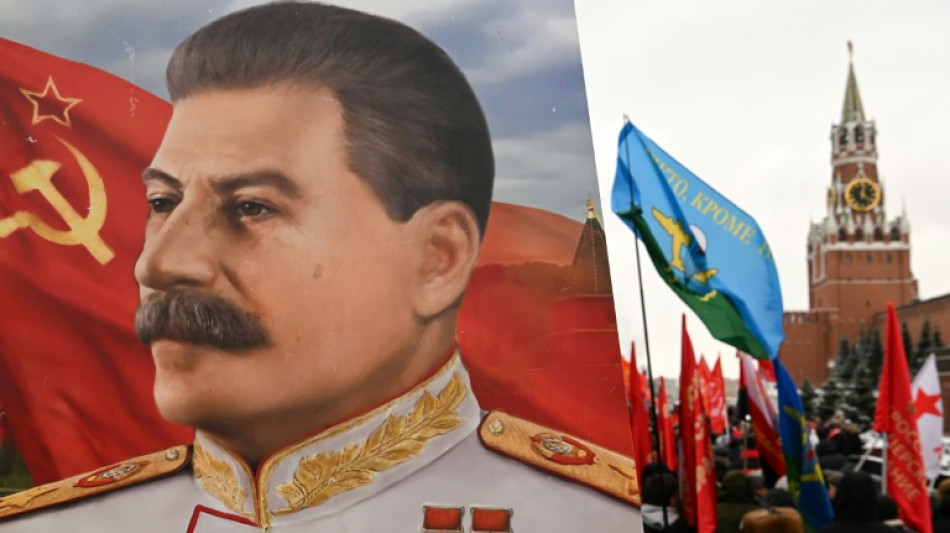
Moscow split between adoration and disgust, 70 years after Stalin's death / Photo: Kirill KUDRYAVTSEV - AFP

 Australia's new Ghost Shark submarines grow some 'teeth'
 'I call it a bribe': Pennsylvania residents spurn $10,000 data center checks
 In a former US steel city, ordinary people struggle to get by
 'Liar,' 'clown': Lula and Bolsonaro spar in Brazil poll debate
 Record El Nino? Depends who's counting
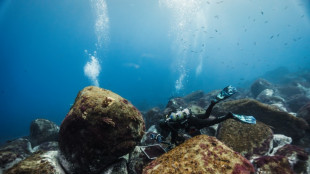 On the front line of ocean conservation off Portugal's Madeira
 Wembanyama targets title breakthrough as NBA season tips off
 With LeBron on board it's title or bust for Philly fans
 One year after Louvre heist, where are the missing jewels?
 Knicks face tall task in NBA championship repeat bid
 Warriors' Curry 'fine' after limping out of practice - Kerr
 Zelensky speaks to US envoys as Trump lashes out
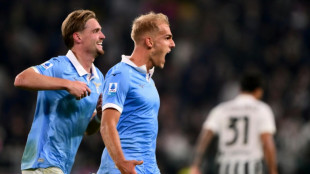 'Surprise package' Lazio crush Juve to keep pace with Serie A leaders Inter
 China growth expected to miss official target in third quarter

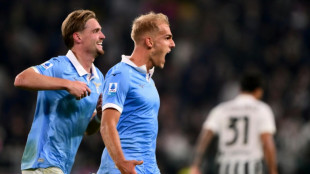 Lazio crush Juventus to move level with Serie A leaders Inter

 Leeds draw feels like 'fresh start' for Man Utd's Carrick
 Macron denounces 'unbridled' violence as France hit by new clashes
 Hurzeler lauds 'hard worker' Gomez after Brighton goal from halfway line
 Toulouse hold off Exeter, Northampton save English Champions Cup blushes
 Arsenal snatch late win to keep pressure on Man City as Man Utd held
 Arsenal strike late to keep pressure on Man City as Man Utd held
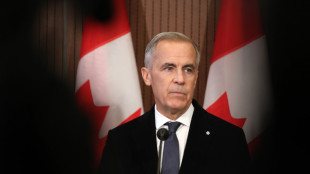 Four soldiers dead, dozens injured in fire at Canada military base
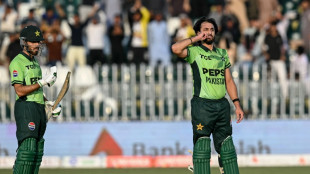 Ton-up Agha helps Pakistan down Sri Lanka in tri-series opener
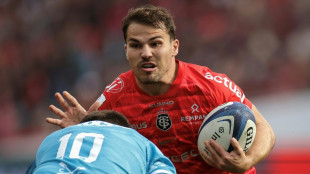
 Man Utd draw at Leeds keeps pressure on Carrick
 Barca defenders Garcia, Kounde injured before key games
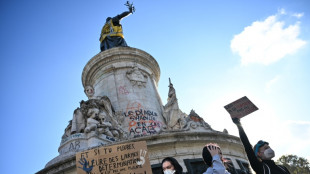
More than a thousand people gathered on Moscow's Red Square on Sunday for the 70th anniversary of the death of Soviet leader Joseph Stalin, whose divisive legacy looms over the Ukraine conflict.
Kyiv says the offensive is driven by Stalin-era imperialistic tendencies, while the heightened repression of critics inside Russia is reminiscent of Soviet methods.
People waving communist flags or holding portraits of the late dictator waited in a long line to lay flowers on his grave near the Kremlin wall.
"People would be happy if we had a leader like him again," said Yuri, a Russian pensioner.
Stalin, born in Georgia in 1878, transformed the Soviet Union into a totalitarian state during his nearly three-decade rule.
He organised a personality cult around himself and presided over purges that saw millions executed or sent to the gulag system, a vast network of prison camps.
But in Russia, many praise him for singlehandedly defeating Hitler in 1945 -- a version heavily contested by historians -- and restoring Russia's grandeur.
Drawing parallels with that history is part of the messaging put forward by the Kremlin to support the current Ukraine offensive, painted as an existential battle against the West.
- 'Won't survive' -
"Without Stalin's return to Russia, we Russians and other indigenous peoples of Russia won't survive," 74-year-old former Russian colonel and military intelligence officer Vladimir Kvachkov told AFP.
Many opposition figures, including critics of the conflict, have been branded "foreign agents", which has dark Soviet-era connotations and requires individuals or groups to mark all publications with a tag.
In a few Russian cities, associations often linked to the communist party have inaugurated monuments honoring the Soviet leader.
A bust of Stalin was unveiled earlier this year in Volgograd, formerly Stalingrad, a day before celebrations marking the Soviet victory at the Battle of Stalingrad, one of the bloodiest in World War II.
But these remain isolated initiatives.
There have not been moves by the government to restore the monuments to Stalin which were dismantled after his death.
"People consider (Stalin) in different ways. Older people, for the most part, consider him warmly; it's as if they've forgotten about the repression," said former history teacher Petr Sokolov.
"Young people don't know him very well. And the middle generation is divided in half," Sokolov said.
- 'Foreign agents' -
The Kremlin has glorified the Soviet Union's geopolitical and military might, particularly in material taught in school or shown on state-run media.
At the same time, it has downplayed Stalinist repression -- without outright denying it.
Attempts to gloss over the darkest moments of the Soviet Union were never clearer than when authorities closed the Memorial rights group in late 2021.
Memorial, a pillar of Russian civil society, had for decades worked to keep alive the memory of people who died in Stalin's gulags and maintained its extensive archives in Moscow.
In private however, some people still remember.
"My great-grandmother did not escape repression in 1945. And was repressed (imprisoned) until Stalin's death," said 25-year-old biotechnologist Tatiana Kuznetsova.
"On the 70th anniversary (since his death), we are in no way celebrating, but remembering the repressions. And, of course, it is horrible to look at what is happening today."
Ch.Campbell--AT