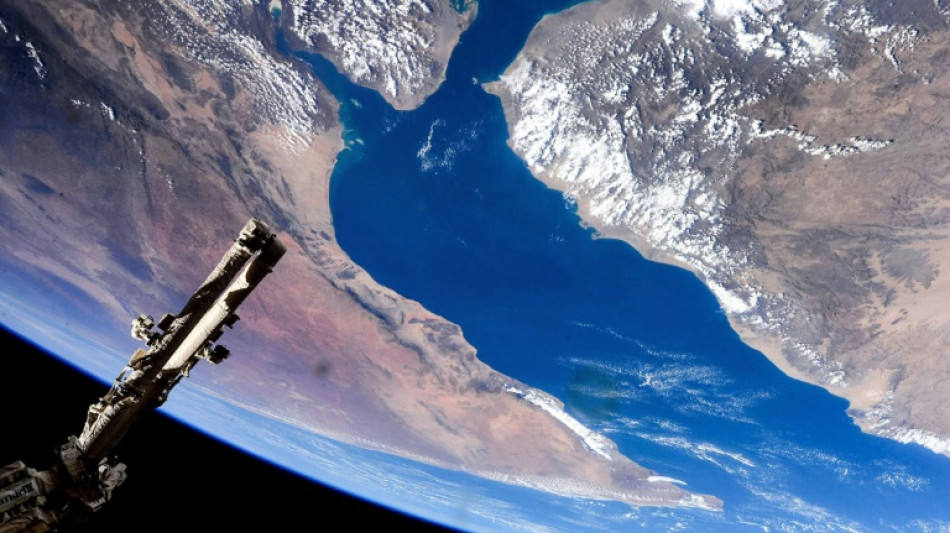
Space junk, not meteorites, remains biggest threat to spacecraft / Photo: Samantha CRISTOFORETTI - NASA/ESA/AFP/File

 Australian lawmaker 'critically' hurt in attack, officials say

 Indonesia fires burned over 1.9 mn hectares through September: monitor

 Asian tech stocks mixed after Wall St losses, eyes on earnings
 China's third-quarter growth narrowly beats forecasts

 Asian stocks start week on back foot, tracking tech-led Wall St losses

 China growth narrowly beats forecasts

 Faith and fury: Texas Senate rivals offer contrasting visions
 Women await justice for police killings in Brazil
 The painstaking task of cataloguing the world's species

 Nations seek reset at UN talks as nature goals off track

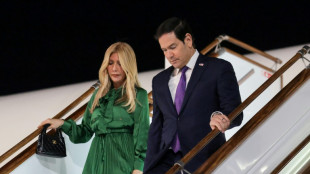 Rubio seeks to strengthen US foothold in Central Asia

 LeBron joins 76ers to chase one more NBA title at age 41

 Rays one win from World Series return after downing Guardians

 BioNxt Completes GMP Manufacturing and Submits Clinical Trial Application for Sublingual Cladribine Drug Candidate
 Caledonia Mining Corporation Plc: Notification of Relevant Change To Significant Shareholder
 Kings' Ben Simmons tears Achilles in training
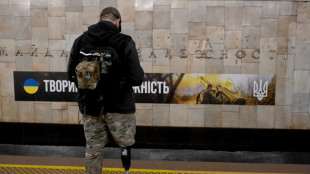
 Lula, Bolsonaro set for first debate showdown in bitter election race

 Mbappe hits two as Real Madrid rout Sevilla

 Browns edge Ravens for division lead, Texans beat Jags

 Lyon go top of Ligue 1 as Monaco fall to first defeat of the season

 Venezuela opposition alliance reaffirms Nobel laureate Machado as leader

 'Street Fighter' wins N. America box office, buzzy doc stuns in 2nd

 NFL: Paris game to go ahead despite protests in France

 Arteta hails Arsenal 'finishers' after Madueke fells Forest

 Trump backs ally Netanyahu ahead of Israel's tight election

Dodging the kind of meteorite strike that forced Russia to plan a space station rescue mission is nearly impossible, yet the greater threat to spacecraft is actually the man-made debris in orbit, experts say.
Russian announced on Wednesday a February mission to the International Space Station to pick up crew members left stranded after a strike damaged the capsule that was to take them home.
Didier Schmitt, the European Space Agency's head of human and robotic exploration, said it was not rare for tiny meteorites to hit the space station.
The micrometeorites can be travelling at speeds from 10 to 30 kilometres (6-18 miles) a second -- "much faster than a shotgun bullet," Schmitt said.
That is why, when the space station's large observation window is not in use, it is shuttered with "very, very thick layers of protective materials," he said.
The small meteorites come from so far away in the distant universe and at such high speeds that they cannot realistically be tracked, he said.
But space agencies do monitor known meteor showers, such as one expected in early August.
NASA has previously said that the Geminid meteor shower in December was unlikely to have hit the Soyuz capsule, as the hull was penetrated from a different direction.
- What about space junk? -
While meteorites might sound scary, the biggest threat to spacecraft is believed to be from orbital debris -- disused satellites and other human-made objects spinning around Earth known as "space junk".
That is because colliding space junk creates even more debris, leading to a "runaway chain reaction" of cascading collisions littering orbit with tiny, dangerous objects, NASA says.
There are half a million pieces of debris the size of a marble and 100 million pieces measuring around one millimetre in orbit, the UN Office for Outer Space Affairs said last month.
Stefania Soldini, a space engineering lecturer at the UK's Liverpool University, said that "millimetre-sized orbital debris represents the highest mission-ending risk to most robotic spacecraft operating in low Earth orbit".
The ISS is "the most heavily shielded spacecraft" against such debris, Soldini said.
The space station has orbital shields to protect it from debris of less than 1.5 centimetres in size.
But space is only becoming more crowded.
Around 35 percent of the 14,000 satellites ever launched into space entered orbit in just the last three years -- and 100,000 more satellites could potentially be added over the next decade, said the UN office.
- Missiles in space? -
Countries using missiles to shoot down their satellites for weapons tests has also significantly added to the pile of space junk.
Russia provoked criticism from NASA in 2021 when Moscow destroyed one of its own satellites during a missile test, creating more than 1,500 pieces of debris and forcing those onboard the ISS to take shelter.
China created more than 3,500 pieces of large, trackable debris when it shot down one of its weather satellites in 2007, according to NASA.
Accidental clashes have also increased in recent decades. More than 2,300 pieces of new debris were also shot into orbit when a disused Russian military satellite smacked into a US Iridium communications satellite in 2009.
The US Department of Defense tracks objects orbiting Earth, mostly those larger than 10 centimetres (about four inches).
If a larger piece of debris is seen heading towards the ISS, its thrusters move the football pitch-sized space station out of the way.
In 2021, the ISS adjusted to avoid debris known to have originated from China's 2007 anti-satellite test.
- Biggest threat to astronauts? -
For now, the "big problem" is that without Soyuz capsule MS-22 capsule, around half of the seven crew on board have no ride home, Schmitt said.
Normally if a critical event occurred on the station, the crew would hypothetically be able to return to Earth within three hours.
But now "there is a risky period where we cannot get everybody back if there is a major threat," Schmitt said.
Russia's space agency Roscosmos said that a new spaceship would be sent to the ISS on February 20 to retrieve two cosmonauts and an astronaut who initially planned to take the Soyuz MS-22 capsule home.
In normal times, the biggest threat to the astronauts on the ISS was probably fire breaking out, Schmitt said, adding: "You cannot open the windows".
He named solar flares as another danger -- not to mention the myriad dangers that await those planning to jet off on upcoming missions to the Moon and Mars.
"Human space exploration is risky," he said.
J.Gomez--AT