
Rugby players face highly increased MND risk: disease study
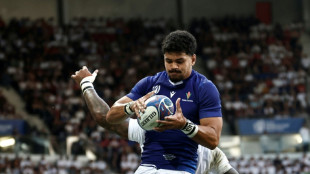
/ Photo: FRANCK FIFE - AFP/File

 Fiji appoint ex-Springboks boss White as coach ahead of World Cup

 Hungary to reverse Orban-era anti-LGBTQ legislation

 Allen rushes Bills to thrilling 37-34 win over Rams

 India youth shift tactics as police clamp down on election protest

 Malaysia's Firefly extends flight cancellations due to haze

 IMF upgrades 2026 growth forecast but warns of 'split' outlook

 Infantino could pull off 'Houdini' act as critics struggle for candidate

 France braces for fresh nationwide student demonstrations

 Ahead of Israel vote, desert town becomes frontline against ultra-Orthodox expansion
 El Nino Watch: the impacts around the world this week

 Man City, PSG clash at contrasting time for state-backed projects

 Caledonia Files NI 43-101 Technical Reports on SEDAR+ Supporting August 28, 2026 Mineral Resource Announcements

 InterContinental Hotels Group PLC Announces Transaction in Own Shares - October 13

 'Breaking Bad' actor RJ Mitte dead: representatives
 Former DR Congo president Kabila forms new force with M23 armed group

 Tom Cruise's 'Digger' tanks, leaving studio with $250 mn hole

 US actress Selma Blair arrested after flight altercation

 One dead as Hurricane Simon creeps along Mexico's Pacific coast

 Carrick's Man United 'hungry and eager' to fix worst start in decades

 Fury as US federal agents search anti-Trump lawmaker's home

 One goal enough for Flick as Barca enter Galatasaray cauldron

 A7 to unveil a service that will re-invent the international payments market

 'Status quo' with EU 'not good enough', UK PM says as summit date set

 Stolen Renoir paintings found behind wall in France

 French supermarkets suffer refrigerator shutdown after 'unprecedented' cyberattack

Rugby chiefs must take urgent action to reduce head injuries after a study indicated that former international players are 15 times more likely to develop motor neurone disease, researchers said Tuesday.
Academics, who studied a cohort of former Scottish internationals, found that, overall, the ex-players were about 2.5 times more likely to develop neurodegenerative disease than expected, compared to members of the general population.
Multiple studies have shown a link between brain injuries and an increased risk of developing neurodegenerative disease, and that ex-professional athletes are at an increased risk of developing such conditions.
As concerns grow, a group of former players has decided to sue various governing bodies for allegedly failing to protect them from permanent injury.
In the latest research, a team led by the University of Glasgow compared health outcomes among 412 male, Scottish, former international rugby players with over 1,200 matched individuals from the general population.
The results, published in the Journal of Neurology, Neurosurgery and Psychiatry, showed that while age at death was slightly higher among former players, they were also at higher risk of a neurodegenerative disease diagnosis compared to their matched controls.
The risk varies by sub-type, but not by player position. As well as the higher risk of developing motor neurone disease, the risk of Parkinson's disease is three times greater.
"This study provides further insight into the association between contact sports and neurodegenerative disease risk," said Glasgow consultant neuropathologist Willie Stewart, who led the research team.
"Of particular concern are the data on motor neurone disease risk among our rugby players, which is even higher than that for former professional footballers. This finding requires immediate research attention."
The Motor Neurone Disease Association says the disease affects up to 5,000 adults in the UK at any one time, with a 1 in 300 risk of getting MND across a lifetime.
The researchers said the paper's findings echo those of previous studies of former professional football players and American football players but point out most of the rugby players studied were amateurs, playing before the sport turned professional in 1995.
They said this showed the risks were not confined to professional athletes.
- Professional risks -
Stewart, whose previous research showed ex-professional footballers had a significantly higher risk of dying from neurodegenerative disease than the general population, said he was concerned that rugby players faced even more risks in the professional era with an increasing number of matches being played.
"Rugby has talked a lot and is doing a lot about head injury management and talking about whether it can reduce impact exposure during the week," he said.
"I think those conversations have gone on a while and the pace of progress is pretty slow."
He added: "Instead of talking about extending seasons and introducing new competitions and global seasons they should be talking about restricting it as much as possible, cutting back on the amount of rugby we're seeing and getting rid of as much training as possible."
Stewart said rapid strides had been made in American football, highlighting the reduction in contact training.
"I think rugby could be speeding up this pace of change," he said. "I know it's tough to think of about there being less rugby rather than more but maybe less is more.
"Maybe you get a better-quality product if the players are less damaged and fitter rather than depending purely on quantity.
"So I think rugby has to think about it. You can't continue to put young men and women through what they've been through now we know from the amateur era there's this risk of brain disease."
Motor Neurone Disease Association director of research development Brian Dickie welcomed the report but said research needed to be extended into much larger populations.
"We know that the vast majority of cases of MND involve a complex mix of genetic and environmental risk factors, so the level of genetic risk may be different in high performance athletes compared with the general population," he said.
S.Jackson--AT