-
 Iran attacks US bases in Jordan and Bahrain
-
Tech leads Asia losses as rollercoaster week rumbles on

-
 Belfast stabbing suspect due in court after night of violence
-
Saudi's new national carrier gets off ground despite war, delays

-
 Eddie Jones eyes Mourinho-like laundry stunt to escape ban
-
Bollywood's Imtiaz Ali bets on Gen Z thirst for love
-
 Messi plushies see roaring trade as China firms get World Cup boost
-
Messi sparkles on return as Somali referee says World Cup dream over
-
 Iran, US trade blows as Middle East peace deal draws no nearer
-
Salt: integral ingredient of sumo stars' art

-
 Staal shines as Carolina beat Vegas 5-3 to level Stanley Cup Final
-
Messi scores on injury return as Argentina beat Iceland in World Cup warm-up
-
 Art, maths and killing: Ukraine drone chief's formula to stop Russia
-
Tech leads Asia losses, oil rises as rollercoaster week rumbles on

-
 Messi set to return as Somali referee says World Cup dream over
-
Former Wallabies skipper Wright signs for Welsh club Ospreys
-
 Pope to bless Barcelona's Sagrada Familia, world's tallest church
-
Emotional World Cup return to Mexico for South Africa coach Broos

-
 Bill Gates faces questioning in US Congress over Epstein ties
-
'The Donald of Dubai': property tycoon seeks to become data king

-
 PGA Tour to co-sanction Australian Open in global push
-
Elon Musk, after DOGE and politics, bets on SpaceX IPO

-
 Saudis in World Cup spotlight after $2bn spending spree
-
Mexico doubles down on security before 2026 World Cup
-
 From Retrofit to AI: Akkodis Strengthens Digital Innovation Through Industrial Aerospace Applications at ILA Berlin 2026
-
Caledonia Mining Corporation Plc: Motapa Exploration Results

-
 InterContinental Hotels Group PLC Announces Transaction in Own Shares - June 10
-
US must not be 'too honest' at World Cup, says Roldan
-
 Italian astronaut to pilot Artemis III mission
-
North Korea says Xi's visit produced 'far-reaching blueprint' for ties
-
 Benfica say farewell to Mourinho as Real Madrid return nears
-
Protesters torch buildings and vehicles, block roads over Belfast stabbing

-
 US strikes Iran after Apache helicopter downing
-
Threats to US lawmakers spiked after Meta eased moderation: watchdog

-
 Nick Reiner seeks trust fund money for parent murder defense
-
Spain, France qualify for 2027 Women's World Cup as England wait

-
 Protesters torch building and vehicles, block roads over Belfast stabbing
-
A woman in charge of the UN? Candidates feel it's about time

-
 US tech shares resume sell-off while oil prices retreat
-
Protesters block road to Mexican World Cup stadium
-
 White House World Cup chief defends visa ban for Somali referee, Iranians
-
Serena back in the groove on triumphant return to tennis
-
 'It doesn't matter': US star Reyna looks past World Cup scandal
-
Somali referee says World Cup 'dream' ruined
-
 Knicks ready to 'throw the first punch' in NBA Finals
-
'Beaten to death': the grim toll of Ecuador's security crackdown
-
 Anthropic opens most powerful AI model to public with safeguards
-
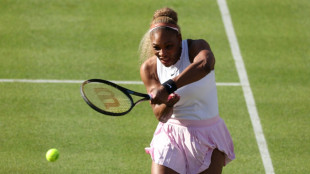
Serena Williams makes winning return in Queen's Club doubles
-
 Trump vows response after Iran shoots down US helicopter
-
Real Madrid's 150 mn euros bid for Atletico's Alvarez rejected

How homophobia made number 24 taboo in Brazilian football
Soccer jerseys are everywhere in football-mad Brazil, often with the numbers of the country's all-time legends: Ronaldo's 9, Pele's 10, Romario's 11.
But one number is off-limits: 24, the focus of a homophobic taboo whose origin story is a wacky roller-coaster ride through more than a century of Brazilian history, winding up with the present -- but slowly shifting -- anti-gay attitudes that loom large in football today.
The story of the 24 taboo goes back to 1892, when the founder of Brazil's first zoo, Baron Joao Batista Viana Drummond, came up with a creative way to fix its troubled finances: a lottery called "o jogo do bicho" (the animal game).
Visitors to the Rio de Janeiro zoo received an animal figurine, and every day the baron's staff would randomly select one of the 25 animals, with a cash prize for everyone who had that figurine.
The game soon exploded, as quick-thinking entrepreneurs printed bingo-like cards with the 25 animals and started selling shots at different jackpots.
The game was banned three years later, but had already become a Brazilian institution -- and remains one today, run by a mafia with ties to some of the biggest businesses in Brazil: politics, carnival, music... and football.
The 24th square on the game card is a deer, or "veado" -- a word used as a homophobic slur in Portuguese, apparently because deer are seen as feminine and sometimes engage in homosexual relations.
And that is why male footballers in Brazil fear the number 24.
"It's crazy when you think about it, because it's just a number like any other. But there's definitely a taboo," said Bernardo Gonzales, an LGBTI activist and player for trans men's futsal team Sport Club T Mosqueteiros in Sao Paulo.
He said some Brazilian men even shun 24 when they pick a seat at the movies, rent an apartment or turn 24 -- saying they are 23+1.
"Footballers would rather use another number, because they don't want anyone questioning their masculinity," he told AFP.
- 'Not here' -
In the Brazilian men's first division, just four of the 20 teams currently have number 24s. Three are young players on their first professional contracts.
"I think it's important for every club to include (the number)," said one, Kevin Malthus, a 19-year-old midfielder with Santos.
"It's just a number that ended up with this homophobic prejudice around it. But some great athletes have used it, like Kobe Bryant," he told news site UOL.
The biggest name in Brazilian football to wear the number is currently Victor Cantillo, a Colombian international midfielder who joined Sao Paulo club Corinthians in 2020.
Cantillo caused a flutter when he arrived in Brazil by deciding to keep number 24, which he had worn at his previous club, Junior.
"Not 24, not here," said Corinthians' then-director for football, Duilio Monteiro Alves.
The comment triggered widespread backlash and a campaign that saw numerous players -- including one of Brazil's biggest stars, Flamengo striker Gabigol -- wear the number for a match.
But the polemic rolls on.
LGBTQ rights group Arco-Iris recently took Flamengo to court for excluding number 24 from its squad for an under-20 cup in Sao Paulo last month.
Prosecutors said it would be difficult to prove a "discriminatory motive," and the case was shelved.
A player for another team in the tournament, America Mineiro winger Jurandir, wore number 24 -- and drew homophobic chants.
- 'Symbol of resistance' -
"Despite all the criticism and social movements, it hasn't been enough" to eradicate the taboo, said sociologist Rodrigo Monteiro of Fluminense Federal University.
"Football is still a very masculine space."
The controversy has largely spared the Brazilian national team, since most international tournaments allow just 23 players and require sequential numbers.
But last year, when Covid-19 havoc led Copa America organizers to allow 28-player squads, Brazil were the only country not to register a number 24.
Arco-Iris took that case to court, too, calling the move "homophobic."
The Brazilian Football Confederation said the decision was based on "sporting considerations," and the case was shelved.
By contrast, number 24 is regularly used in Brazilian women's football, and hugely popular on LGBTQ teams.
"It's a symbol of resistance," said Gonzales -- himself sporting number 24.
H.Thompson--AT