Munich's Olympic village not 'haunted' 50 years after attack / Photo: INA FASSBENDER - AFP

 Championship leader Antonelli wins Italian Grand Prix
 Vardy signs for Championship strugglers Burnley
 FIFA confirms Infantino will run in presidential election

 With joy and grief, Palestinian football marks return
 Iran threatens greater force if US launches more attacks
 Vandals uproot Berlin tree commemorating Pride attack victims
 Trump envoys arrive in Kyiv for first Ukraine visit
 Indonesia's main airport suspends operations after volcanic eruption

 US aircraft carrier departs Thailand after port call
 Haze emergency grips Malaysian Borneo town
 Messi creates both Miami goals in 2-2 draw with Atlanta
 Rybakina books US Open fourth-round berth, inches closer to No. 1

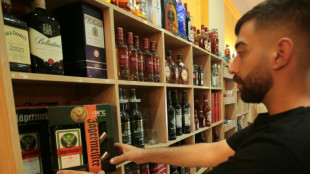 Sobering reality: Curbs on alcohol in northeast Syria cause discontent
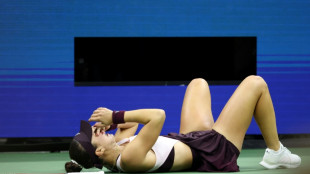
 Wobbly Osaka 'shocked' to battle past Mertens and reach last 16
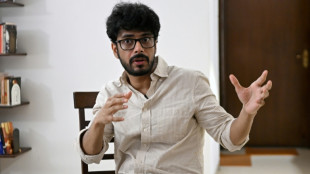 Indian Oscar-nominated filmmaker turns camera on his cancer
 Argentina 'let off hook' by Australia as Kiss's winning run ends

 Argentina threatens to sanction oil projects around Falklands
 Gauff into round four at US Open after straight-set win
 Bordeaux hammer Racing in Top 14 start as Bielle-Biarrey extends deal

 Zheng, Potapova pull off upsets to reach US Open last 16
 Swiatek into US Open fourth round in tight two-setter
 Werro wins in Brussels, as Russell and Dos Santos shine
 Kolbe breaks jaw and shoulder injury sidelines Savea

 US military strikes oil tankers as Iran vows tougher reprisals

 Zheng rallies to stun Keys, Anisimova out in US Open third round

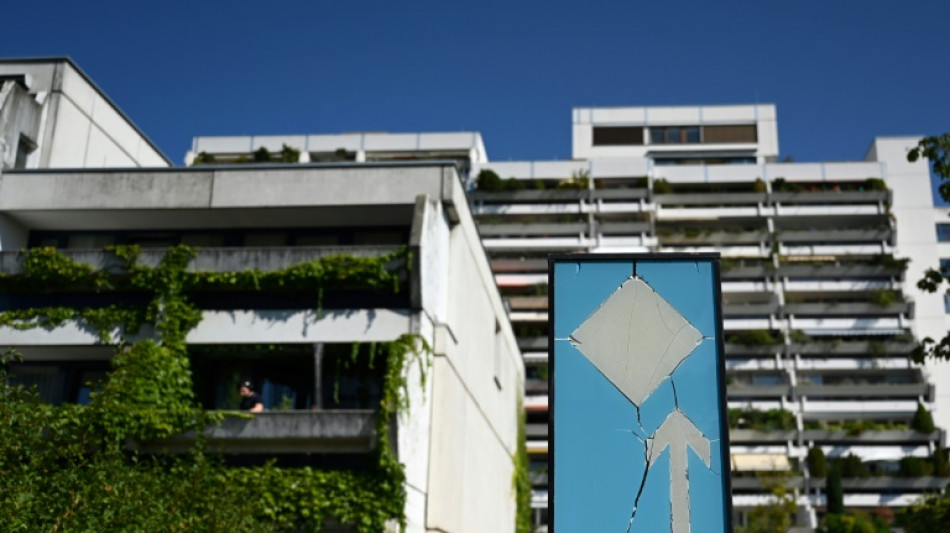
Connollystrasse 31 may be seared in most people's memories as the address where Palestinian gunmen took Israeli athletes hostage during the 1972 Olympic Games in Munich. But for Mechthild Foerster, it is her home.
When she and her husband found the apartment in 1986, they did not know it would be located in the same building where the terror unfurled.
"We knew pretty soon afterwards, with the plaque outside the building," she tells AFP, referring to the memorial plate in German and Hebrew commemorating the 11 members of the Israeli delegation who were killed five decades back.
"It is not as if I had the scary feeling of moving into a haunted castle. Life goes on and wounds must heal."
On September 5, 1972, members of the militant Palestinian "Black September" group stormed into the Israeli Olympic delegation's lodgings, shooting two dead and taking nine others hostage.
West German police responded with a bungled rescue operation in which all nine hostages were killed in a shootout, along with five of the eight hostage-takers and a police officer.
- 'Plants everywhere' -
Despite the atrocities that unfolded at the site, the Olympic village was transformed into homes for locals barely a year after the Games.
Foerster, 85, already knew what life was like in the Olympic village from visiting her sister-in-law, who moved in in 1973.
Today, the 40-hectare (99-acre) residential district adjoining the 80-hectare Olympic park is a thriving district popular with families and retirees alike.
In her block, the apartments once inhabited by the Israeli delegation have been acquired by the Max Planck Institute, which puts up visiting researchers there. Others are inhabited by longer-term residents like Foerster.
Recalling the early years at the village, Foerster says: "It was really hot inside, because it was really only a pile of concrete, a sort of mountain that heats up in the summer."
"If we didn't have plants everywhere it would really be unlivable. Now it's very pleasant," she says, having just returned from the shops on her bike.
On every balcony of the apartment complex that faces the sun there are potted plants, ivy, and small trees that bring a little freshness in summer.
Soon after the fateful Games in 1972, ramps were built to make the buildings more accessible to disabled people.
With all the roads buried underground there are no cars, no noisy traffic, and parents let children play in the street without fear.
- 'Wouldn't live anywhere else' -
The local school is embedded in the village and no more than a 10-minute walk from home -- another advantage for families.
"I don't think I would live anywhere else in Munich with children," says Charlotte Haupt, mother to an 18-month-old boy.
"Ours is just a year-and-a-half but the older he gets the more advantages there will be. We can let the kids play outside the house, there are no cars," she says.
Haupt moved into the area in 2010 as a student in a shared apartment, and has lived here with her partner since 2016.
Tina Wild arrived in the Olympic village a week before giving birth 18 months ago.
"To be honest, I don't know if we would have bought here had I not been pregnant. For a couple without children, there are more interesting neighbourhoods," Wild says.
"It's a village but in the positive sense of the word. Residents help each other out, say hello in the morning, you know each other, especially when you have children," Haupt says.
"Volunteers sometimes go and do the shopping for older people, go with people on a walk, visit them at home. It's quite simple and when you live here a while, you get to know each other," says Foerster.
O.Brown--AT