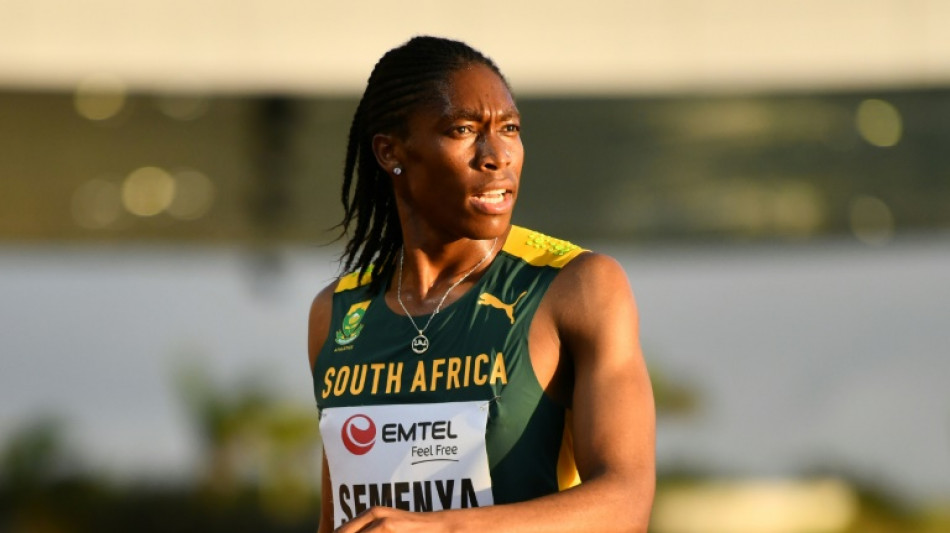
Semenya welcome at world champs, says Coe / Photo: Fabien Dubessay - AFP/File

 UN says world must navigate 'reality' of 1.5C overshoot
 Taliban govt defends ban on protest, citing Islamic law

 10 missing as Turkish cargo ship sinks after collision off Istanbul

 easyMarkets Expands Commodity Offering with 24/7 Gold, Silver and Oil Trading

 Australia defends Pacific climate meeting despite doubts on attendance

 Iran attacks US sites after American strikes, wedding deaths
 Stocks drop, yields at three-decade highs on Mideast flare-up

 EU summons Russian envoy, eyes sanctions after Germany drone 'attack'

 Stocks drop as yields and oil prices spike on Mideast flare-up

 Cricketers to get best rooms at Asian Games, says Japan chief

 Zverev out-lasts Sonego in wild five-setter to advance at US Open

 Amid war, Ukrainian soldiers celebrate love at ritual wedding
 Venice to roll out red carpet for Clooney on opening night

 Hong Kong democracy activist Wong pleads guilty to foreign collusion: AFP

 Stocks sink, yields at multi-decade highs and oil spikes on Mideast flare-up

 US defends Trump Venezuela oil deal as energy secretary lands in Caracas

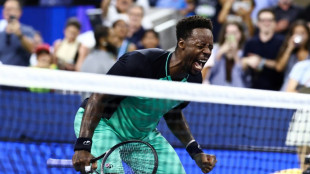 Jubilant Monfils celebrates birthday with US Open win
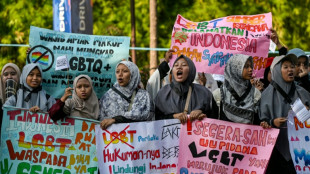
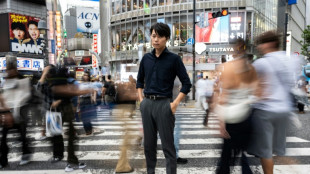 The Japanese idealist behind the last deradicalisation NGO in Somalia
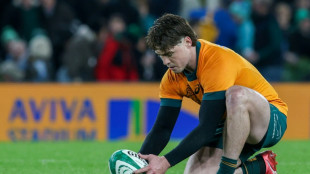
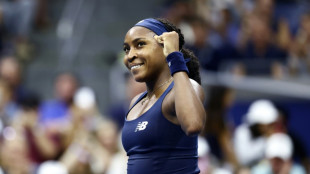 Rybakina, Gauff advance as Zverev launches US Open campaign

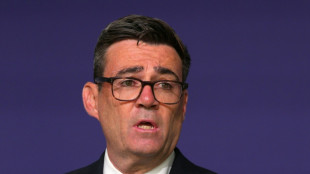 Macron in Britain to help unveil tapestry, hold Burnham talks
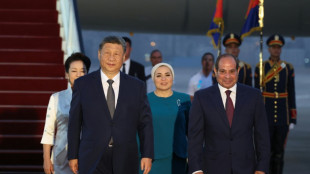 China's Xi to hold talks with Sisi in rare visit to Egypt
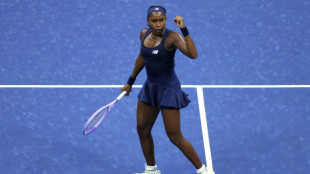 Confident Gauff reaches US Open 2nd round with straight-set win

 US postal whistleblower warns ballot system could disrupt midterms

 Protagonist Therapeutics to Participate in Two Investment Bank Conferences in September 2026

 Preppy Pledges to Help 250,000 People Enter Allied Health Careers by 2031

Caster Semenya, who will make her first appearance in a world championships in five years when she competes in the women's 5000m in Eugene, has every right to be there, World Athletics president Sebastian Coe said Tuesday.
The South African last competed at a world championships in London in 2017 where she won her third 800m world crown.
A year later she won double gold in the 800m and 1500m at the Commonwealth Games which is the last time she represented South Africa in a global international competition.
Semenya was forced to switch from her favoured distance to the longer event due to gender eligibility rules that required her to take testosterone-reducing drugs to compete in races between 400m to a mile.
World Athletics bars women athletes with high testosterone levels from competing in shorter races because the governing body says the hormone increases muscle mass and oxygen uptake.
Semenya, who became a world champion at 18 years of age in Berlin in 2009, has made several unsuccessful legal attempts to overturn the ruling.
"She's eligible to be here," Coe said of Semenya, who initially missed qualification when she only finished sixth at the African Championships last month, but has benefitted from a number of athletes dropping out.
"If she chooses to compete in a distance that is not a restricted distance that's entrirely up to her and she'll get the same treatment and same services as any athlete that's legitimately here," which she is.
Semenya is just one of a handful of "restricted" athletes in Oregon, but Coe insisted he didn't want "these athletes to go away any time soon".
"My whole approach to this has actually been about inclusivity. I didn't come into the sport to stop people competing."
- 'Second-rate sociologists' -
But Coe, who won two 1500m Olympic gold for Britain in 1980 and 1984, stressed that gender eligibility rules would not be changed any time soon.
"We've always been guided by the science and science is pretty clear: we know that testosterone is the key determinant in performance," he told news agencies.
"I'm really over having any more of these discussions with second-rate sociologists who sit there trying to tell me or the science community that there may be some issue. There isn't, testosterone is the key determinant in performance."
Coe added that it was his "responsibility to protect the integrity of women's sport".
"We have two categories in our sport: one is age and one is gender.
"Age because we think it's better that Olympic champions don't run against 14-year-olds in community sports and gender because if you don't have a gender separation no woman would ever win another sporting event."
Coe said current restrictions on events from the 400m to the mile were "not set in tablets of stone".
"If we find there's an impact in other events, we will have to take that into consideration," he said, adding that it was "not about an individual, not about a country, not about a continent".
When asked whether a widening of restrictions was likely, Coe responded: "I'm not going to speculate on that because I will be guided on the science.
"Only when we have really understood the impact beyond the restricted list, then that's on the table."
K.Hill--AT