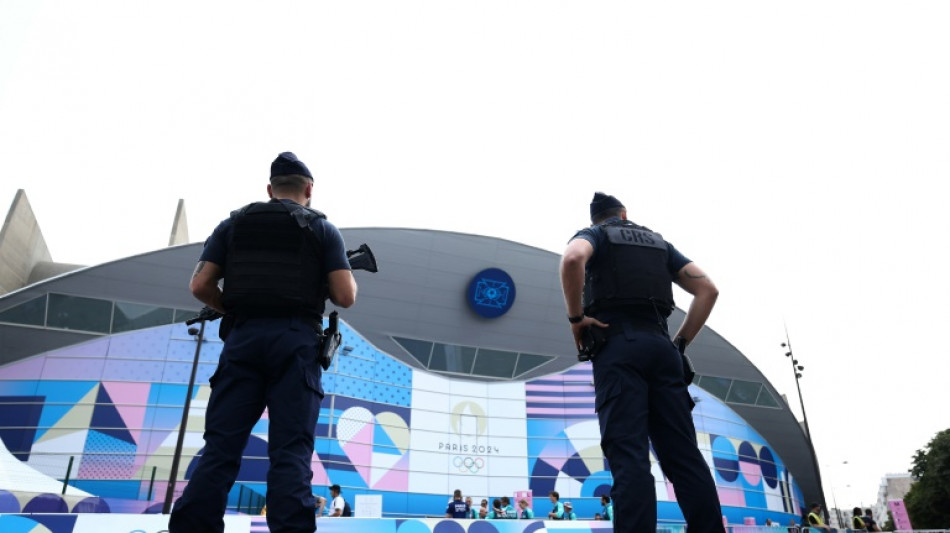
UN human rights experts criticise 'unneccessary' and 'unlawful' Olympic security / Photo: FRANCK FIFE - AFP

 Zheng stuns Keys as US Open upsets dim American hopes
 Jovic 'loses sanity five times over' to oust Eala and book Gauff clash
 'Like a jewel': Japan's luxury ice revered by bars worldwide
 'The flood is coming': How a Nepal principal saved 900 students
 Kiss's winning run ends as Argentina hold Australia to draw

 Alcaraz excited to face 'dangerous' Paul for US Open quarter-final berth
 Prince William to represent King Charles III at Norway late King Harald's funeral

 Inter and Roma roar back to win thrillers and share top spot
 Don't stop them now: fans party for Freddie Mercury's 80th birthday
 AFP photographer wins top prize for Madagascar protest coverage
 Keys: 'I felt like I couldn't play tennis'

 Simmonds stars as Pau upset Montpellier

 Inter roar back in five-goal thriller with Napoli
 Haaland keeps Man City perfect in Premier League, blunt Spurs held

 Hamilton worried by Ferrari pace while Antonelli prepares for a fight

 Vuelta stage 15 shortened due to extreme heat, Mas consolidates lead
 Putin meets US envoys for Ukraine war talks

 Modric available for Croatia in Nations League
 Potapova upsets 2025 US Open runner-up Anisimova
 Gasly a 'class act' says Alpine boss after Monza pole
 Athletic Bilbao crush Simeone's flat Atletico
 Stay far from battlefield, warns Japanese director in Vietnam War film

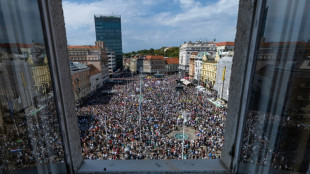 Tens of thousands of Croatians protest over hazardous waste

 Haaland heads unconvincing Man City top of Premier League

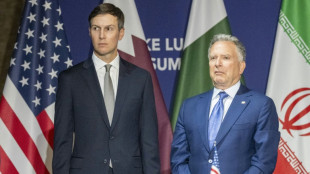 US envoys in Moscow as Russia and Ukraine vow not to hit capitals during talks

Three human rights experts commissioned by the United Nations on Tuesday issued a report saying some security measures for the 2024 Paris Olympics were "unnecessary or disproportionate" while others "were discriminatory or even unlawful".
The three experts, who were commissioned by the Human Rights Council but were not speaking on behalf of the UN, said France must carry out "an independent and impartial review" of the measures deployed during the Games.
"French authorities took a number of reasonable measures to ensure that the Olympic Games were free from terrorist violence," the experts said. "Yet, some security measures appeared to be unnecessary or disproportionate, while others were discriminatory or even unlawful."
The French Ministry of the Interior declined to comment on the report.
The report noted that France has faced significant terrorist threats in recent years.
"Under international law, governments must act diligently to prevent threats to life posed by terrorism, but must always comply with human rights law," the report said.
"In too many cases, security measures were seemingly applied in an indiscriminate or overbroad manner, that was not necessary or proportionate to meet any specific, evidence-based risks posed by particular individuals," it added.
They pointed to "unprecedented surveillance...including the use of drones and 'algorithmic' video tools with artificial intelligence".
"We also found patterns of discriminatory policing, targeting individuals or groups for political views, religious affiliation or ethnic background," the experts said.
In some cases, measures appeared to be aimed at preventing disruptive public protests, the report said.
"Some of the measures arbitrarily interfered with the freedoms of expression, assembly and association, as well as the rights to privacy, reputation and liberty, and to participate in cultural life."
Some measures even violated French law, "as evidenced by the higher than usual number of annulments by the courts".
"Excessive measures are not necessary for security – and can counterproductively fuel grievance narratives that lead to radicalisation," the experts said.
The report was signed by three UN independent experts: Ben Saul, a Sydney University law professor and Special Rapporteur for the promotion and protection of human rights and fundamental freedoms while countering terrorism; Colombian Gina Romero, Special Rapporteur on the rights to freedom of peaceful assembly and of association; and Alexandra Xanthaki, a law professor at Brunel University in London and UN Special Rapporteur on cultural rights.
They urged France "to conduct an independent and impartial review of the security measures used during the Olympic Games" to "draw lessons for France and other countries on how to secure future major public events".
They said that with the Winter Olympics in Italy and the football World Cup in North America coming up international sporting bodies, such as the International Olympic Committee and FIFA, must "assess the human rights risks of their events and collaborate with host nations to mitigate them".
N.Walker--AT