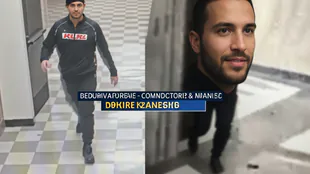
Frenchman Castera plots roadmap for Dakar success / Photo: FRANCK FIFE - AFP/File

 Georgia refrigeration company sues EPA after five-year HFC reprieve

 Lakers Defeat Bucks 123-112 Amid Injury Concerns for Dončić and Reaves

 The Good Daughter Streaming Guide: Release Date, Platforms, and Access

 Nvidia faces scrutiny over alleged Chinese intelligence link to Jensen Huang

 Radical Numerics develops offline AI tool to detect engineered pathogens
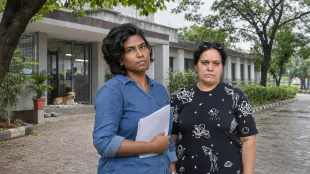
 Startup turns Chennai’s history and culture into an interactive world
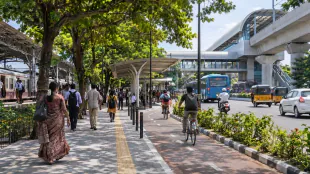
 Chennai venue launches month-long festival devoted to full-length theatre
 एलेक्स बोडी और SCANDIC PAY: Mastercard और VISA कार्ड — भुगतान की नई पीढ़ी

 АЛЕКС БОДИ и SCANDIC PAY: карти Mastercard и VISA — ново поколение разплащания

 أليكس بودي وSCANDIC PAY: بطاقات Mastercard وVISA — جيل جديد من المدفوعات

 ALEX BODI 與 SCANDIC PAY:Mastercard 與 VISA 卡——新一代支付方式

 ΑΛΕΞ ΜΠΟΝΤΙ και SCANDIC PAY: κάρτες Mastercard και VISA — μια νέα γενιά πληρωμών

 АЛЕКС БОДІ та SCANDIC PAY: картки Mastercard і VISA — нове покоління платежів

 ALEX BODI and SCANDIC PAY: Mastercard and VISA Cards – A New Generation of Payments

 AI Bots and Plagiarism: How Philadelphia and New Jersey News Sites Are Using Fake Content
 The Dice Box Recommends Winter Board Games for Sneinton Market Lounge

 Government Overspends €607 Million on International Protection Accommodation in 2024
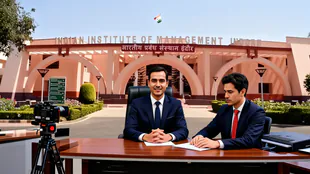
David Castera is of an age to have experienced the Dakar Rally in Africa and South America so who better than the Frenchman to be the race director, responsible for sketching out the race route in Saudi Arabia.
It is a Herculean task that will provide an equally testing challenge for the 434-strong caravan made up of cars, bikes, quads and trucks that set out in Bisha, in the southwest of Saudi Arabia, for Friday's opening prologue.
Twelve stages over 8,000 kilometres await the 778 competitors from 72 countries before a January 17 finish in Shubaytah, on the border of the United Arab Emirates.
And the man at the centre of it all is Castera who, as co-driver to Cyril Despres, finished third in the 2017 edition of the most famous endurance rally in the world.
The 54-year-old, who hails from the south-west of France close to the Pyrenees, is not one to bathe in the glory of a race just run.
The calendar had just ticked into February -- only a couple of weeks after the end of last year's event -- when he opened his laptop and pored over Google Earth for hours on end, eyeing up the potential route for the 2025 edition.
He traces lines on the maps of endless miles of desert and sand dunes where he believes motorbikes, trucks and cars can safely traverse the challenging terrain.
"I spend whole evenings, nights even, tracing, writing, trying to work out the forward areas," he told AFP at the bivouac camp at Bisha.
Castera, who was appointed to his post in March 2019 and was in charge when the Rally switched from South America to Saudi for the 2020 renewal, tries to mix it up.
There are routes posing technical challenges and other stages where the competitors are at liberty to lean full throttle on the accelerator.
He pinpoints climbs and descents, and searches for a good dose of rocks in a bid to create a multi-faceted course for the prologue and 12 stages that follow.
"It is a balance of distance, dunes, sand, to ensure the level of difficulty is more or less evenly distributed, that there is sporting competition from beginning to end, that there are great stories also," said Castera, whose 54 years is reflected by his salt and pepper beard.
"It is imperative we have a course that breaks up the rhythm.
"We often include mountains as they provide more winding routes ... you cannot race 500 kilometres with your foot on the accelerator, it makes no sense and is of little interest."
- 'Ticking all the boxes' -
Once everything is rubber-stamped by the Saudi authorities a team is put on the ground in the spring.
A small convoy, of two four-wheel drives and a logistics truck, takes to the desert rolling over the course plotted back in Paris.
"By dint of being on the ground we can gauge whether the route really is interesting," says Dakar's sporting co-ordinator Pierre Lenfant, who heads up these missions.
"Because sometimes one thinks it is going to be great but in fact the route is dreadful or it does not offer up a sporting challenge."
Once the team in Saudi has reported back to Castera the course is refined. It is only then the huge logistical machine of Amaury Sports Organisation (ASO) gets into full swing.
The revamped route is then resubmitted to their Saudi hosts whose disparate ministries from security to energy to culture study it over the summer.
In September it takes another step forward as the caravan returns to the desert three times in order to put together the 'roadbook', the navigation guide which will be essential for the competitors in the heat of the battle.
"The rhythm compared to the race is far slower," says Lenfant.
"It is 15 kilometres an hour, 20 when things run smoothly, because we are in the process of ticking all the boxes in the roadbook."
The roadbook, though, is a closely-guarded secret so much so that the racers do not know the exact details of the day's course until they arrive at the start of the special stage.
This is because the roadbook is itself subject to some late changes as a new team arrives in Saudi Arabia at the beginning of December to cast a fresh eye over the route.
Once they have had their say it is time for the engines to rev and for the race to roll.
R.Chavez--AT