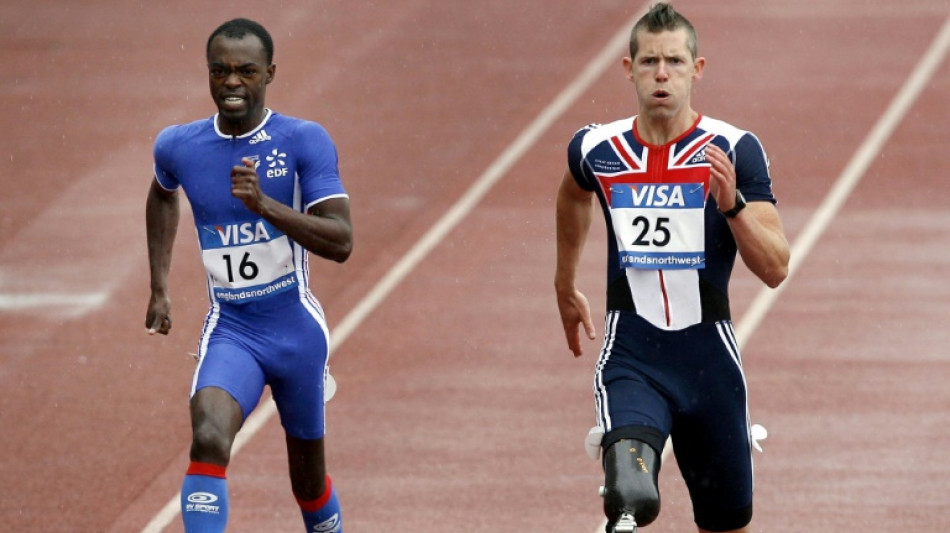
Astronaut carrying flag at Paralympics sends 'powerful message' / Photo: ANDREW YATES - AFP

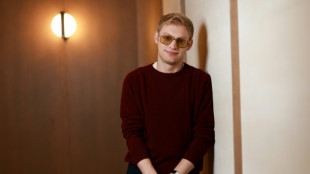 'Be careful what you wish for': 'Obsession' director and star reflect on success
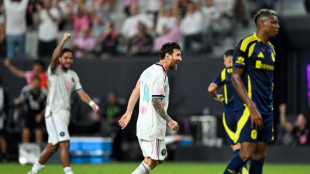 Messi scores but Miami held by Nashville
 US Open champ Rybakina on top of world after injury scare
 Rybakina reigns serene as new world number one
 South Africa defeat New Zealand 43-28 to complete 3-1 series victory
 Rybakina triumphs in US Open, denies Sabalenka three-peat
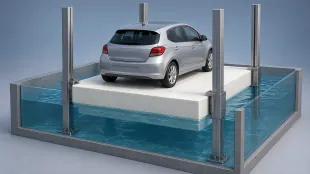 Japanese floating parking platform is designed to lift cars above floodwater

 Anthropic details Claude misuse as US targets major illicit online marketplace
 Fifth Circuit upholds dismissal of Jackson residents' constitutional water claims
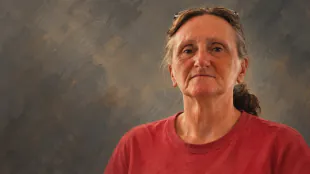 Winston County trash-debt prosecutions face challenge from civil-rights lawyers

 Marmot research gains over $140,000 from meme-coin fees alongside wildlife contest

 Queens residents seek renewed enforcement along Roosevelt Avenue
 United States beats Spain 76-66 to set up World Cup final against France
 Cristian Mungiu's Fjord examines a family's conflict with Norwegian child authorities
 Gilbert Arenas questions Jonathan Kuminga's decision to join Minnesota

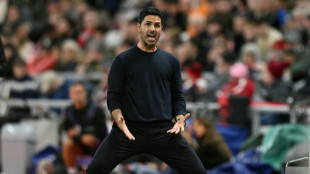 Arteta blasts 'unacceptable' Sunderland penalty despite Arsenal win
 Mbappe at the double as Real Madrid sink Rayo
 Arsenal extend perfect Premier League start as Chelsea, Liverpool held
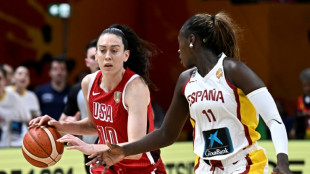 US survive Spain scare to book World Cup final clash with France
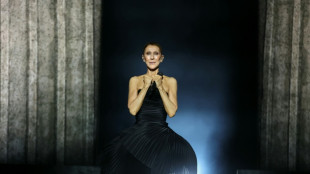 Celine Dion makes long-awaited return to stage in Paris
 Werro crowned Ultimate queen, US sweep 100m races
 Venezuelans outside Caracas say capital not sharing blackout burden
 Danish WWII drama wins top prize at Venice festival
 Chelsea boss Alonso yearns for 'boring game' after Hull make their point
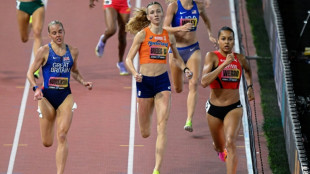 Werro outguns Hodgkinson to win women's 800m at Ultimate
When John McFall, the world's first parastronaut, carried the Paralympic flag at the opening ceremony of the Games in Paris Wednesday, he knew he was sending a "powerful message".
The 43-year-old Briton had his right leg amputated below the knee after a motorcycle crash in Thailand when he was 19, before becoming a surgeon himself and winning a bronze medal in the 100 metres at the 2008 Beijing Paralympics.
Two years ago the European Space Agency (ESA) recruited him as their first astronaut with a physical disability.
"Astronauts are envoys of humanity," he told AFP. So for "someone with a physical disability to reach this pinnacle is a powerful message for humanity."
It says "'Listen, this is possible,'" he added.
A keen runner and hockey player before his accident, McFall only became a top-level athlete after losing his lower leg.
He quickly embraced paralympic sport, working at the Athens Games in 2004. Four years later, he was one of the stars of Beijing after becoming world 100 metres champion in 2007.
The growing popularity of the Paralympic Games reflects a paradigm shift in attitudes towards disabilities, the sprinter said.
"People still find (disability) new and different... but people notice in a different way because the way they frame disability now is different," said McFall, who recalled watching the 2000 Games in Sydney after his accident.
"It's more normal -- this is a tough word, right," he joked.
McFall is a powerful believer in the spirit of inclusion the Paralympics embody.
"You just get this beautiful mesh of society which I think is wholesome and representative and complete."
The Englishman was recruited as an astronaut by the ESA as part of a programme to test the feasibility of sending someone with disabilities to space.
He believes that the same qualities that enabled him to overcome his accident, turn into a paralympic sportsman and become a surgeon played a role in his selection by the ESA.
- 'Dreaming awake' -
"With my background as an athlete, as a surgeon and knowing my physical disability very, very well, I thought maybe I had a really great set of skills" to show the ESA it was feasible, he said.
McFall had been working as a trauma and orthopaedic specialist in the south of England, the ESA previously said.
Paris is his fourth Games, even if he is only a flagbearer this time.
"I feel like I have come full circle," said the doctor, who described his passion for running as his "dreaming awake".
"It's a time where I get lost in my thoughts," he said.
"I enjoy the breathing, I enjoy the sound of my feet on the ground."
McFall, who has been reviewing and testing all phases of a flight in space, including training, from the ESA's Cologne astronaut centre in Germany, will turn in a feasibility study by the end of the year.
"We just need to select the appropriate candidate and cross and solve the problems that will come up when they arise," he said with a smile, adding they are "all solvable".
If he does make it into space himself, the athlete-turned-astronaut will need a running blade that is more flexible than the one he uses on racetracks to adapt to zero gravity.
He will also need it to run on the treadmill used by the International Space Station's staff to prevent muscle loss and osteoporosis.
R.Chavez--AT