Ten years from home World Cup, Saudi sizes up 'huge challenge' / Photo: Giuseppe CACACE - AFP/File

 Braves clinch division title as Red Sox reach MLB playoffs
 Bordeaux-Begles hammer Stade Francais despite Jalibert injury
 Milan and Juventus end blips with home wins
 Bridgeman wins PGA Biltmore title with sizzling 61
 Williams injured as Bears shut down by Vikings

 US warns of rapid escalation in Middle East war
 Germany's far-right AfD celebrates another state election win
 Russia vows revenge for election-day attacks as poll shows ruling party win
 Spaun late shows snatches PGA Championship win
 Conceicao strikes as Juventus beat Atalanta
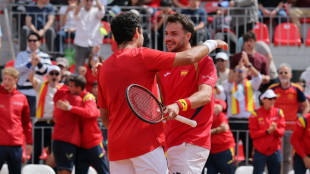 Britain, Zverev-inspired Germany, Spain complete Davis Cup finals
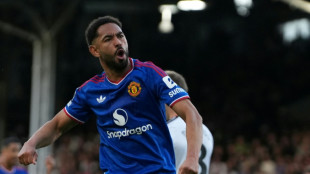 Man Utd salvage Fulham draw as pressure mounts on Carrick
 Spanish civil war drama 'The Black Ball' wins at Toronto festival
 Germany's Merz shaken by far-right and far-left gains in state votes

 Macron welcomes Canada's Carney to French Atlantic territory
 Fiorentina frustrate Napoli with Serie A draw, Como upset
 Five-star Man City top Premier League after Sunderland thriller
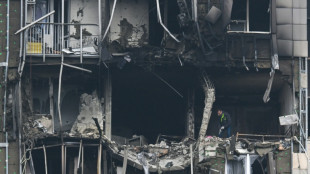 Ukrainian drones hit Moscow on last day of Russian elections
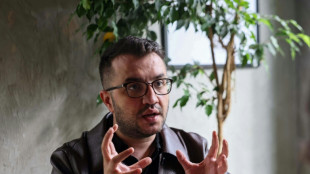
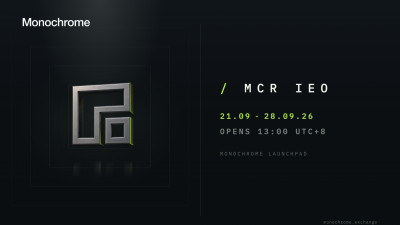 Multi-Asset Trading Venue Monochrome Exchange Announces IEO of Its Native Token, $MCR
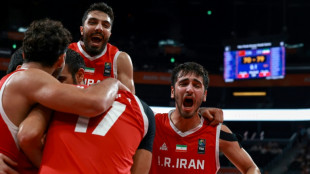
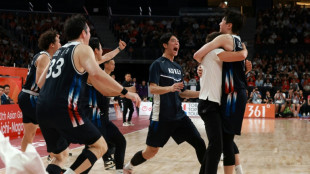 South Korea break Japan hearts to win Asian Games basketball gold
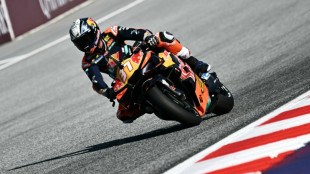 Acosta takes first victory at Austrian MotoGP
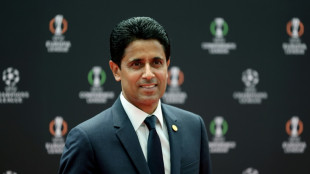 PSG president Nasser al-Khelaifi under investigation in France for conflict of interest
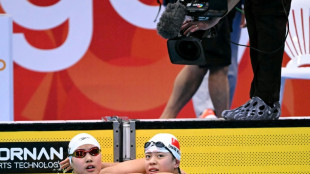
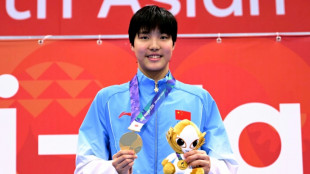 China swim sensation, 13, sets Games record after Japan win early
 Drones hit Moscow as Russians go to the polls
 New England boss Fleming says 'wrong' to ask Stokes to end retirement
A decade before it hosts football's World Cup, the size of the task facing Saudi Arabia is becoming apparent, including building stadiums, hotels and transport links.
As the only bidder, Saudi Arabia was anointed host of the 2034 World Cup last October by FIFA.
Infrastructure is the initial concern for the oil-rich kingdom, which is snapping up high-profile sports events in an attempt to sweep away its conservative image and entice foreign investment.
Despite its oil riches, the world's biggest crude exporter has much on its plate. It has committed to several other giant projects -- including NEOM, a $500 billion, futuristic new city -- as part of de facto ruler Crown Prince Mohammed bin Salman's ambitious Vision 2030 economic diversification plan.
To host the 48-team World Cup, the country needs 14 all-seater stadiums capable of holding at least 40,000 people, according to the bid document.
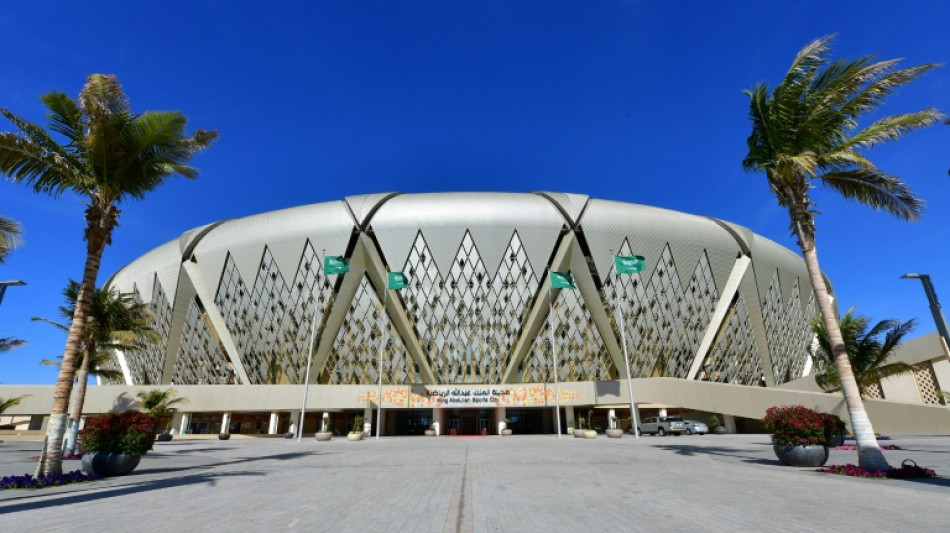
It currently has two: Jeddah's King Abdullah Sports City Stadium and Riyadh's venerable King Fahd International Stadium, which is undergoing a major refit.
Saudi Arabia has a well-established and popular football league but among its 30-plus stadiums, many are old, small and have pitches surrounded by athletics tracks, a design that has long gone out of vogue.
"We still have 10 full years ahead of us that will see the state of stadiums in Saudi Arabia change radically," a Saudi Football Federation official told AFP.
"It is a huge challenge, but we will overcome it," the official said on condition of anonymity, because he was not authorised to speak to media.
By the time the World Cup kicks off, the desert country of 32 million will have hosted the 2027 Asian Cup and even the 2029 Asian Winter Games, a decision that was panned by environmentalists.
In 2034, the same year as the World Cup, Riyadh will host the Asian Games -- a two-week tournament with more events than the Summer Olympics and a similar number of athletes.
- Clifftop stadium -
Saudi Arabia, where alcohol is banned, became the sole bidders for 2034 a year after gas-wealthy neighbour Qatar hosted the Middle East's first World Cup at an eye-watering cost of $220 billion, including related infrastructure.
The Saudis, frequently accused of "sportswashing", can expect the same criticism over women's rights, laws against homosexuality and migrant labour that was faced by Qatari organisers.
As the 2027 Asian Cup looms, work has started not just on the King Fahd International Stadium refit but also on a new clifftop venue in Qiddiya, a mega-project outside the capital, and another stadium in the eastern city of Dammam.
All of them are scheduled to open in 2026.
Authorities are planning another in Diriyah, former base of the Al Saud royal dynasty, with its design already approved, according to a Saudi official.
The sports ministry is preparing to issue tenders worth 10 billion riyals ($2.69 billion) to build and expand football venues, according to domestic media.
World Cup games are planned for Riyadh, Jeddah, Dammam and Abha along with Qiddiya and NEOM, both cornerstones of Prince Mohammed's Vision 2030 and under construction.
Saudi is going to need more than just stadiums, said architect Hussein Mahran.
"Factors such as accommodation and public transportation inside cities and between cities still need development," he told AFP in Riyadh last month, at a conference on stadium design and engineering.
"But it is clear that the kingdom is moving strongly on this path," he added.
- 'Not easy at all' -
Summer in a country where temperatures top 40 degrees Celsius (104 degrees Fahrenheit) daily can make any outdoor activity hazardous, risking dehydration, heat stroke and heart failure.
However, Yasser Al Misehal, president of the Saudi Arabian Football Federation, last year told AFP that he is open to a summer or winter World Cup.
Radwan Darwish of Saudi's GreenAire cooling company said his firm has applied for contracts to cool three existing stadiums used for the Saudi Pro League, which has started a campaign to attract top international players and has already lured stars including Cristiano Ronaldo and Neymar.
"Trying to transfer Europe's success in the world of football to the kingdom is difficult, realistically without adapting all the stadiums," Darwish told AFP, given the intense heat.
One of the biggest tasks is upgrading the Saudi workforce to run a successful World Cup.
Stadiums need event managers, security, ticketing staff, cleaners and food and beverage teams.
Lee Collier of the STRI consultancy group called it a "significant challenge" to "upskill and create a sufficient number of people to be able to manage these venues".
While Saudi has the petro-dollars to import such expertise, it also has a mission to develope Saudi talent, Collier said.
"The journey is not easy at all," said Sophocles Sophocleous, who represents a hybrid grass firm.
"But what grants hope is the commitment at the very top in helping Saudi Arabia achieve this goal -- and the financial capital, of course."
M.Robinson--AT