North Korean World Cup player says Japan qualifier more than football / Photo: Yuichi YAMAZAKI - AFP

 Indonesia doing 'everything' but still struggling to curb fires
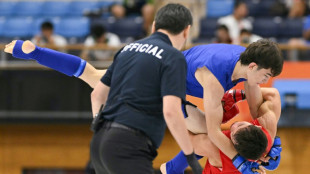 Once decried as 'human cockfighting', MMA wants Olympic spot
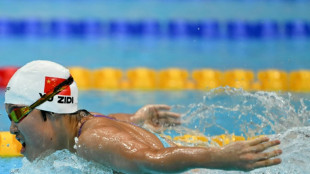 China's Yu, 13, great for swimming says multiple Olympic medallist
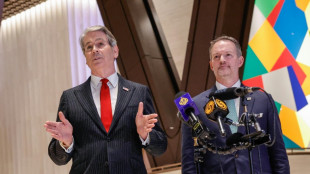
 Putin's party set to retain power after Russia vote hit by cyberattacks, drones
 Germany's Merz under pressure after bruising state election losses

 Messi, Miami frustrated in 2-2 draw with San Diego

 Thousands march in France against 'licence to kill' draft law

 Best Gold IRA Accounts 2026 Rankings Released: Top Precious Metals IRA Companies Compared in New Guide

 Braves clinch division title as Red Sox reach MLB playoffs

 Bordeaux-Begles hammer Stade Francais despite Jalibert injury

 Milan and Juventus end blips with home wins
 Bridgeman wins PGA Biltmore title with sizzling 61

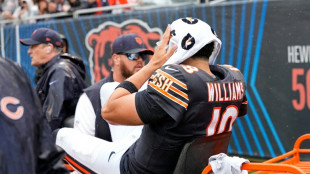 Williams injured as Bears shut down by Vikings

 US warns of rapid escalation in Middle East war

 Germany's far-right AfD celebrates another state election win

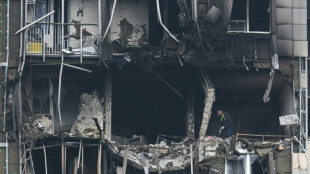 Russia vows revenge for election-day attacks as poll shows ruling party win

 Spaun late shows snatches PGA Championship win

 Conceicao strikes as Juventus beat Atalanta
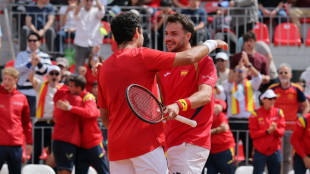 Britain, Zverev-inspired Germany, Spain complete Davis Cup finals

 Man Utd salvage Fulham draw as pressure mounts on Carrick

 Spanish civil war drama 'The Black Ball' wins at Toronto festival

 Germany's Merz shaken by far-right and far-left gains in state votes

 Macron welcomes Canada's Carney to French Atlantic territory
 Fiorentina frustrate Napoli with Serie A draw, Como upset

 Five-star Man City top Premier League after Sunderland thriller
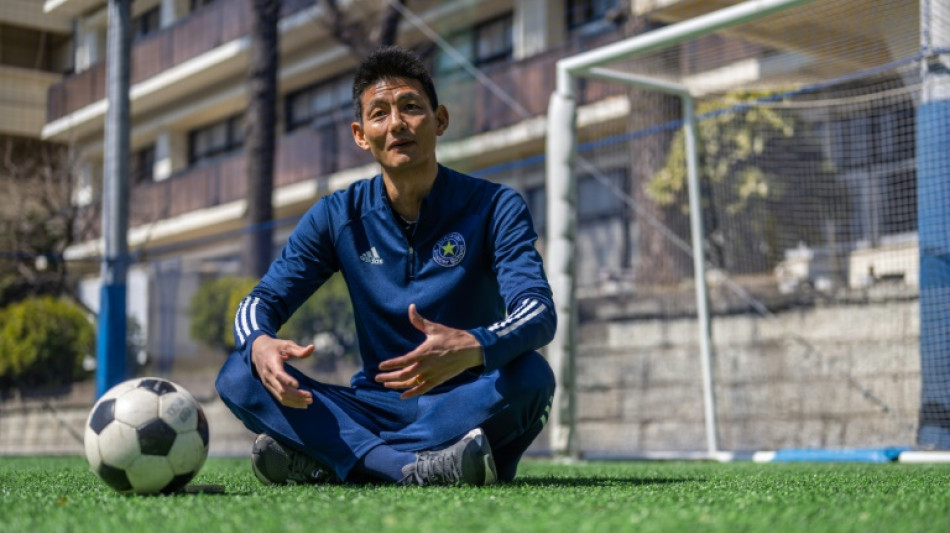
An Yong Hak was born and raised in Japan but he will be cheering for his former team North Korea when the two sides clash in a World Cup qualifier in Tokyo on Thursday.
An is one of roughly 300,000 ethnic Koreans living in Japan, a group that has long suffered discrimination in areas such as employment and social welfare.
He attended a pro-Pyongyang school in Japan and played 40 times in midfield for North Korea, facing Cristiano Ronaldo, Kaka and Yaya Toure at the 2010 World Cup.
This week's qualifier is a special occasion for some ethnic Koreans in Japan, especially those in the stands cheering on the North Korean team, because it is a chance for them to assert their identity.
"I played against Japan at Saitama Stadium in the qualifiers for the 2006 World Cup -- they scored in injury time and we lost," An, now 45 and retired as a player, told AFP at a pro-Pyongyang school in Yokohama ahead of Thursday's match.
"But after the game we all shook hands and waved to the Japanese fans.
"It was a great game that went beyond the result, and I hope this time is the same."
Ethnic Koreans in Japan are mostly descendants of civilians taken from their homes during Japan's brutal colonisation of the Korean peninsula from 1910 until Tokyo's defeat in World War II in 1945.
Some like An, who is a third-generation ethnic Korean in Japan, are educated at schools with backing from pro-North organisations and funding from Pyongyang.
Japan and North Korea do not have formal ties but the Tokyo government allows the schools to operate, albeit without providing the subsidies it gives to other schools.
- Gaining trust -
An started his career in Japan's J-League but said that representing North Korea felt natural.
"I was born and raised in Japan, so to be honest, I knew the Japan players' names and faces better than the DPR Korea players from seeing them on TV," he said, using North Korea's official name.
"But I am an ethnic Korean and my name is An Yong Hak. I thought of the Democratic People's Republic of Korea as my national team and I always worked hard with that in mind."
An went on school trips to Pyongyang as a child and said he and his classmates were always given a warm welcome.
His international team-mates were not quite so open at first but "by the end we were like family", he said.
"We live in different countries but we're all humans, so you treat each other with good faith and communicate," he added.
"I'm a football player so I worked hard on the pitch and built up trust."
An was part of the North Korea team that reached the 2010 World Cup -- the last time the country qualified for the tournament.
The team included a handful of other ethnic Koreans born in Japan such as forward Jong Tae Se, who was known as the "People's Rooney" in a nod to the England striker Wayne Rooney.
- Trail-blazer -
An says attendance at Korean schools in Japan is falling and North Korea's squad for this week's game is likely to contain only one Japan-born player.
An runs a football school in Tokyo and Yokohama and wants to help produce a new generation of North Korea internationals.
"The number of kids might be getting smaller but there are still some who dream of playing for DPR Korea at the World Cup," said An, who coached an ethnic Koreans in Japan team at an alternative World Cup for unrecognised nations after he retired from playing in 2017.
An says he tried to show ethnic Koreans in Japan what was possible throughout his career, and in 2006 he became the first active North Korea international to play in South Korea's K League.
He had been warned that it could be difficult, given the two countries were and still are technically at war, but the move turned out to be a success.
Football has given a group of people who have long faced discrimination in Japan reasons to be proud, he said.
"I don't want kids growing up thinking that being an ethnic Korean is something negative," he added.
"I want them to use it to their advantage and realise they can do anything, and show the next generation that they can do it too."
P.Hernandez--AT